一年级阅读理解原创练习
1年级阅读理解与复述练习:育苗盘故事
1年级阅读理解与复述练习,以育苗盘故事为情境,包含五项任务、配套答案与教师指导。支持Letter/A4打印,也可在打印窗口保存PDF。
这份活动内容固定,可调整布局后打印。 在浏览器打印窗口中选择“另存为 PDF”即可保存副本。
页面布局
0 页练习 · 0 页答案。需要时会自动增加页面,题目与答案保持对应。
教学速览
6-7 岁 · 约15分钟 · 成人引导
- 学生将完成什么
- 依据行动与顺序复述原创短故事。
- 适龄与作答支持
- 成人可朗读,接受指出、绘画或口述代记。评价想法而非字迹。
- 布置前准备
- 学生页与答案分开打印,布置前阅读情境与模型假设,无需外部账号、器材或音频。
- 所需材料
- 铅笔
题目编号 585FA57C · 题目与答案共用此 ID
同一目标,不同阶段怎么选
以下是各阶段的第一项原题,便于比较任务要求。材料可能共用;活动顺序可按学生准备情况调整,需保留页面注明的成人支持。
配套分层教学主题包
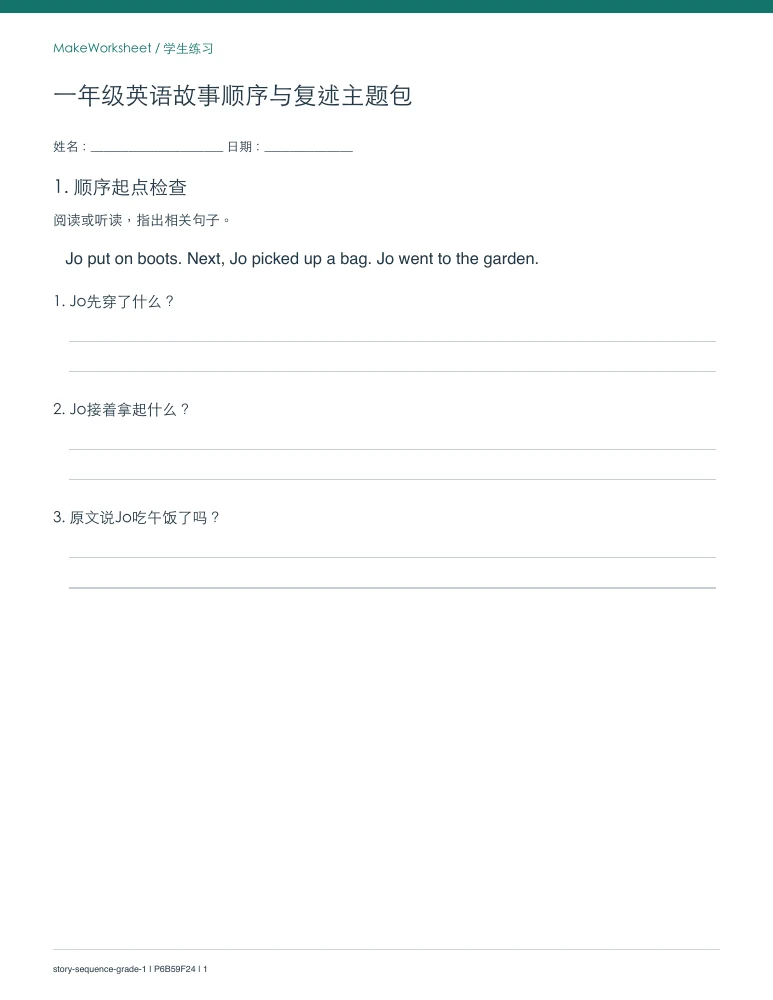
关于这份练习
一年级 · 英语语言与读写 · 包含对应答案 · 支持 US Letter 和 A4
在浏览器打印窗口中选择“另存为 PDF”即可保存副本。
教学指南、答案示例与课程参考
开始之前
作答前阅读或听读模型,并确认任务要求。
如何使用这份练习单
- 主要人物是谁?
- 描述故事中的一项行动。
- 用first、next和last复述故事。
值得讨论的常见错误
先是Mia发现问题,接着询问或测试应对,最后改进计划。
接下来练习什么
创作一个保持相同学习目标的新例子,并解释如何核查。
发布于 2026-10-23;更新于 2026-10-23. 阅读编辑政策.
继续练习
练习预览
一年级
答案
复述有益选择:社团阅读
练习 · 成人引导 · 15 分钟
复述有益选择:社团阅读。1年级可打印练习:依据行动与顺序复述原创短故事。包含五项任务、对应答案与教师指导。支持Letter或A4打印,也可在打印窗口另存PDF。
可打印活动
练习预览
一年级
答案
复述有益选择:图书馆阅读
练习 · 成人引导 · 15 分钟
复述有益选择:图书馆阅读。1年级可打印练习:依据行动与顺序复述原创短故事。包含五项任务、对应答案与教师指导。支持Letter或A4打印,也可在打印窗口另存PDF。
可打印活动
练习预览
一年级
答案
复述有益选择:工作坊阅读
练习 · 成人引导 · 15 分钟
复述有益选择:工作坊阅读。1年级可打印练习:依据行动与顺序复述原创短故事。包含五项任务、对应答案与教师指导。支持Letter或A4打印,也可在打印窗口另存PDF。
可打印活动
练习预览
选择另一套练习