Explain the problem, choose an approach, monitor progress and revise when needed.
三年级 数学 练习单
22 份原创资源。请根据下方学习目标选择,并非覆盖完整课程。原版 PDF 可免费用于课堂和家庭;支持定制的活动还可以调整。
数学知识图谱
每个想法都有成长的空间。
探索从早期数量认知到高中数学的学习路径。沿分支查看学习目标,寻找当前可用的活动。
11 个主题分支 · 6 有关联活动
关联活动 暂无活动触控板:双指横滑 · 鼠标:拖动或 Shift+滚轮
知识不断生长
沿关联探索 →
沿关联探索 →
三年级通过练习深化理解
123数与运算4 个主题
½分数与比例推理1 个主题
ƒ规律、代数与函数1 个主题
△几何与空间推理1 个主题
↔测量与量3 个主题
▥数据、统计与概率1 个主题
分支按阶段组织内容。建议学习关联显示在主题内部;相邻叶节点不代表必须的教学顺序。九至十二年级在灵活课程路径中采用参考位置。
贯穿各学习阶段的八种习惯数学实践
Move between quantities in context and symbolic representations while keeping meaning.
Justify a claim and examine another argument using appropriate evidence.
Choose a representation, state assumptions and check conclusions against the situation.
Choose and explain the use of diagrams, manipulatives, measurement tools or technology.
Communicate clearly using appropriate units, definitions, notation and accuracy.
Recognize and use parts, patterns and relationships to reason efficiently.
Notice repetition, formulate a general method and check whether it holds.
建模将数学与情境、假设和决策联系起来,贯穿整张图谱,并非独立年级或孤立主题。
图谱覆盖范围 · 来源与资源缺口
基础图谱包含全部 385 CCSS 数学内容标准及其 124 子项、十项学前数学目标和八项数学实践。主题分支将这些目标分组以便导航。高中 (+) 目标已包含并在详情中标注。可选的预备微积分和微积分纲要单独显示。
数学概念跨越国界,但年级安排和课程顺序各有不同。本参考图谱采用列出的美国课程框架。关联活动是资源库中精选的一部分,不代表每项标准都有练习,也不代表学习者已全部掌握。
Common Core State Standards for Mathematics (2010) ↗
K–8 content, all high-school content including (+), and eight mathematical practices. High-school modeling is a cross-cutting practice, not a separate collection of isolated targets.
Head Start ELOF: preschool mathematics (2015) ↗
All ten P-MATH goals; the map uses product-authored summaries and links to official developmental progressions.
MakeWorksheet extension outline
Precalculus synthesis and optional calculus directions authored for navigation. Not part of the official baseline.
© Copyright 2010. National Governors Association Center for Best Practices and Council of Chief State School Officers. All rights reserved. NGA Center 和 CCSSO 是 Common Core 州立标准的唯一所有者和开发者。 公开许可。图谱标签、拓展纲要、活动关联和建议衔接由 MakeWorksheet 编写。来源快照核查日期: 2026-10-04.
此合集中的技能
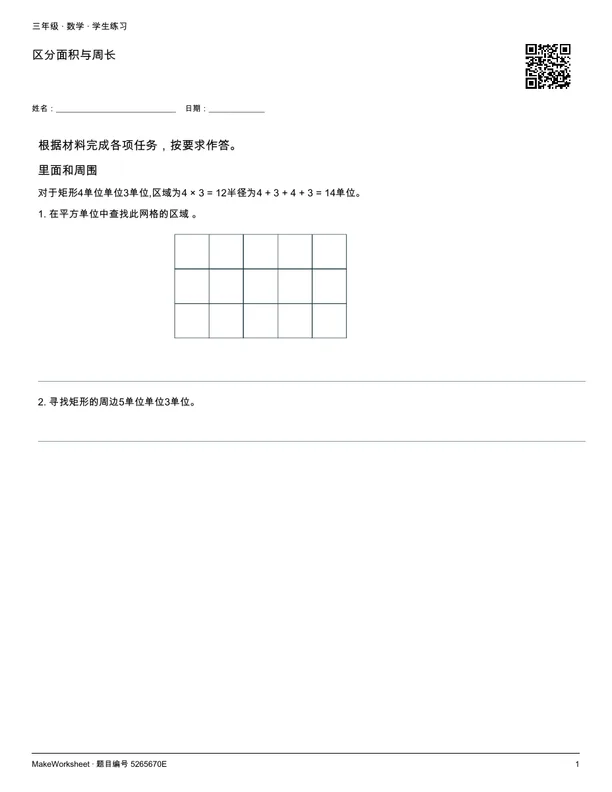
- Area and Perimeter Are Different — Distinguish square units of area from units along a boundary.
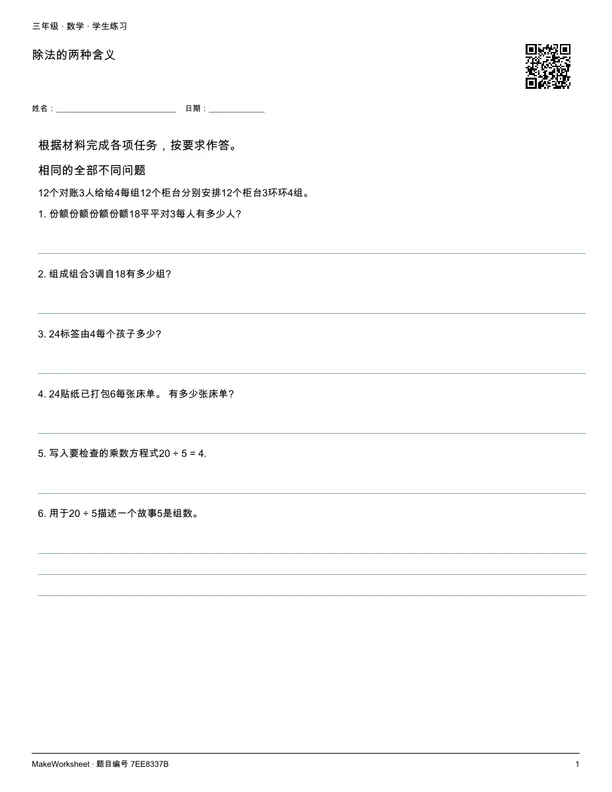
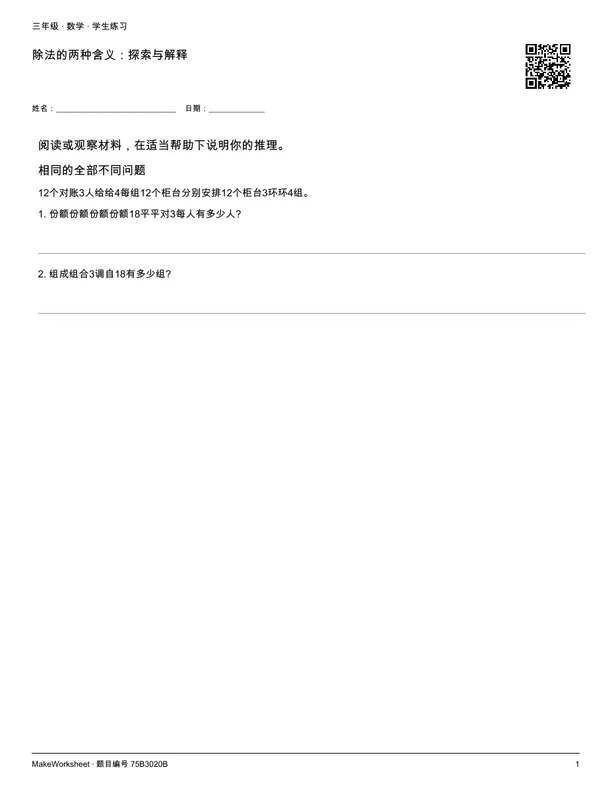
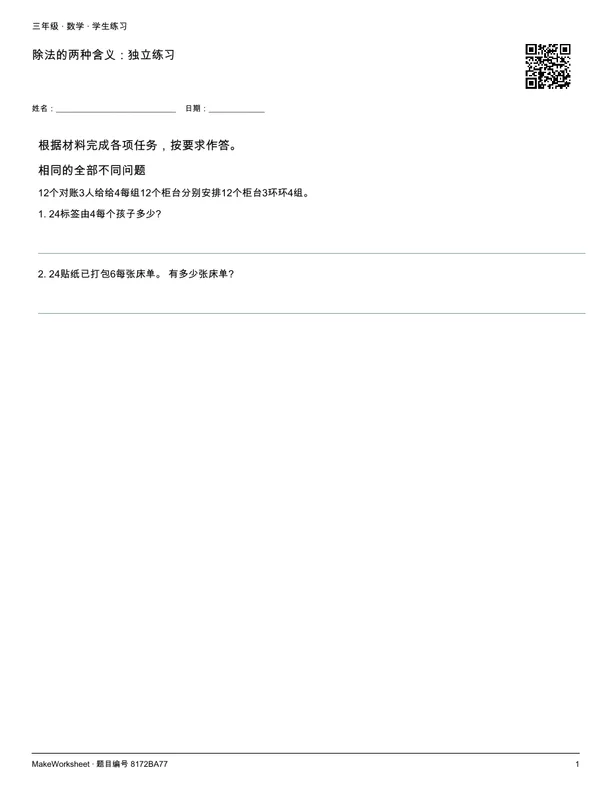
- Two Meanings of Division — Represent division as equal sharing or counting equal groups.
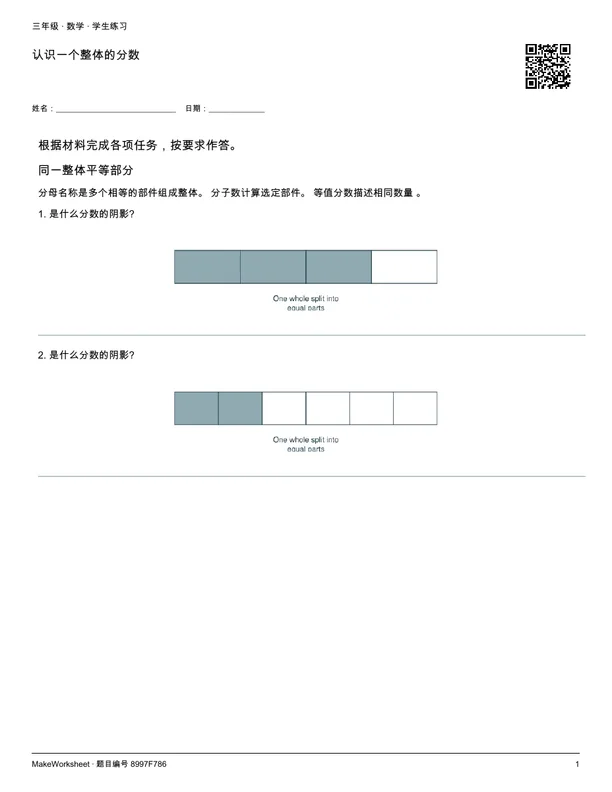
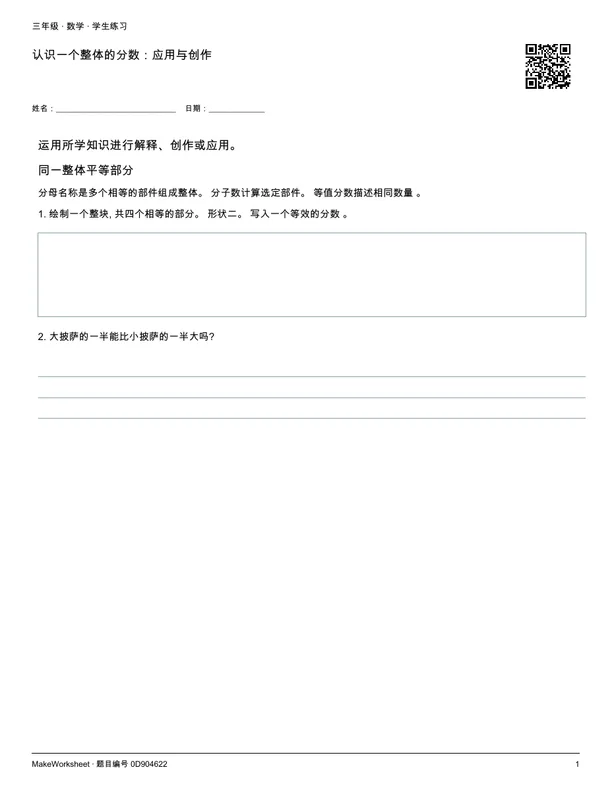
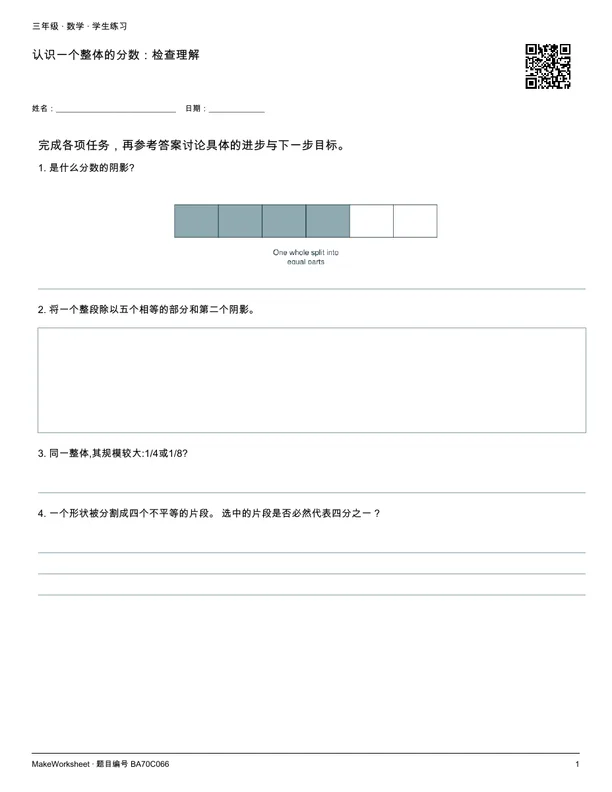
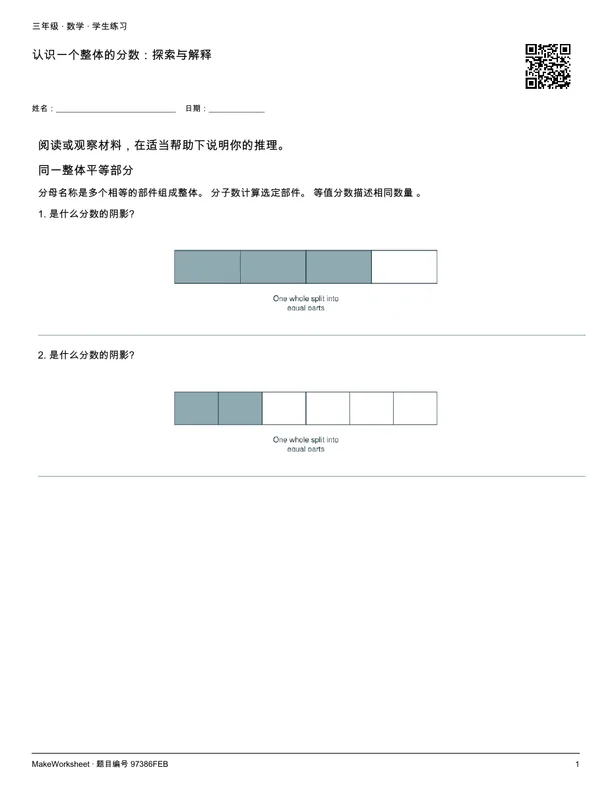
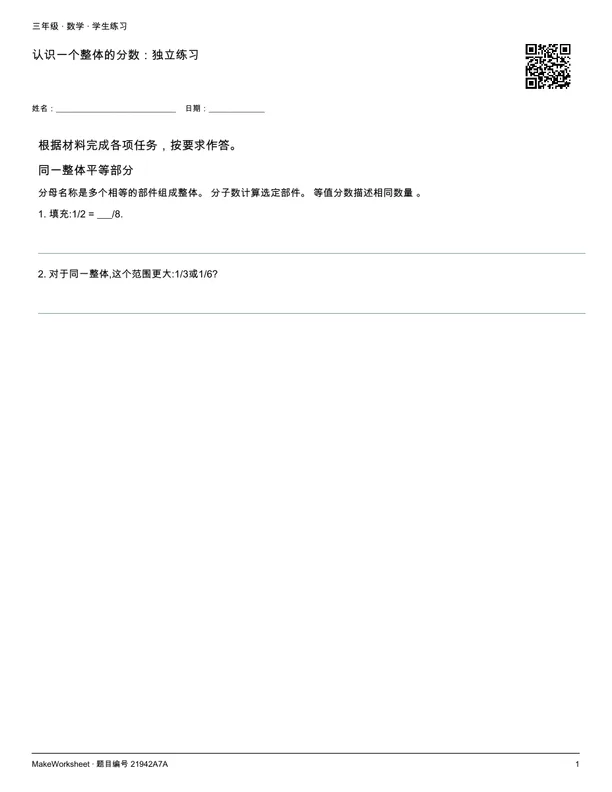
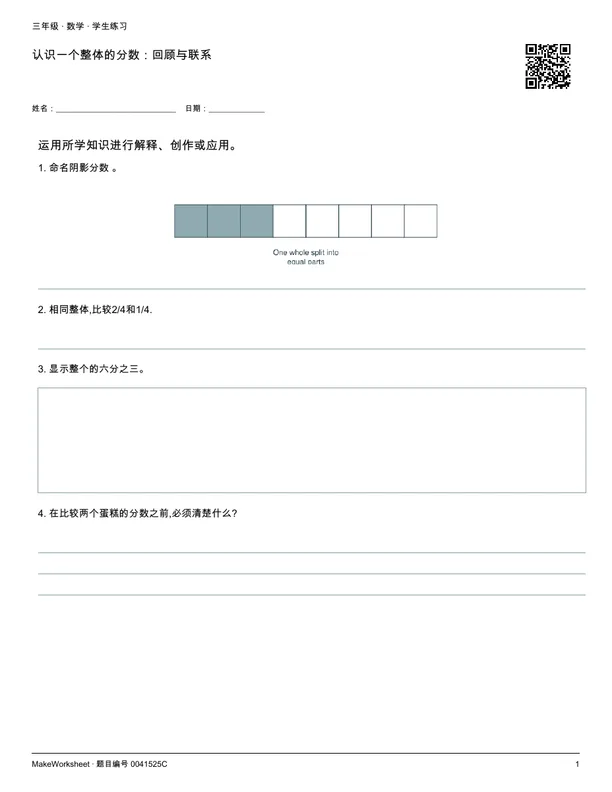
- Read Fractions of One Whole — Interpret equal parts of one whole and connect fraction representations.
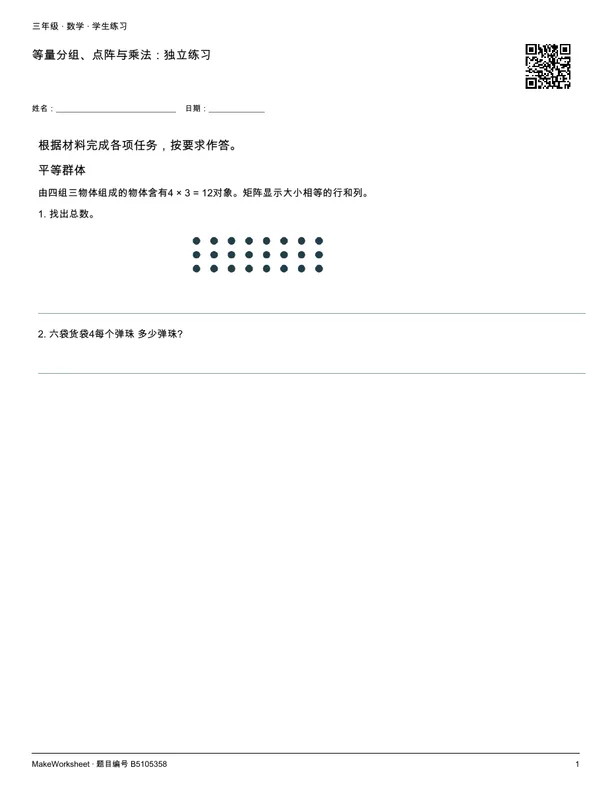
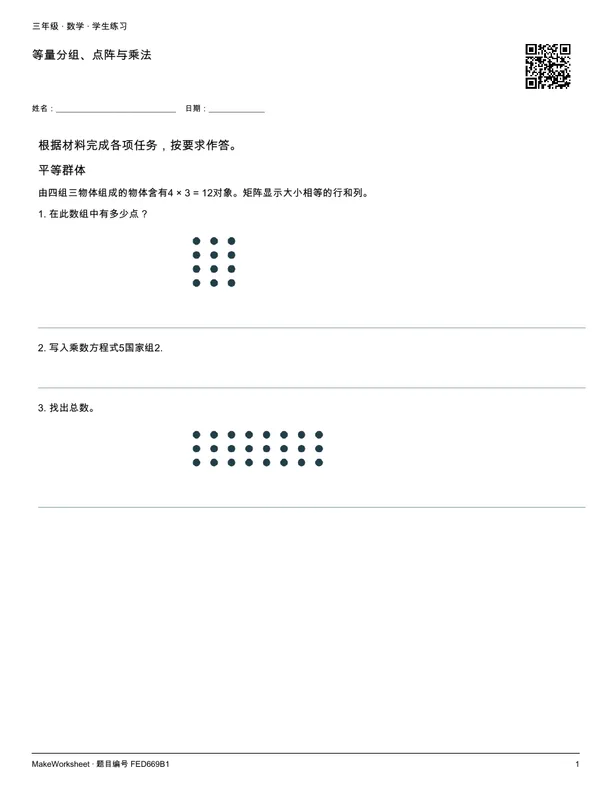
- Equal Groups Arrays and Multiplication — Represent multiplication using equal groups and arrays.
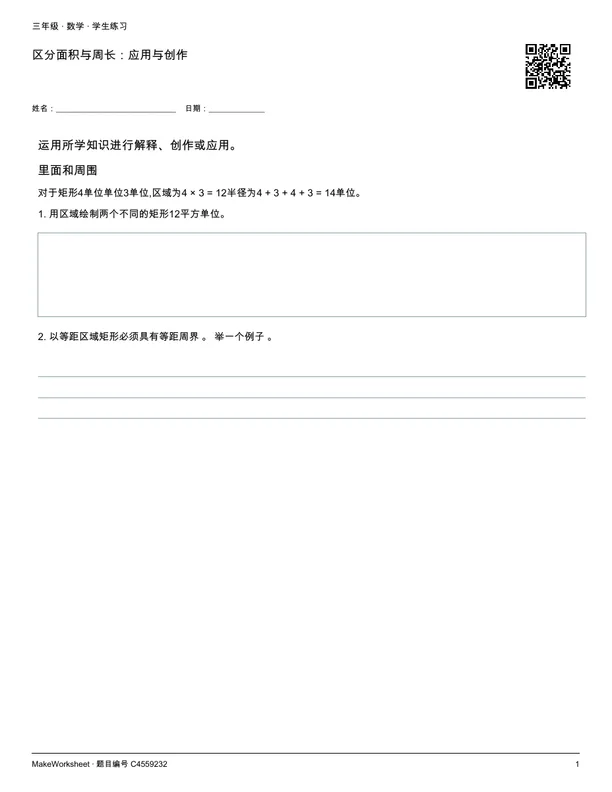
- Area and Perimeter Are Different: Apply and Create — Distinguish square units of area from units along a boundary.
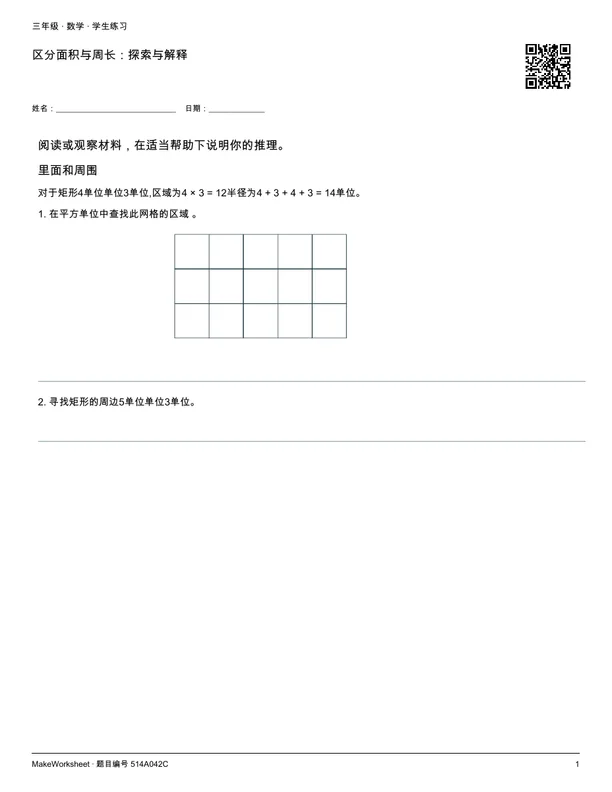
- Area and Perimeter Are Different: Explore and Explain — Distinguish square units of area from units along a boundary.
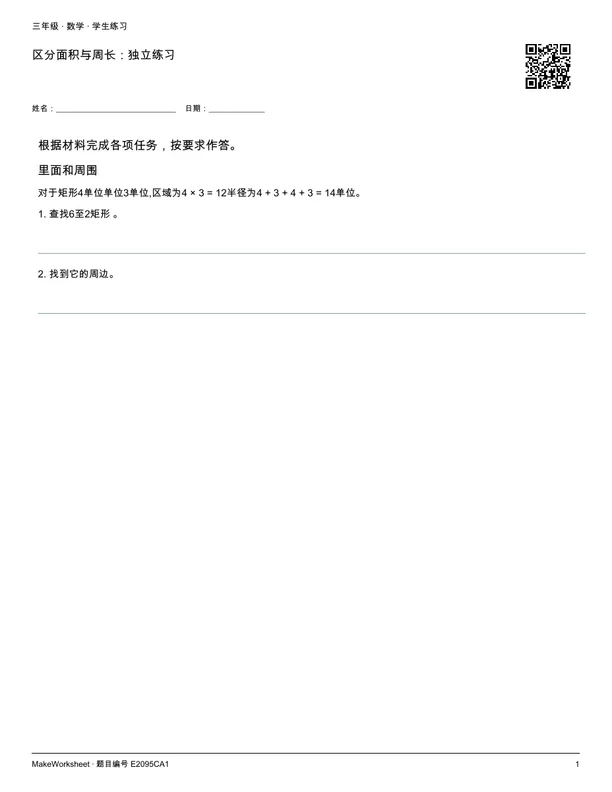
- Area and Perimeter Are Different: Practice Independently — Distinguish square units of area from units along a boundary.
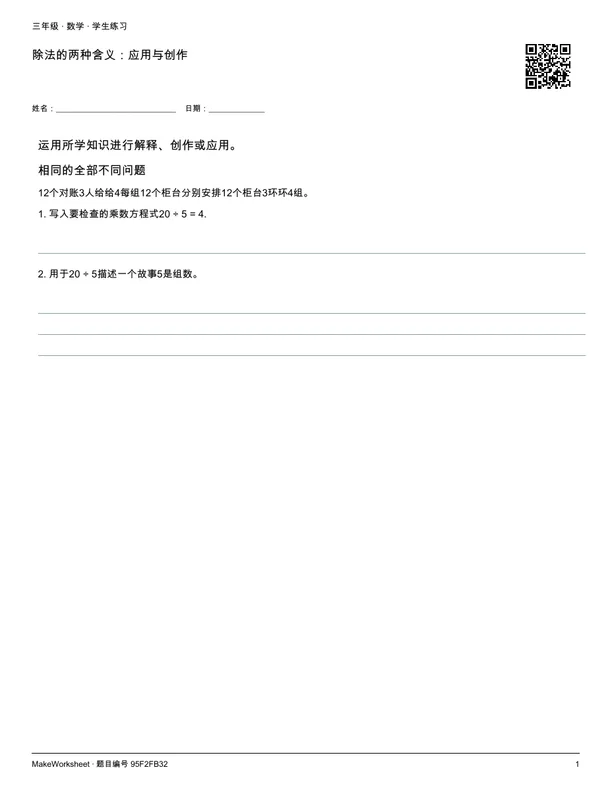
- Two Meanings of Division: Apply and Create — Represent division as equal sharing or counting equal groups.
- Two Meanings of Division: Explore and Explain — Represent division as equal sharing or counting equal groups.
- Two Meanings of Division: Practice Independently — Represent division as equal sharing or counting equal groups.
- Read Fractions of One Whole: Apply and Create — Interpret equal parts of one whole and connect fraction representations.
- Read Fractions of One Whole: Check Your Understanding — Interpret equal parts of one whole and connect fraction representations.
- Read Fractions of One Whole: Explore and Explain — Interpret equal parts of one whole and connect fraction representations.
- Read Fractions of One Whole: Practice Independently — Interpret equal parts of one whole and connect fraction representations.
- Read Fractions of One Whole: Review Connections — Interpret equal parts of one whole and connect fraction representations.
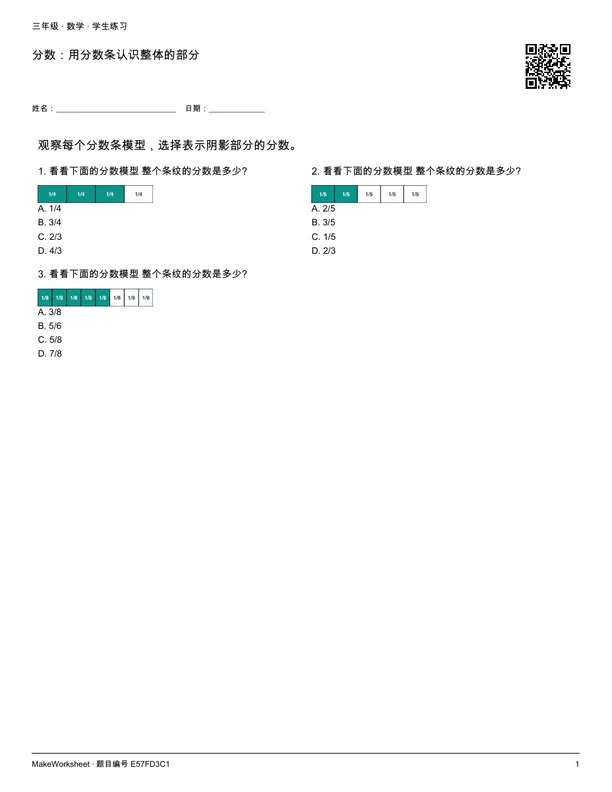
- Fractions: Identifying Parts of a Whole with Fraction Bars — Understand a fraction 1/b as the quantity formed by 1 part when a whole is partitioned into b equal parts
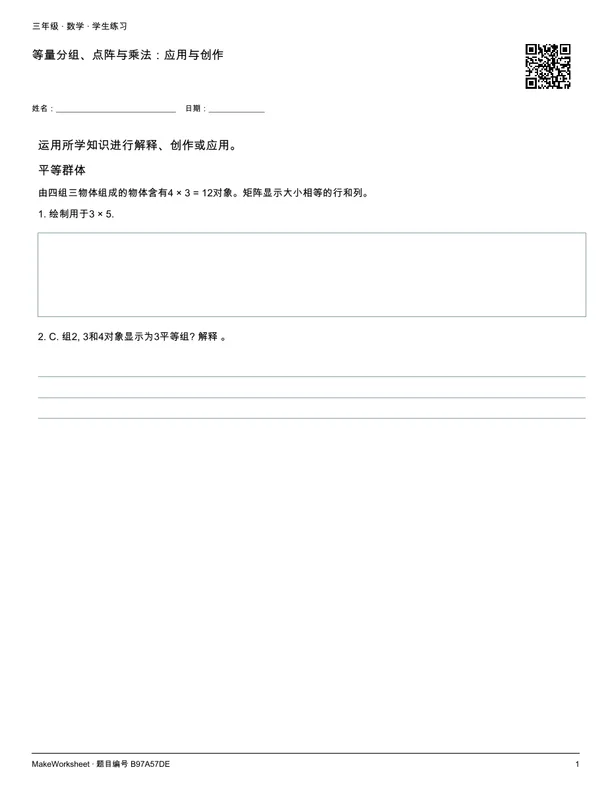
- Equal Groups Arrays and Multiplication: Apply and Create — Represent multiplication using equal groups and arrays.
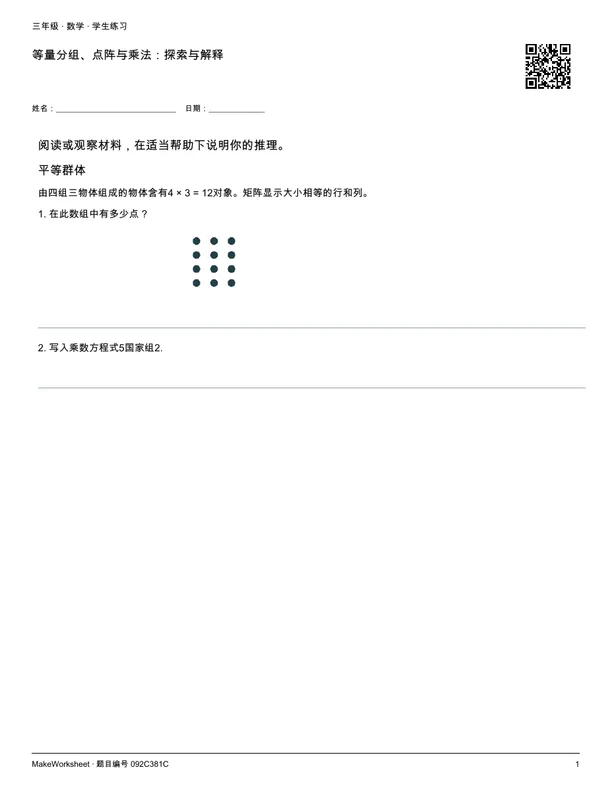
- Equal Groups Arrays and Multiplication: Explore and Explain — Represent multiplication using equal groups and arrays.
- Equal Groups Arrays and Multiplication: Practice Independently — Represent multiplication using equal groups and arrays.
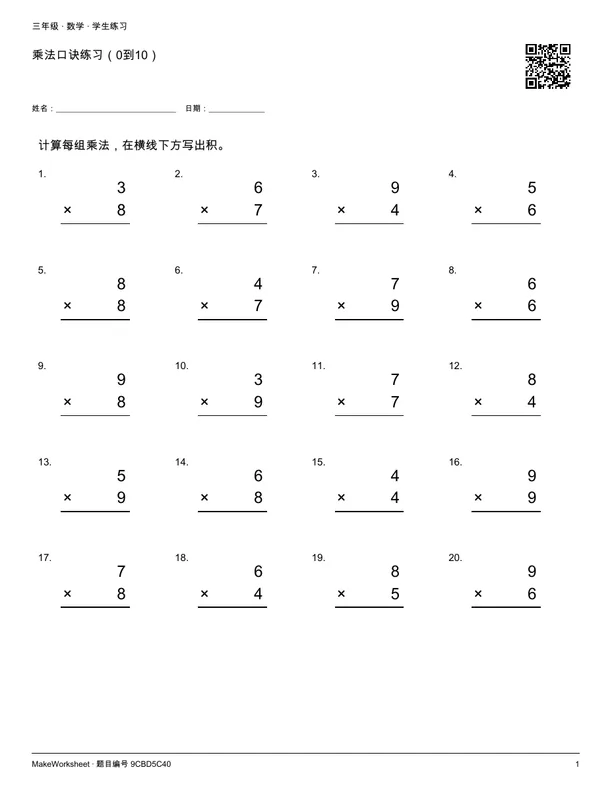
- Multiplication Facts Practice (0 to 10) — Recall basic multiplication facts within 100 with fluency
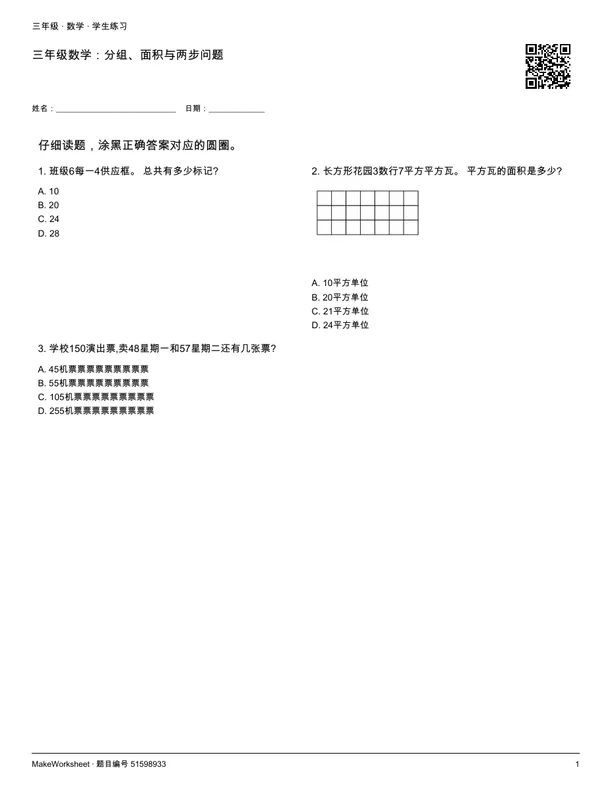
- Grade 3 Math: Groups, Area & Two-Step Problems — Interpret products of whole numbers as equal groupings in real-world contexts
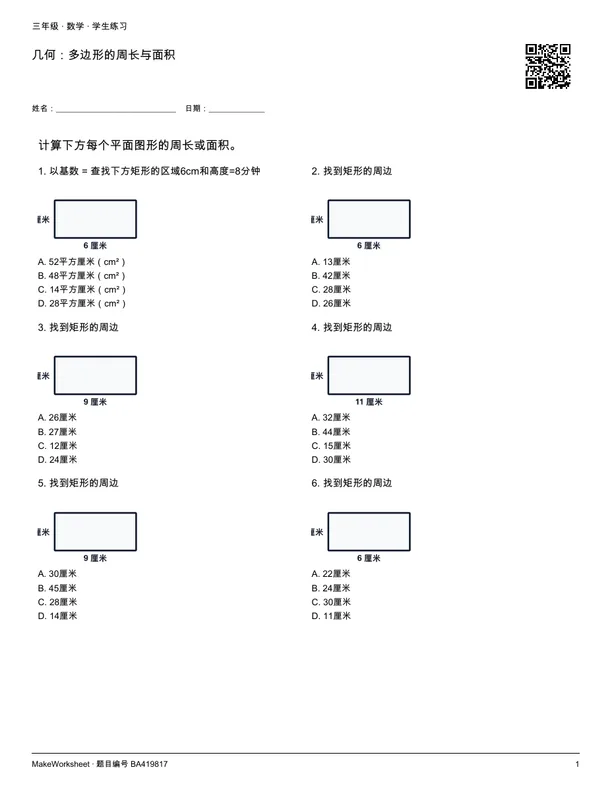
- Geometry: Perimeter and Area of Polygons — Distinguish between linear perimeter measurements and square area units
布置练习前,请预览资源页上的示例和前置技能。首次接触任务时可先示范,并通过错误答案判断需要复习的概念。
 练习预览
练习预览可打印活动