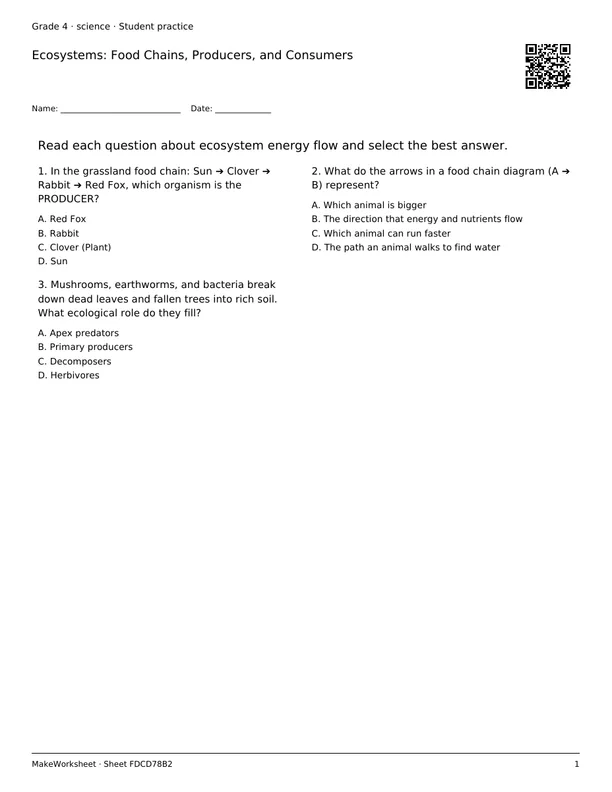
1.In the grassland food chain: Sun ➔ Clover ➔ Rabbit ➔ Red Fox, which organism is the PRODUCER?
ARed Fox
BRabbit
CClover (Plant)
DSun
Trace the flow of energy from the sun through producers, herbivores, carnivores, and decomposers. Includes diagrams and answer key.
The same content with a different order. No new questions are added. Choose “Save as PDF” in your browser’s print window to keep a copy.
0 practice pages · 0 answer pages. Pages are added automatically when needed. Question content and answer keys stay together.
Grade 4 · science · Matching answer key included · US Letter and A4
Downloads contain the original practice. Use the workbench above for new questions and custom printing.
Recognize that living things obtain energy in different ways.
Food-chain arrows show the direction of energy transfer, from the eaten organism toward the consumer.
Extend a chain with a justified organism and explain the new arrow.
In the grassland food chain: Sun ➔ Clover ➔ Rabbit ➔ Red Fox, which organism is the PRODUCER?
Answer: C. Clover is a green plant that produces its own food using sunlight through photosynthesis, making it the producer.
Intended curriculum references: NGSS.4-LS1-1 · NGSS.5-PS3-1. These references describe learning goals; they are not endorsements.
Published 2026-10-02; updated 2026-10-02. Original MakeWorksheet practice. Automated consistency checks support publication; independent subject-specialist review is not recorded. Read our editorial policy.
 Practice preview
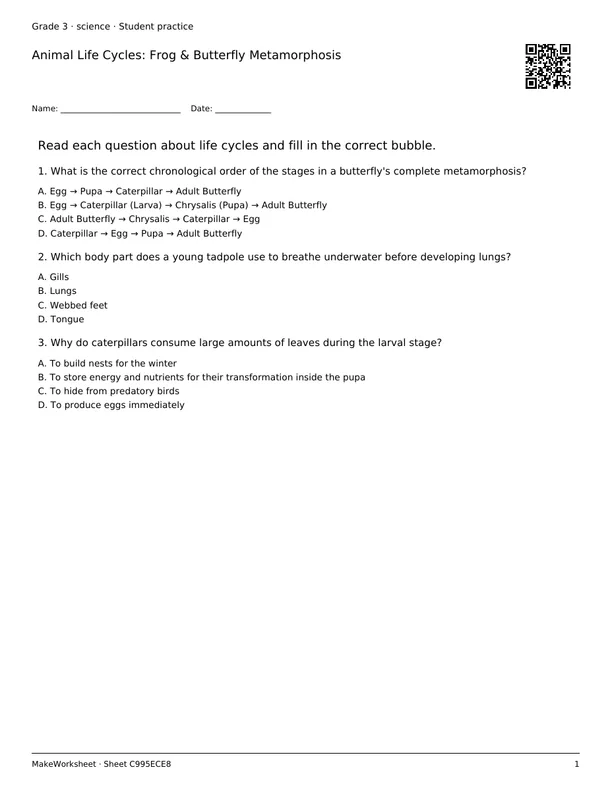
Examine complete metamorphosis in insects and amphibians. Trace stages from egg to adult with comprehension checks.
 Practice preview
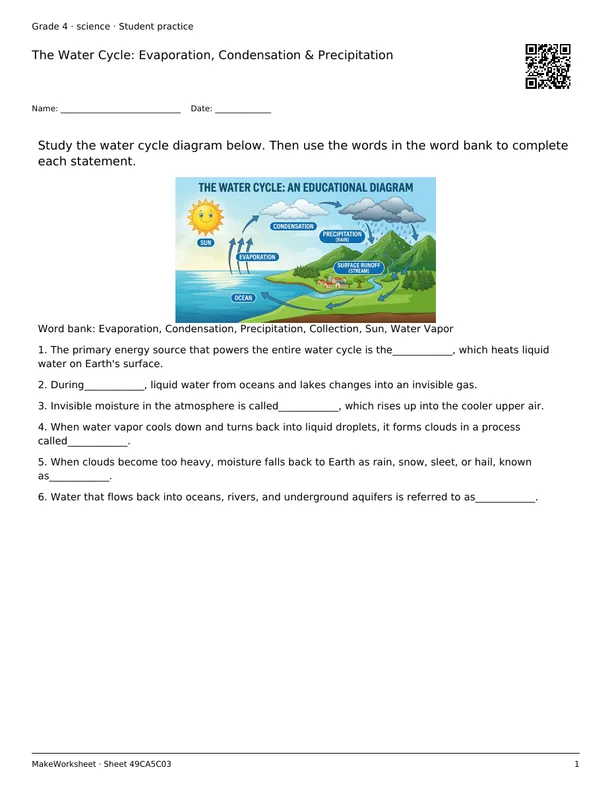
Understand how Earth's water moves continuously. Fill in the blanks for evaporation, condensation, precipitation, and collection with vocabulary bank.
 Practice preview
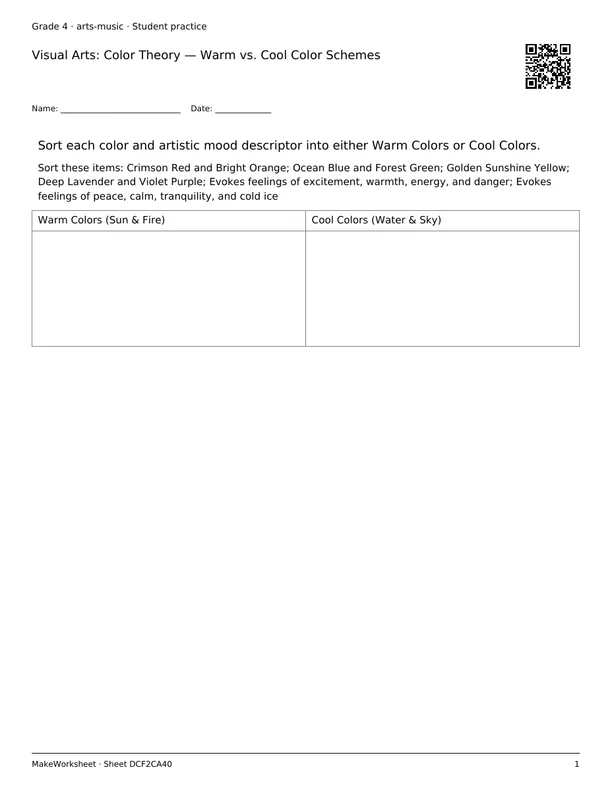
Understand how artists use warm colors (red, orange, yellow) and cool colors (blue, green, purple) to evoke emotional mood and depth.
 Practice preview
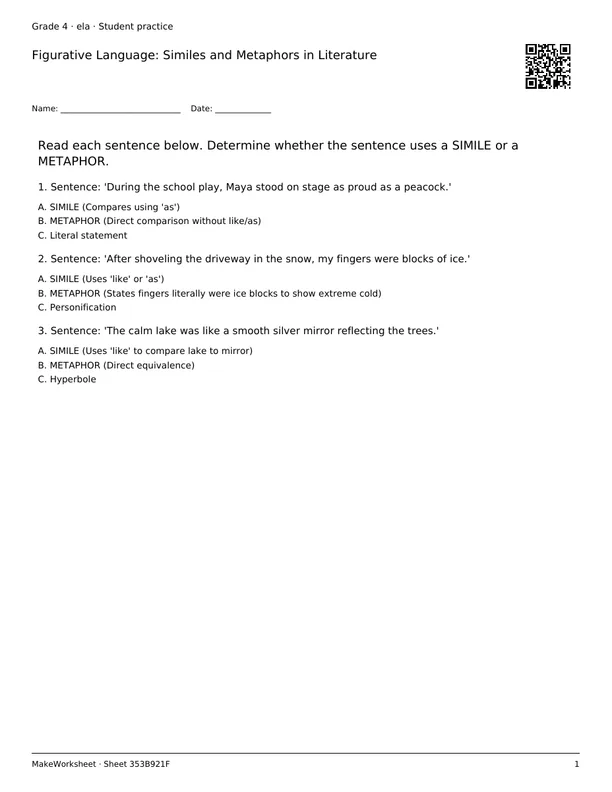
Distinguish between comparisons using 'like' or 'as' (similes) versus direct comparisons (metaphors). Includes literary examples and full answer key.