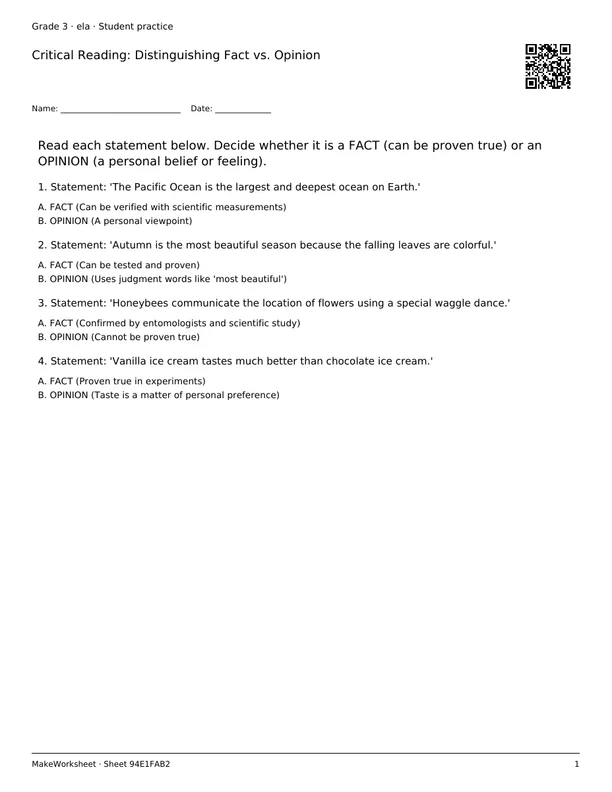
Downloads contain the original practice. Use the workbench above for new questions and custom printing.
Teaching guide, sample answers and curriculum references
Before you begin
Recognize that an animal grows through stages.
How to use this worksheet
- Model the target skill: describe the four distinct stages of butterfly metamorphosis: Egg, Larva (Caterpillar), Pupa (Chrysalis), Adult. Use the first task as a guided example before asking for an independent response.
- Check readiness first: Recognize that an animal grows through stages.
- Discuss an incorrect response using this distinction: A butterfly's pupa and larva are different stages; do not skip a stage when ordering the cycle.
A common mistake to discuss
A butterfly's pupa and larva are different stages; do not skip a stage when ordering the cycle.
What to practice next
Draw arrows between stages and explain why a cycle does not have a single permanent ending.
Sample question and answer
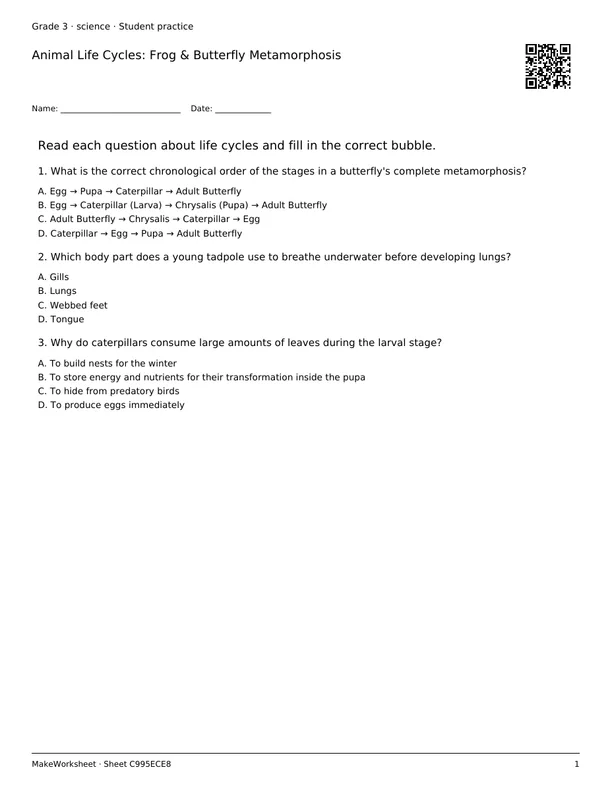
What is the correct chronological order of the stages in a butterfly's complete metamorphosis?
- A. Egg → Pupa → Caterpillar → Adult Butterfly
- B. Egg → Caterpillar (Larva) → Chrysalis (Pupa) → Adult Butterfly
- C. Adult Butterfly → Chrysalis → Caterpillar → Egg
- D. Caterpillar → Egg → Pupa → Adult Butterfly
Answer: B. Butterflies undergo complete metamorphosis: the female lays an egg, which hatches into a larva (caterpillar). The larva forms a chrysalis (pupa) and emerges as a winged adult butterfly.
Intended curriculum references: NGSS.3-LS1-1. These references describe learning goals; they are not endorsements.
Published 2026-10-02; updated 2026-10-02. Original MakeWorksheet practice. Automated consistency checks support publication; independent subject-specialist review is not recorded. Read our editorial policy.