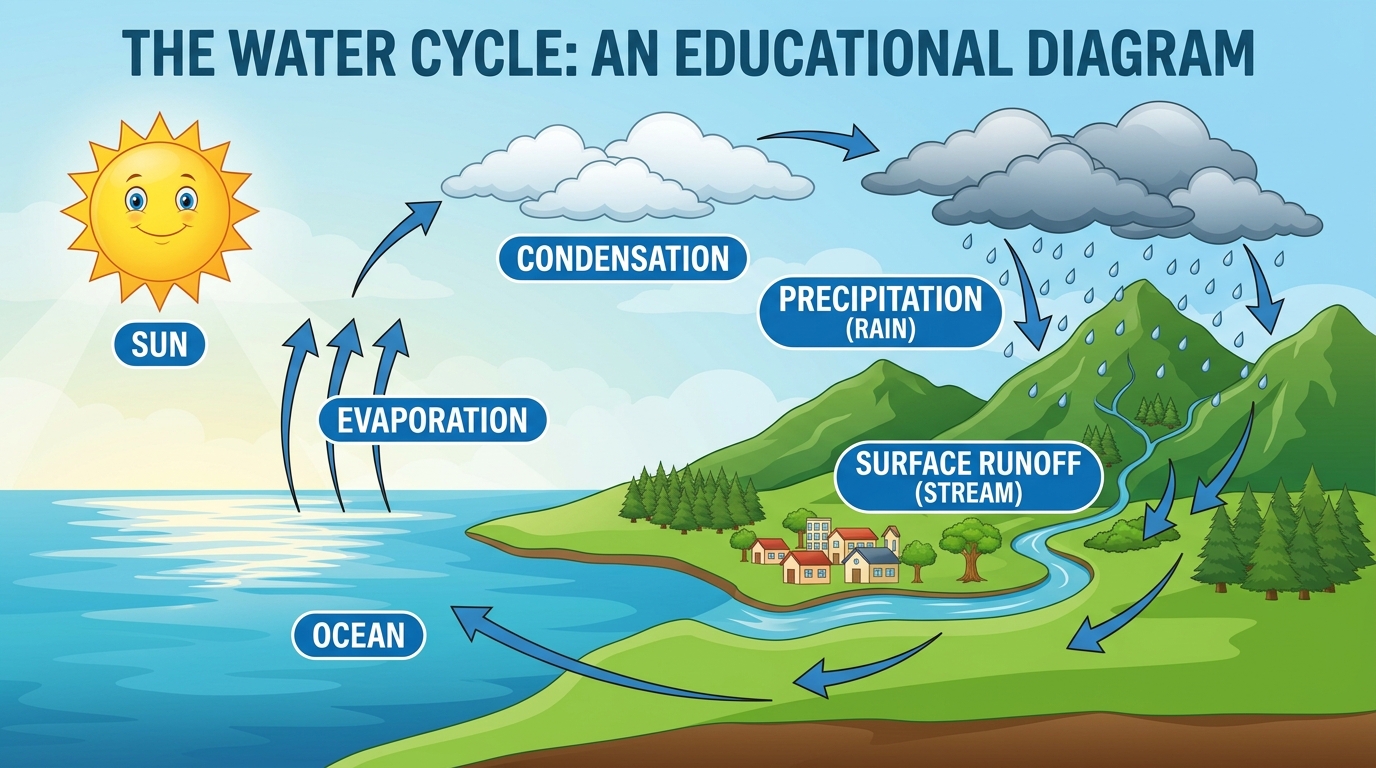
The Water Cycle: Evaporation, Condensation & Precipitation
Understand how Earth's water moves continuously. Fill in the blanks for evaporation, condensation, precipitation, and collection with vocabulary bank.
The same content with a different order. No new questions are added. Choose “Save as PDF” in your browser’s print window to keep a copy.
Page layout
0 practice pages · 0 answer pages. Pages are added automatically when needed. Question content and answer keys stay together.
About this practice
Grade 4 · science · Matching answer key included · US Letter and A4
Preview the original practice
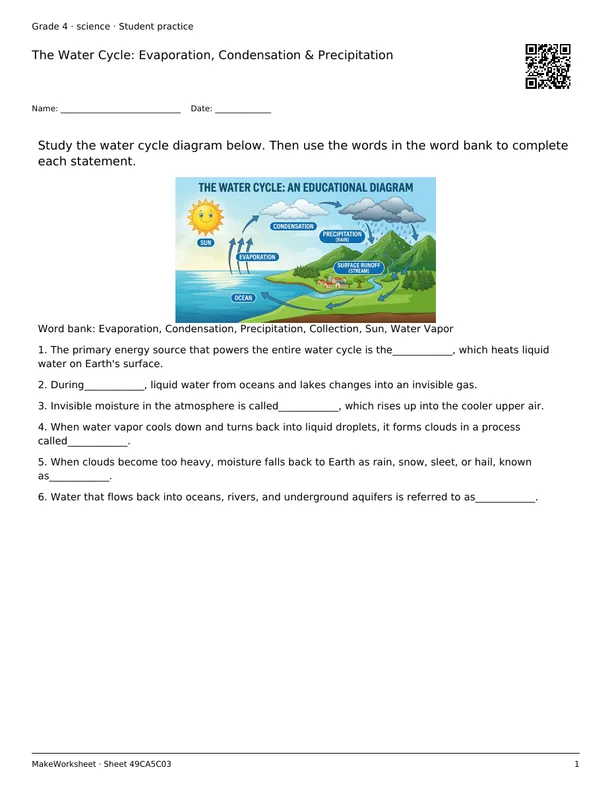
Downloads contain the original practice. Use the workbench above for new questions and custom printing.
Teaching guide, sample answers and curriculum references
Before you begin
Distinguish liquid water from water vapor and recognize heating and cooling.
How to use this worksheet
- Model the target skill: define the primary stages of the hydrologic cycle driven by the Sun's energy. Use the first task as a guided example before asking for an independent response.
- Check readiness first: Distinguish liquid water from water vapor and recognize heating and cooling.
- Discuss an incorrect response using this distinction: Evaporation and condensation describe opposite changes; precipitation is water falling from clouds.
A common mistake to discuss
Evaporation and condensation describe opposite changes; precipitation is water falling from clouds.
What to practice next
Trace a possible route through the cycle without treating the diagram as one mandatory starting order.
Intended curriculum references: NGSS.4-ESS2-1. These references describe learning goals; they are not endorsements.
Published 2026-10-02; updated 2026-10-02. Original MakeWorksheet practice. Automated consistency checks support publication; independent subject-specialist review is not recorded. Read our editorial policy.
Continue practicing
 Practice preview
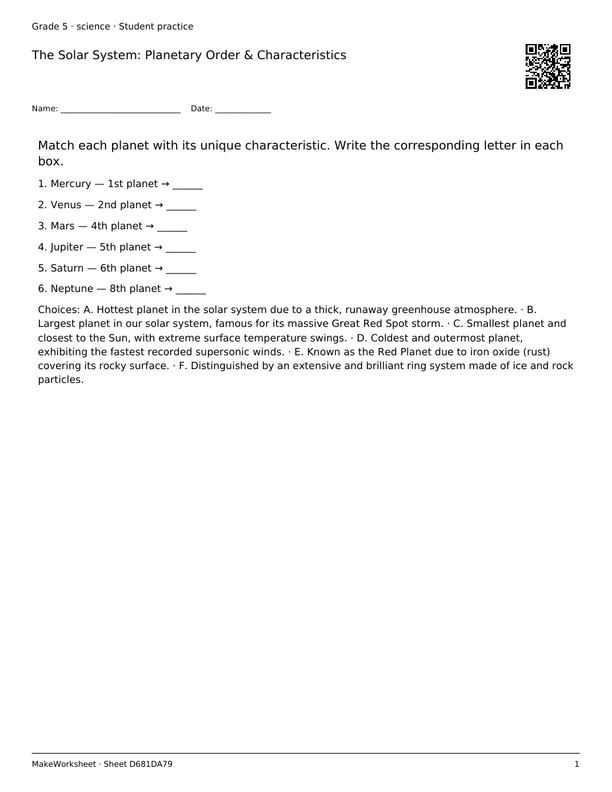
The Solar System: Planetary Order & Characteristics
Explore the eight planets of our solar system. Master orbital distance from the Sun, rocky inner planets versus gas giants.
 Practice preview
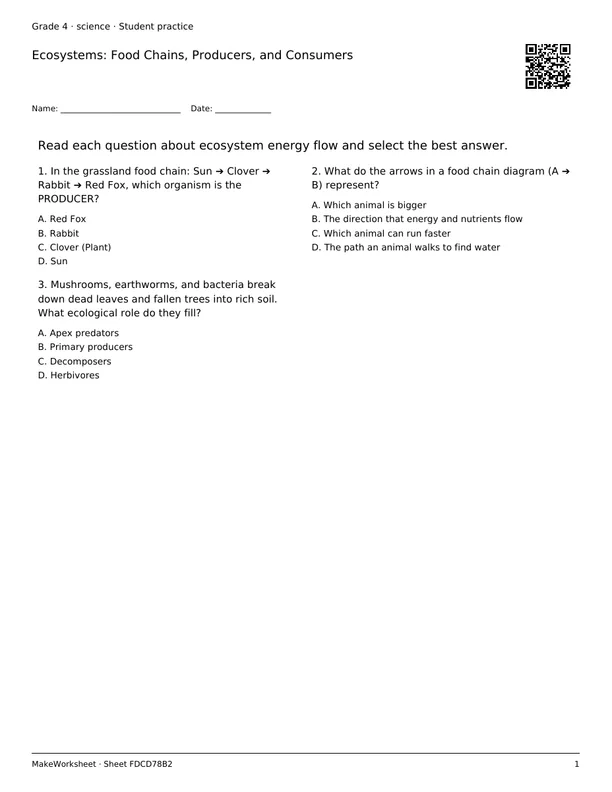
Ecosystems: Food Chains, Producers, and Consumers
Trace the flow of energy from the sun through producers, herbivores, carnivores, and decomposers. Includes diagrams and answer key.
 Practice preview
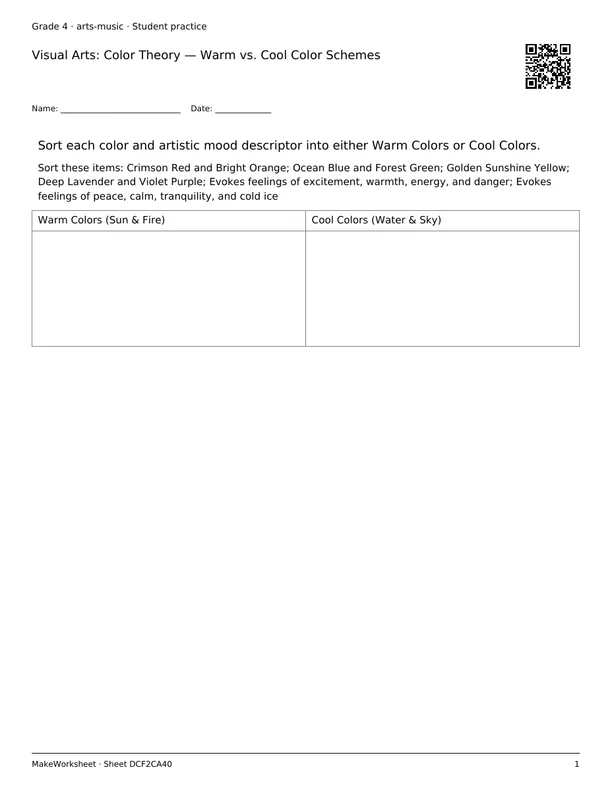
Visual Arts: Color Theory — Warm vs. Cool Color Schemes
Understand how artists use warm colors (red, orange, yellow) and cool colors (blue, green, purple) to evoke emotional mood and depth.
 Practice preview
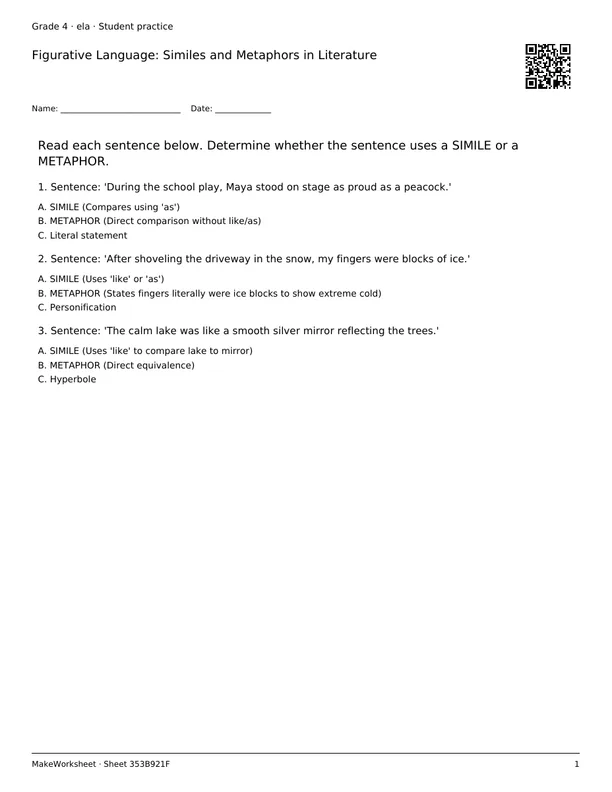
Figurative Language: Similes and Metaphors in Literature
Distinguish between comparisons using 'like' or 'as' (similes) versus direct comparisons (metaphors). Includes literary examples and full answer key.