Visual Arts: Color Theory — Warm vs. Cool Color Schemes
Understand how artists use warm colors (red, orange, yellow) and cool colors (blue, green, purple) to evoke emotional mood and depth.
The same content with a different order. No new questions are added. Choose “Save as PDF” in your browser’s print window to keep a copy.
Page layout
0 practice pages · 0 answer pages. Pages are added automatically when needed. Question content and answer keys stay together.
About this practice
Grade 4 · arts music · Matching answer key included · US Letter and A4
Preview the original practice
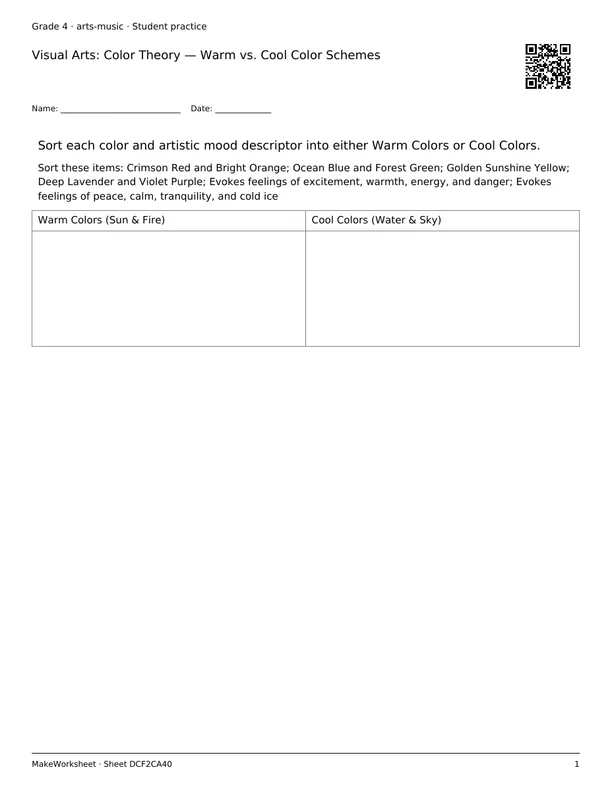
Downloads contain the original practice. Use the workbench above for new questions and custom printing.
Teaching guide, sample answers and curriculum references
Before you begin
Identify common color names and notice colors in a picture.
How to use this worksheet
- Model the target skill: distinguish between warm colors (red, orange, yellow) and cool colors (blue, green, violet). Use the first task as a guided example before asking for an independent response.
- Check readiness first: Identify common color names and notice colors in a picture.
- Discuss an incorrect response using this distinction: Warm and cool describe a color relationship, not a physical temperature; a color's effect also depends on its surroundings.
A common mistake to discuss
Warm and cool describe a color relationship, not a physical temperature; a color's effect also depends on its surroundings.
What to practice next
Compare the mood of the same sketch using two color palettes.
Intended curriculum references: NAfME.VA:Re7.1.4. These references describe learning goals; they are not endorsements.
Published 2026-10-02; updated 2026-10-02. Original MakeWorksheet practice. Automated consistency checks support publication; independent subject-specialist review is not recorded. Read our editorial policy.
Continue practicing
 Practice preview
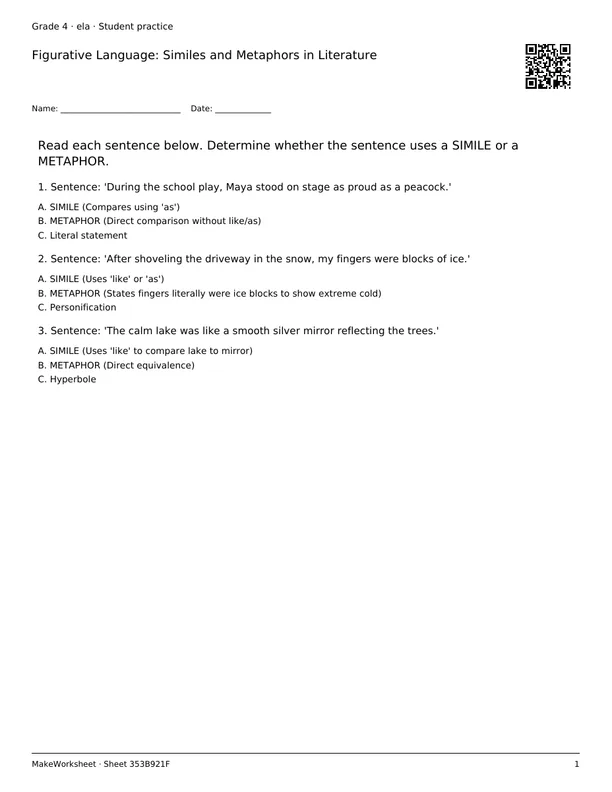
Figurative Language: Similes and Metaphors in Literature
Distinguish between comparisons using 'like' or 'as' (similes) versus direct comparisons (metaphors). Includes literary examples and full answer key.
 Practice preview
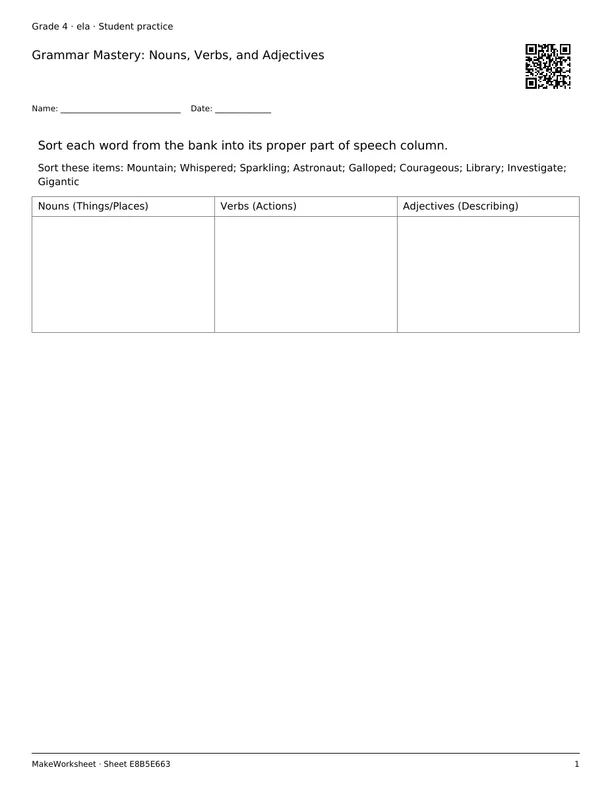
Grammar Mastery: Nouns, Verbs, and Adjectives
Essential upper elementary grammar practice. Classify and identify nouns (person, place, thing), verbs (action), and adjectives (describing words).
 Practice preview
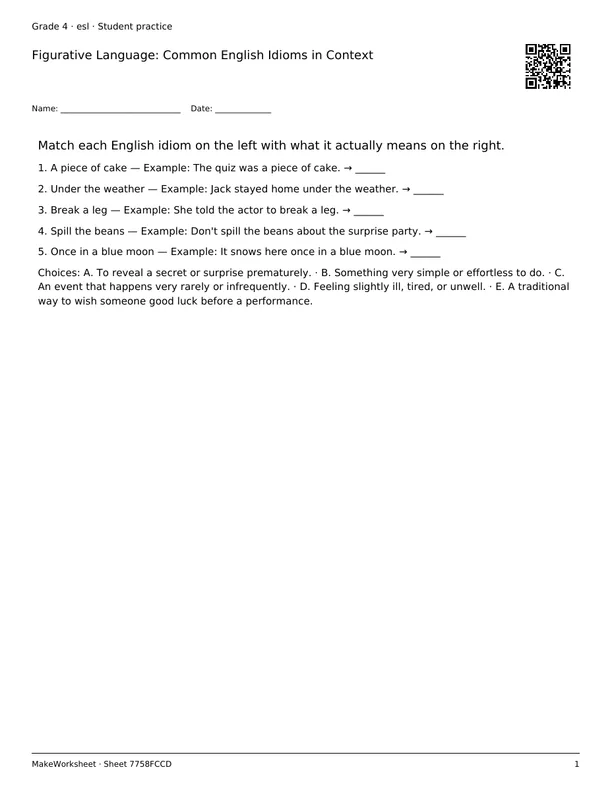
Figurative Language: Common English Idioms in Context
Demystify figurative phrases. Match idioms like 'piece of cake', 'under the weather', and 'cost an arm and a leg' with their true meanings.
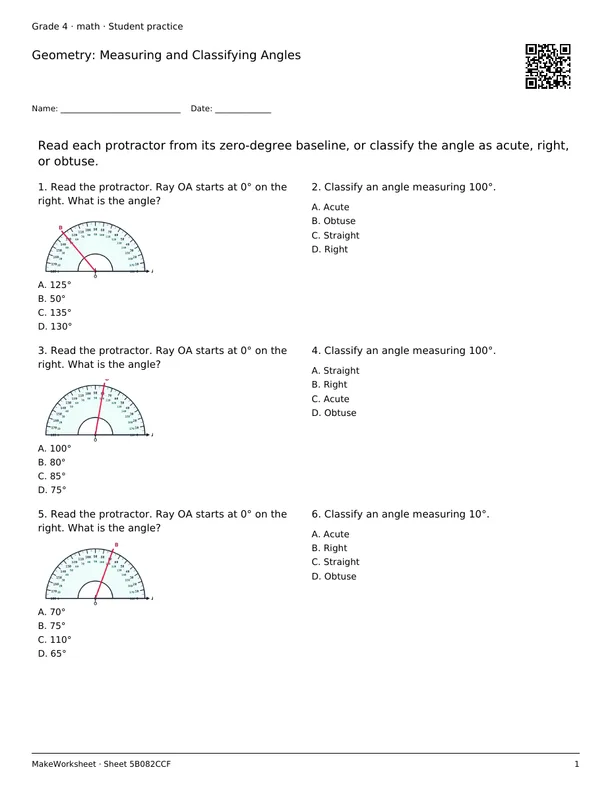 Practice preview
Geometry: Measuring and Classifying Angles
Read protractors and classify acute, right, and obtuse angles with structured practice.