Skip to content
Grade 5civicsOriginal practice

The Bill of Rights: Understanding the First 10 Amendments

Deepen civics comprehension. Explore the First Amendment freedoms, trial rights, and constitutional protections in the Bill of Rights.

The same content with a different order. No new questions are added. Choose “Save as PDF” in your browser’s print window to keep a copy.

Page layout

0 practice pages · 0 answer pages. Pages are added automatically when needed. Question content and answer keys stay together.

Sheet 0664B661 · questions and answers share this ID

About this practice

Grade 5 · social studies · Matching answer key included · US Letter and A4

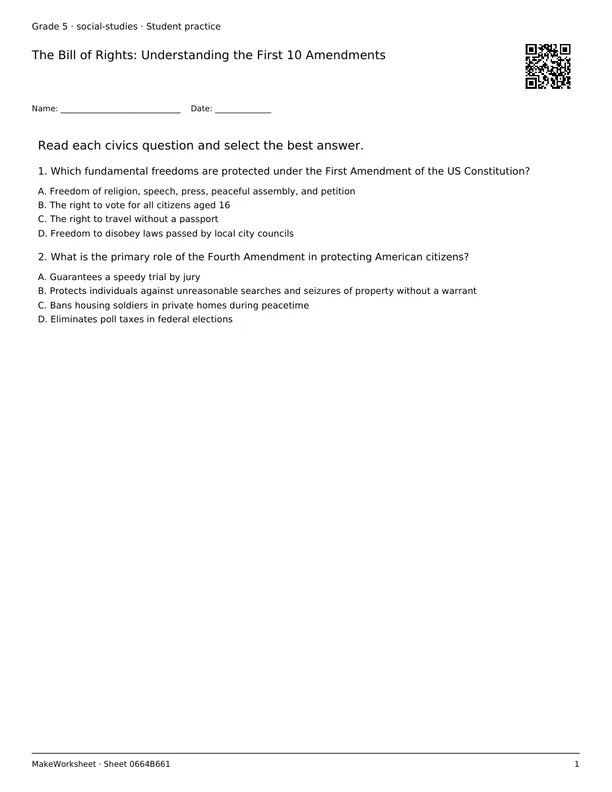
Preview the original practiceThe Bill of Rights: Understanding the First 10 Amendments: first student practice page

Downloads contain the original practice. Use the workbench above for new questions and custom printing.

Teaching guide, sample answers and curriculum references

Before you begin

Distinguish a constitutional rule from an ordinary law and identify a stated right.

How to use this worksheet

  1. Model the target skill: identify the Bill of Rights as the first ten amendments added to the US Constitution in 1791. Use the first task as a guided example before asking for an independent response.
  2. Check readiness first: Distinguish a constitutional rule from an ordinary law and identify a stated right.
  3. Discuss an incorrect response using this distinction: A short amendment summary is not the full legal rule; context matters when applying a right to a scenario.

A common mistake to discuss

A short amendment summary is not the full legal rule; context matters when applying a right to a scenario.

What to practice next

Match a simple scenario to an amendment and explain which words support the choice.

Sample question and answer

Which fundamental freedoms are protected under the First Amendment of the US Constitution?

  • A. Freedom of religion, speech, press, peaceful assembly, and petition
  • B. The right to vote for all citizens aged 16
  • C. The right to travel without a passport
  • D. Freedom to disobey laws passed by local city councils

Answer: A. The First Amendment guarantees five cornerstone civil liberties: religion, speech, press, assembly, and petitioning government.

Intended curriculum references: C3.D2.Civ.3.3-5. These references describe learning goals; they are not endorsements.

Published 2026-10-02; updated 2026-10-02. Original MakeWorksheet practice. Automated consistency checks support publication; independent subject-specialist review is not recorded. Read our editorial policy.
Continue practicing

Grade 5
C3.D2.His.1.3-5 Key

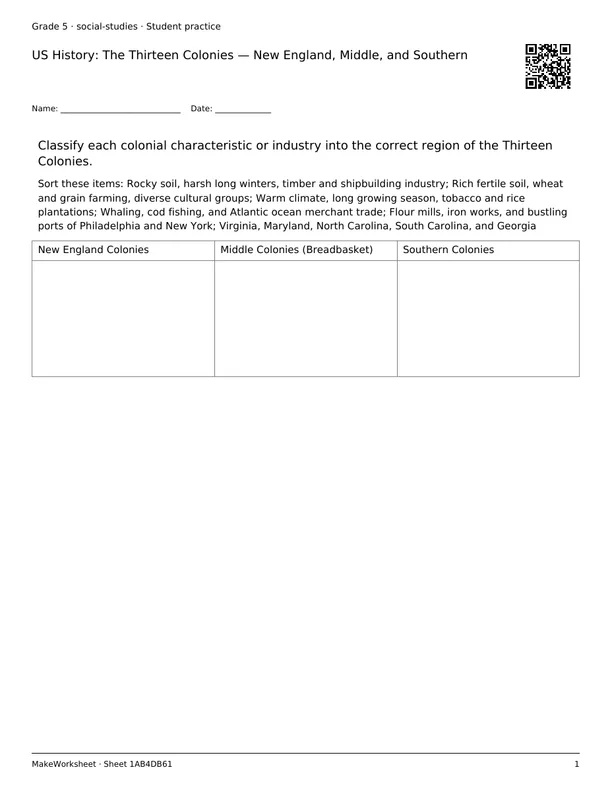
US History: The Thirteen Colonies — New England, Middle, and Southern

Compare the geographic, economic, and social characteristics of the New England, Middle, and Southern colonial regions.

Shuffle this practice
Music Theory: Dynamics and Tempo Markings (Italian Terms): first student practice pagePractice preview
Grade 5
NAfME.MU:Pr4.2.5 Key

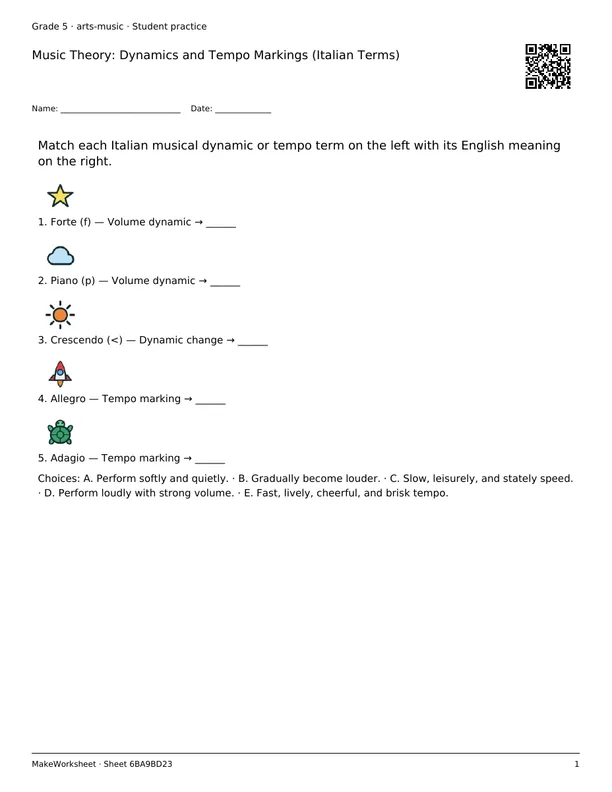
Music Theory: Dynamics and Tempo Markings (Italian Terms)

Learn essential Italian musical terms for volume dynamics (piano, forte, crescendo) and speed tempos (allegro, andante, adagio) with full answer key.

Shuffle this practice
Informational Reading: Cause & Effect of Earthquakes: first student practice pagePractice preview
Grade 5
RI.5.5 Key

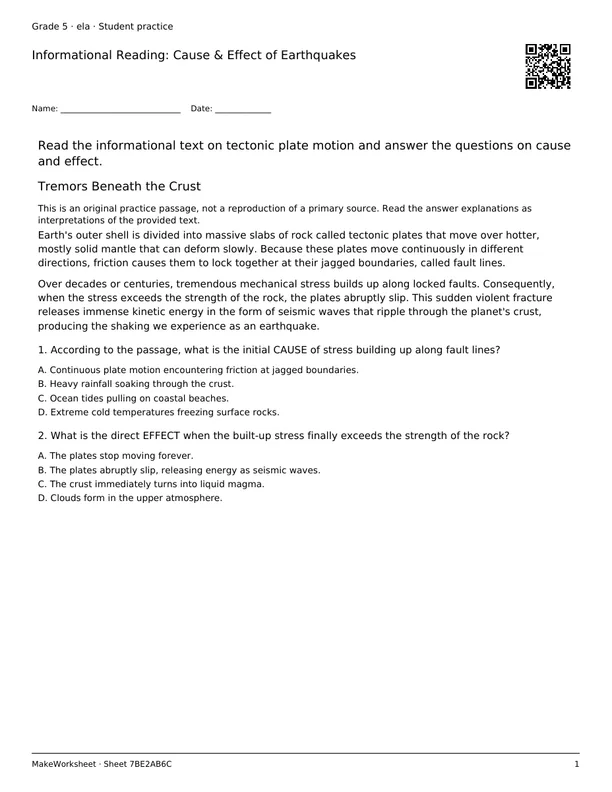
Informational Reading: Cause & Effect of Earthquakes

Analyze informational text structure. Identify tectonic causes and surface effects in an engaging passage on geological fault lines.

Shuffle this practice
Text Structure: Compare and Contrast in Nonfiction Texts: first student practice pagePractice preview
Grade 5
RI.5.5 Key

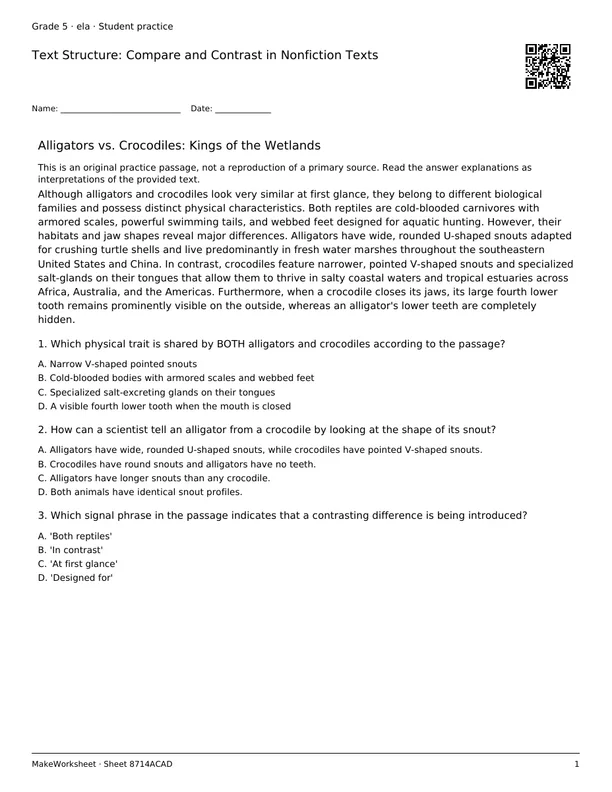
Text Structure: Compare and Contrast in Nonfiction Texts

Analyze text structures by identifying similarities and differences between two informational subjects using signal words and graphic organizers.

Shuffle this practice