Music Theory: Dynamics and Tempo Markings (Italian Terms)
Learn essential Italian musical terms for volume dynamics (piano, forte, crescendo) and speed tempos (allegro, andante, adagio) with full answer key.
The same content with a different order. No new questions are added. Choose “Save as PDF” in your browser’s print window to keep a copy.
Page layout
0 practice pages · 0 answer pages. Pages are added automatically when needed. Question content and answer keys stay together.
About this practice
Grade 5 · arts music · Matching answer key included · US Letter and A4
Preview the original practice
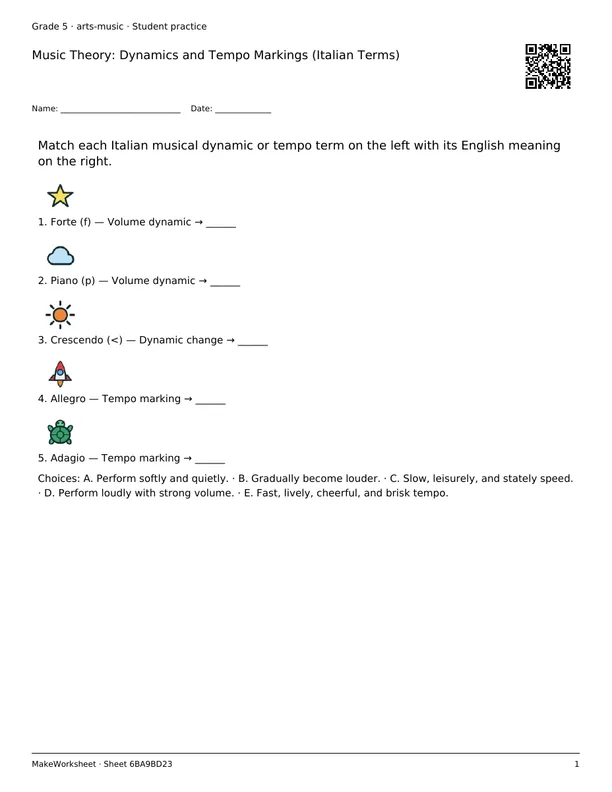
Downloads contain the original practice. Use the workbench above for new questions and custom printing.
Teaching guide, sample answers and curriculum references
Before you begin
Distinguish how loud music is from how fast its beat moves.
How to use this worksheet
- Model the target skill: identify standard Italian volume dynamics: piano (p), forte (f), mezzo forte (mf), crescendo, and decrescendo. Use the first task as a guided example before asking for an independent response.
- Check readiness first: Distinguish how loud music is from how fast its beat moves.
- Discuss an incorrect response using this distinction: Forte changes volume, whereas allegro describes tempo; a loud passage need not be fast.
A common mistake to discuss
Forte changes volume, whereas allegro describes tempo; a loud passage need not be fast.
What to practice next
Perform one phrase softly and then slowly, changing one feature at a time.
Intended curriculum references: NAfME.MU:Pr4.2.5. These references describe learning goals; they are not endorsements.
Published 2026-10-02; updated 2026-10-02. Original MakeWorksheet practice. Automated consistency checks support publication; independent subject-specialist review is not recorded. Read our editorial policy.
Continue practicing
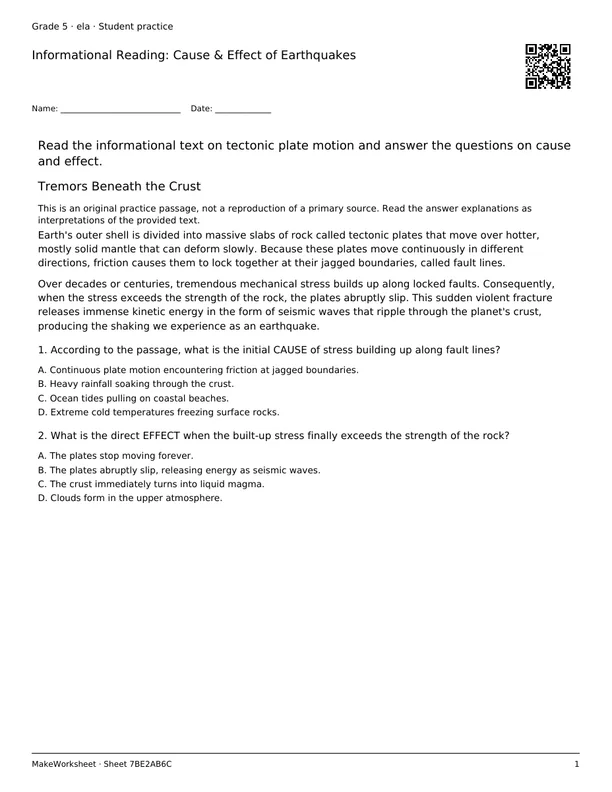 Practice preview
Informational Reading: Cause & Effect of Earthquakes
Analyze informational text structure. Identify tectonic causes and surface effects in an engaging passage on geological fault lines.
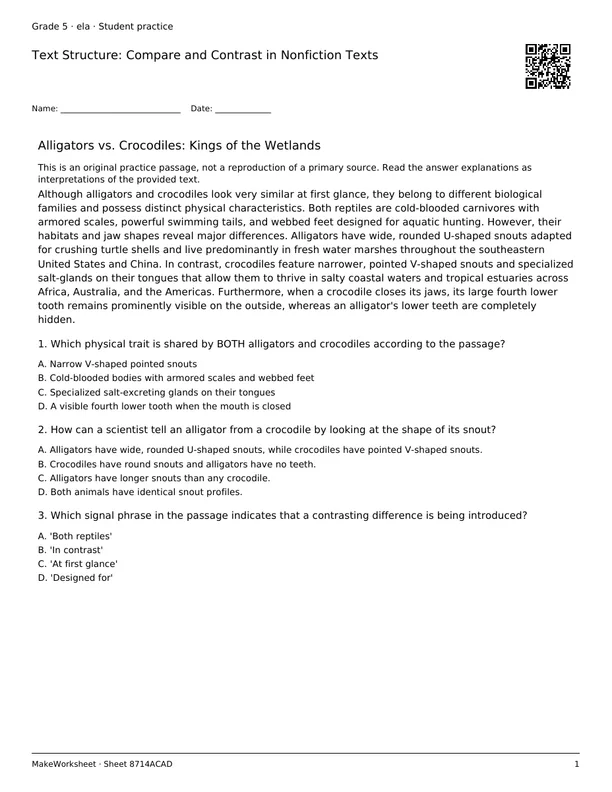 Practice preview
Text Structure: Compare and Contrast in Nonfiction Texts
Analyze text structures by identifying similarities and differences between two informational subjects using signal words and graphic organizers.
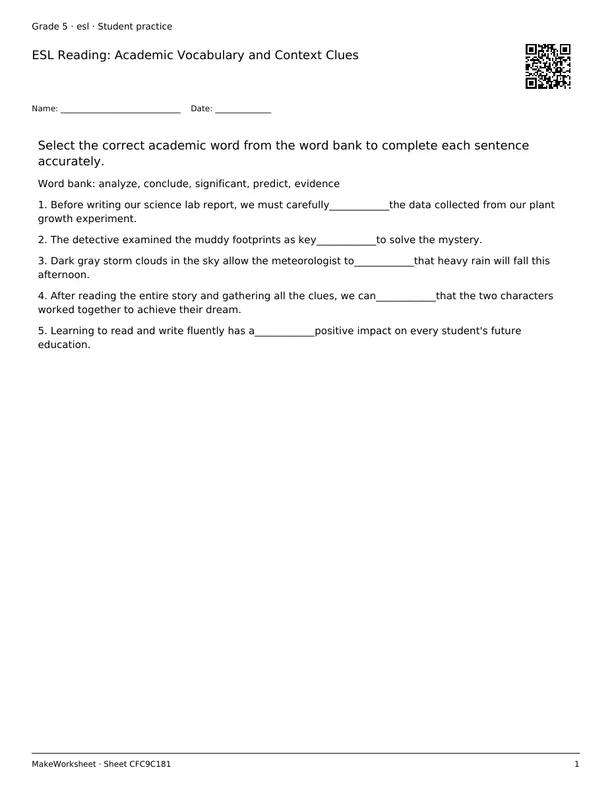 Practice preview
ESL Reading: Academic Vocabulary and Context Clues
Strengthen academic English language proficiency by decoding Tier 2 cross-curricular vocabulary words using sentence context clues.
 Practice preview
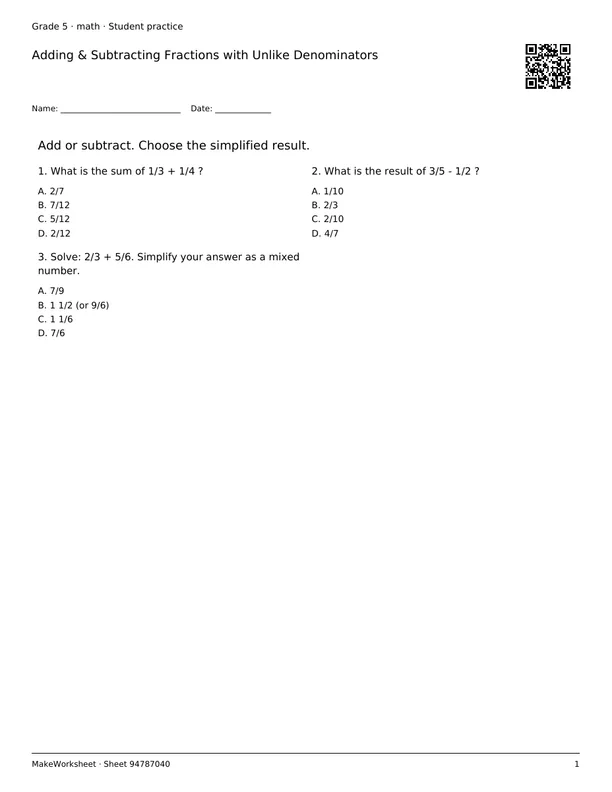
Adding & Subtracting Fractions with Unlike Denominators
5th grade fraction arithmetic practice. Find common denominators, convert equivalent fractions, and simplify sums to simplest form.