Skip to content
Grade 7historyOriginal practice

World History: Afro-Eurasian Trade & The Silk Road

Examine the trans-Eurasian trade routes connecting China, Central Asia, the Middle East, and Europe. Explore cultural diffusion, technology, and economic exchange.

The same content with a different order. No new questions are added. Choose “Save as PDF” in your browser’s print window to keep a copy.

Page layout

0 practice pages · 0 answer pages. Pages are added automatically when needed. Question content and answer keys stay together.

Sheet 544BD337 · questions and answers share this ID

About this practice

Grade 7 · social studies · Matching answer key included · US Letter and A4

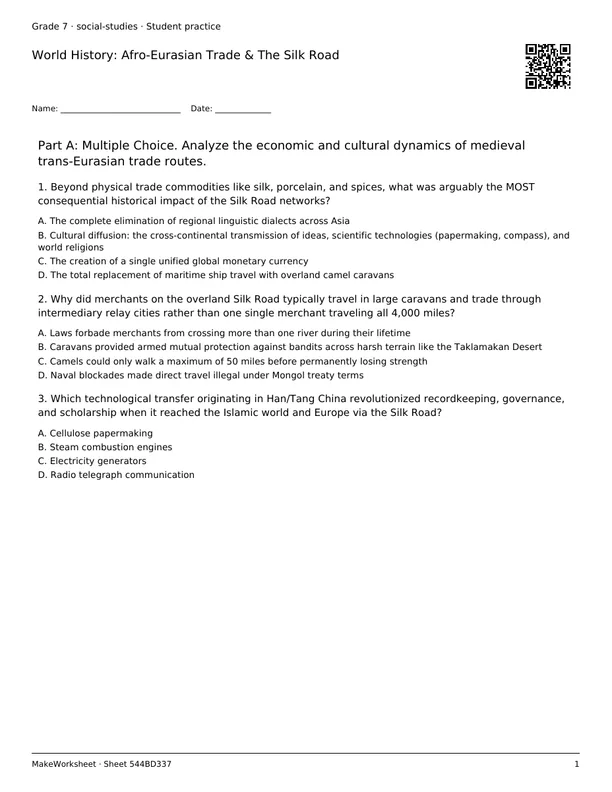
Preview the original practiceWorld History: Afro-Eurasian Trade & The Silk Road: first student practice page

Downloads contain the original practice. Use the workbench above for new questions and custom printing.

Teaching guide, sample answers and curriculum references

Before you begin

Read a route map and recognize exchange between connected communities.

How to use this worksheet

  1. Model the target skill: trace major overland and maritime trade networks connecting Asia, the Mediterranean, and Africa during the Middle Ages. Use the first task as a guided example before asking for an independent response.
  2. Check readiness first: Read a route map and recognize exchange between connected communities.
  3. Discuss an incorrect response using this distinction: The Silk Road was a network of routes rather than one continuous road used by a single group.

A common mistake to discuss

The Silk Road was a network of routes rather than one continuous road used by a single group.

What to practice next

Explain how an item or idea could move through several intermediaries.

Sample question and answer

Beyond physical trade commodities like silk, porcelain, and spices, what was arguably the MOST consequential historical impact of the Silk Road networks?

  • A. The complete elimination of regional linguistic dialects across Asia
  • B. Cultural diffusion: the cross-continental transmission of ideas, scientific technologies (papermaking, compass), and world religions
  • C. The creation of a single unified global monetary currency
  • D. The total replacement of maritime ship travel with overland camel caravans

Answer: B. Caravans carried scholars, monks, and diplomats alongside merchants, spreading transformative technologies (paper, gunpowder, compass) and major religions (Buddhism, Islam, Christianity).

Intended curriculum references: C3.D2.His.2.6-8 · C3.D2.Geo.6.6-8. These references describe learning goals; they are not endorsements.

Published 2026-10-02; updated 2026-10-02. Original MakeWorksheet practice. Automated consistency checks support publication; independent subject-specialist review is not recorded. Read our editorial policy.
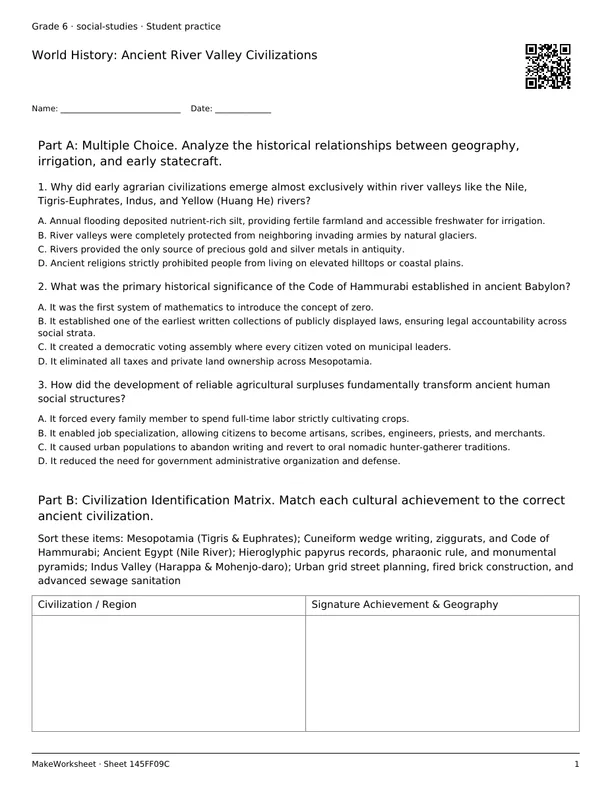
Continue practicing

Grade 6
C3.D2.His.1.6-8 Key

World History: Ancient River Valley Civilizations

Analyze geographic advantages, irrigation canals, agricultural surpluses, and legal codes in Mesopotamia, Egypt, the Indus Valley, and Early China.

Shuffle this practice
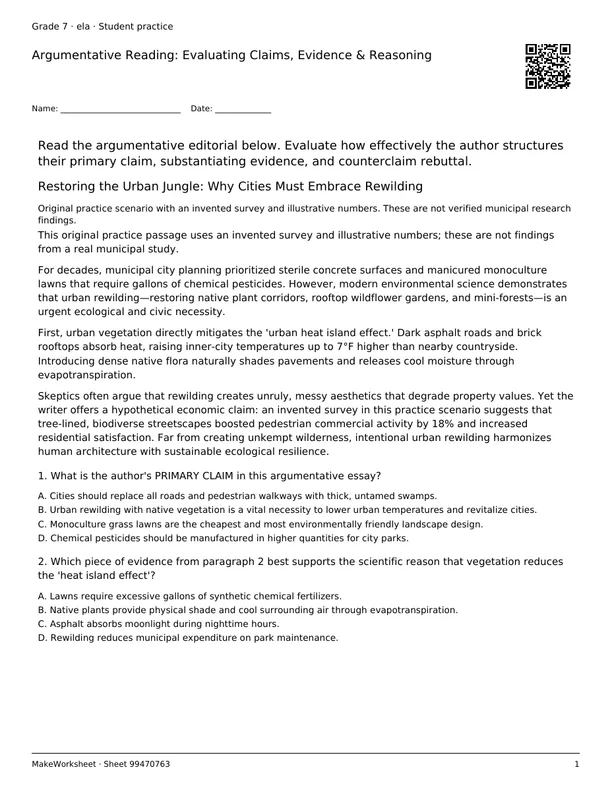
Argumentative Reading: Evaluating Claims, Evidence & Reasoning: first student practice pagePractice preview
Grade 7
RI.7.8 Key

Argumentative Reading: Evaluating Claims, Evidence & Reasoning

Trace and evaluate an author's argument. Distinguish sound reasoning and credible empirical evidence from unsupported rhetorical claims.

Shuffle this practice
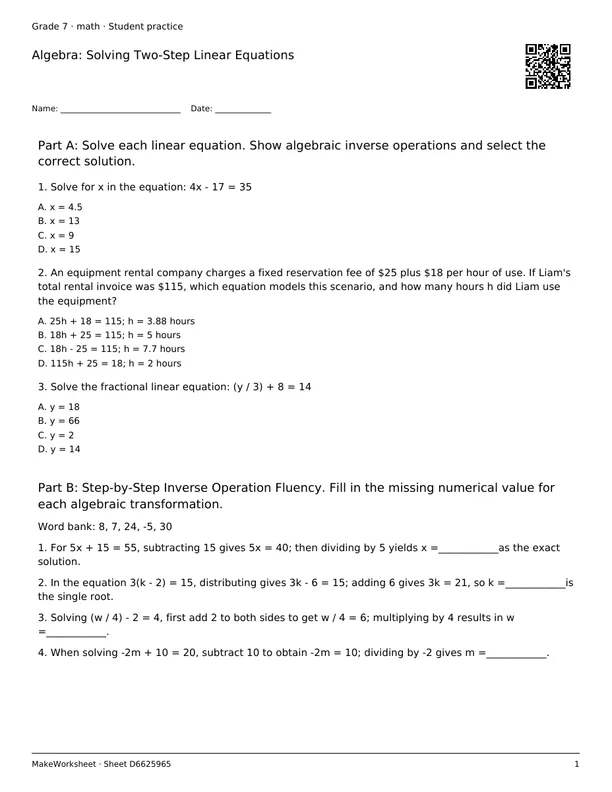
Algebra: Solving Two-Step Linear Equations: first student practice pagePractice preview
Grade 7
7.EE.B.4 Key

Algebra: Solving Two-Step Linear Equations

Master inverse operations, isolate unknown variables, and solve multi-step linear equations in real-world word contexts with full answer key.

Shuffle this practice
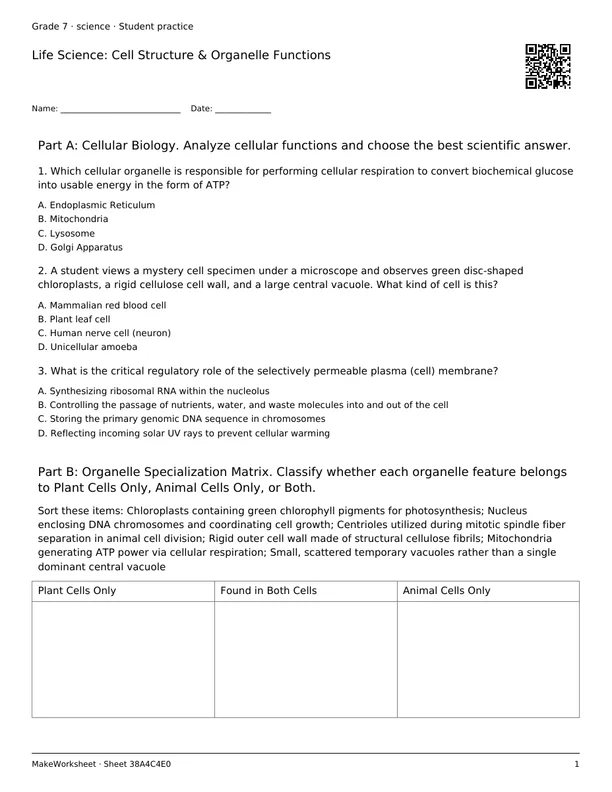
Life Science: Cell Structure & Organelle Functions: first student practice pagePractice preview
Grade 7
NGSS.MS-LS1-2 Key

Life Science: Cell Structure & Organelle Functions

Investigate eukaryotic cell anatomy. Compare plant and animal organelles including mitochondria, chloroplasts, nucleus, and ribosomes with diagrams.

Shuffle this practice