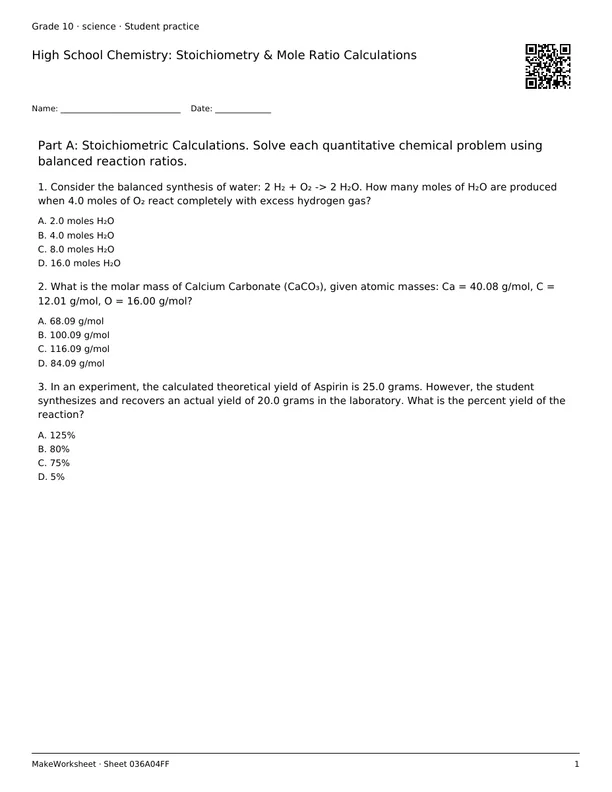
Downloads contain the original practice. Use the workbench above for new questions and custom printing.
Teaching guide, sample answers and curriculum references
Before you begin
Distinguish production, labor and trade and place industrialization in its historical setting.
How to use this worksheet
- Model the target skill: analyze why Great Britain became the birthplace of the Industrial Revolution in the late 18th century. Use the first task as a guided example before asking for an independent response.
- Check readiness first: Distinguish production, labor and trade and place industrialization in its historical setting.
- Discuss an incorrect response using this distinction: A change may benefit one group while imposing costs on another; avoid treating all industrial effects as identical.
A common mistake to discuss
A change may benefit one group while imposing costs on another; avoid treating all industrial effects as identical.
What to practice next
Compare a worker's and an owner's perspective using a specific historical change.
Sample question and answer
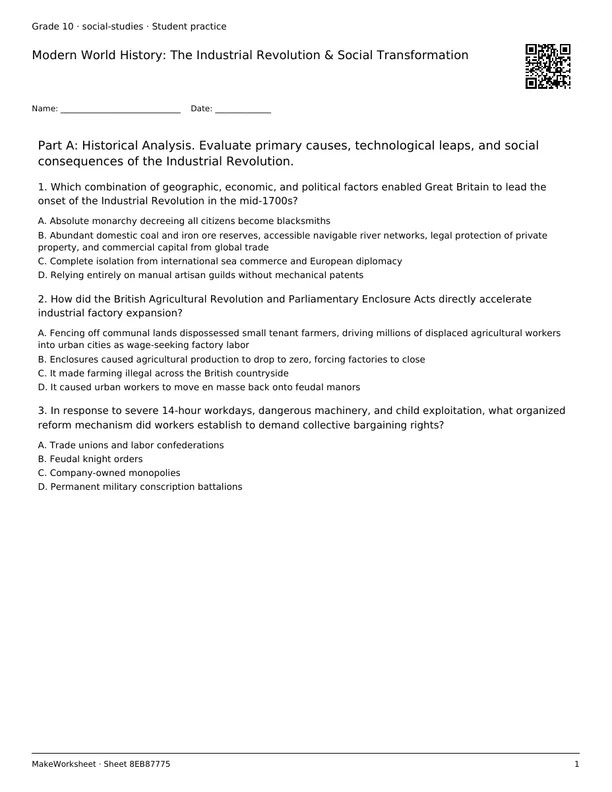
Which combination of geographic, economic, and political factors enabled Great Britain to lead the onset of the Industrial Revolution in the mid-1700s?
- A. Absolute monarchy decreeing all citizens become blacksmiths
- B. Abundant domestic coal and iron ore reserves, accessible navigable river networks, legal protection of private property, and commercial capital from global trade
- C. Complete isolation from international sea commerce and European diplomacy
- D. Relying entirely on manual artisan guilds without mechanical patents
Answer: B. Britain possessed rich deposits of coal and iron, extensive island waterways, patent laws protecting inventors, and deep investment capital accumulated through Atlantic commerce.
Intended curriculum references: C3.D2.His.1.9-12 · C3.D2.Eco.1.9-12. These references describe learning goals; they are not endorsements.
Published 2026-10-02; updated 2026-10-02. Original MakeWorksheet practice. Automated consistency checks support publication; independent subject-specialist review is not recorded. Read our editorial policy.