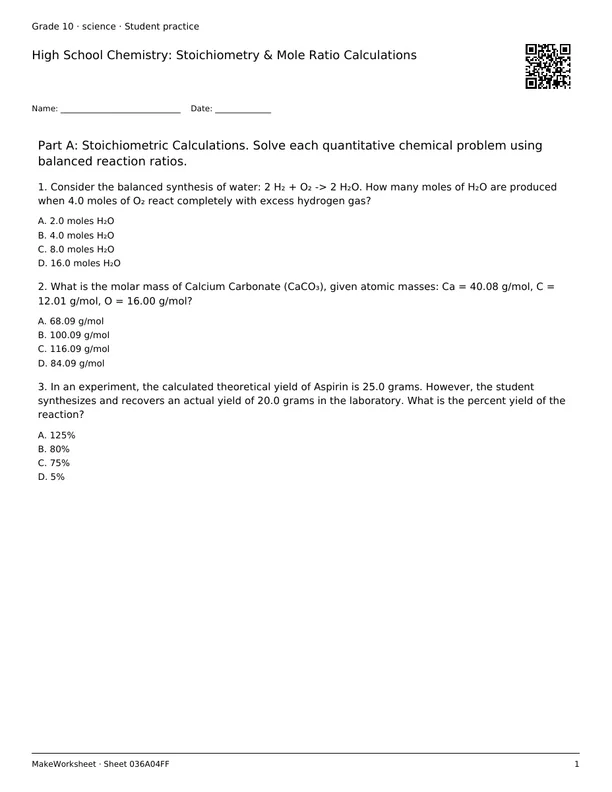
1.Consider the balanced synthesis of water: 2 H₂ + O₂ -> 2 H₂O. How many moles of H₂O are produced when 4.0 moles of O₂ react completely with excess hydrogen gas?
A2.0 moles H₂O
B4.0 moles H₂O
C8.0 moles H₂O
D16.0 moles H₂O
Calculate molar masses, convert between grams and moles, balance chemical equations, and determine limiting reactants with step-by-step solutions.
The same content with a different order. No new questions are added. Choose “Save as PDF” in your browser’s print window to keep a copy.
0 practice pages · 0 answer pages. Pages are added automatically when needed. Question content and answer keys stay together.
Grade 10 · science · Matching answer key included · US Letter and A4
Downloads contain the original practice. Use the workbench above for new questions and custom printing.
Balance a chemical equation and convert mass to moles using molar mass.
Equation coefficients compare moles, not masses; a gram-to-gram conversion needs molar masses.
Write units beside every conversion and check which reactant limits the process.
Consider the balanced synthesis of water: 2 H₂ + O₂ -> 2 H₂O. How many moles of H₂O are produced when 4.0 moles of O₂ react completely with excess hydrogen gas?
Answer: C. From the balanced coefficients, the mole ratio of H₂O produced to O₂ consumed is 2 mol H₂O / 1 mol O₂. Therefore: 4.0 mol O₂ × (2 mol H₂O / 1 mol O₂) = 8.0 moles H₂O.
Intended curriculum references: NGSS.HS-PS1-7. These references describe learning goals; they are not endorsements.
Published 2026-10-02; updated 2026-10-02. Original MakeWorksheet practice. Automated consistency checks support publication; independent subject-specialist review is not recorded. Read our editorial policy.
 Practice preview
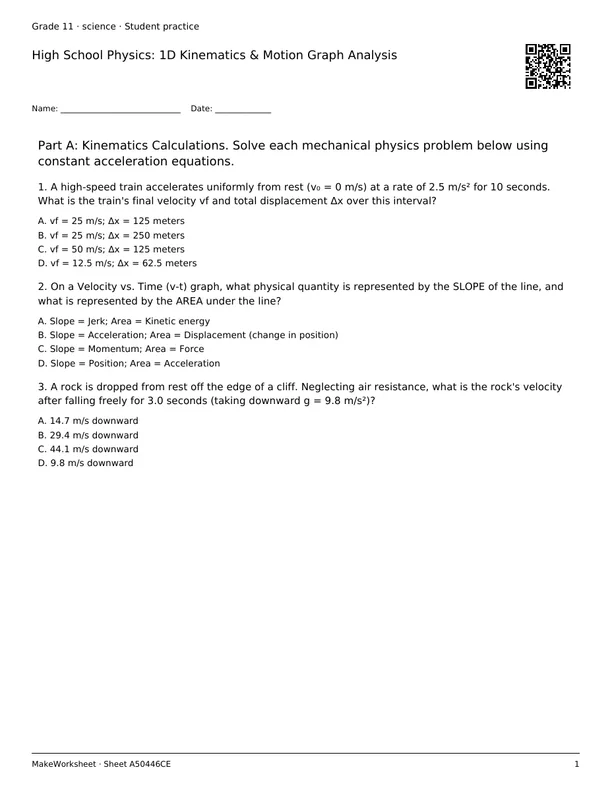
Analyze position-time and velocity-time graphs. Solve 1D constant acceleration problems using kinematic equations with step-by-step calculus-aligned reasoning.
 Practice preview
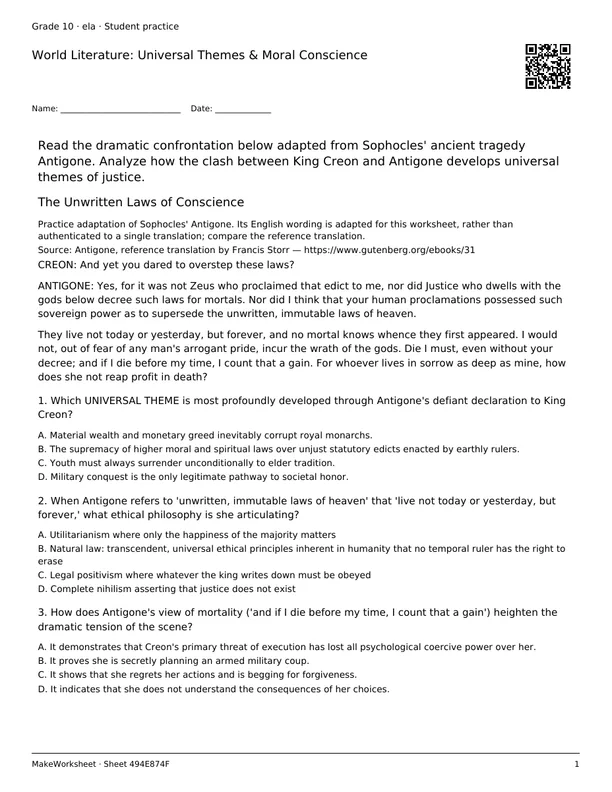
Analyze universal literary themes, character motivation, and the classic conflict between personal moral duty and state authority in world drama.
 Practice preview
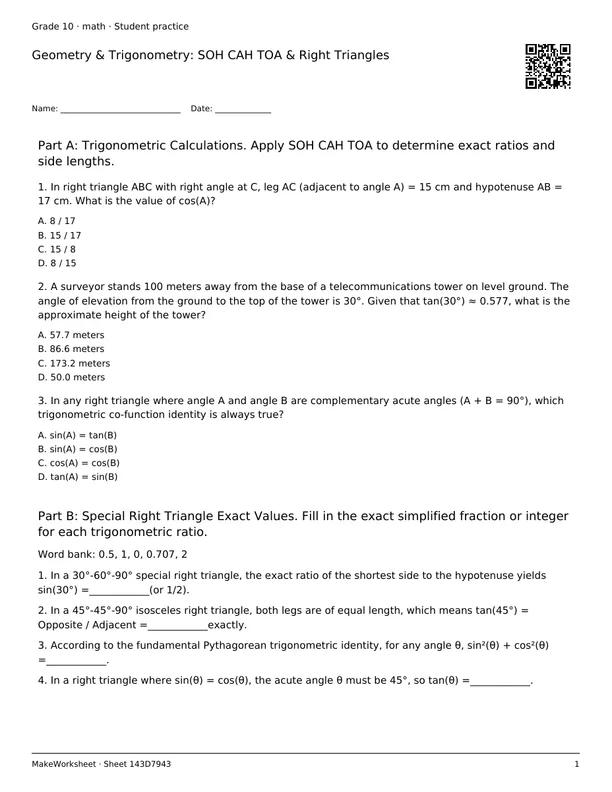
Calculate sine, cosine, and tangent ratios, solve for unknown sides and acute angles, and apply angles of elevation in authentic right triangle problems.
 Practice preview
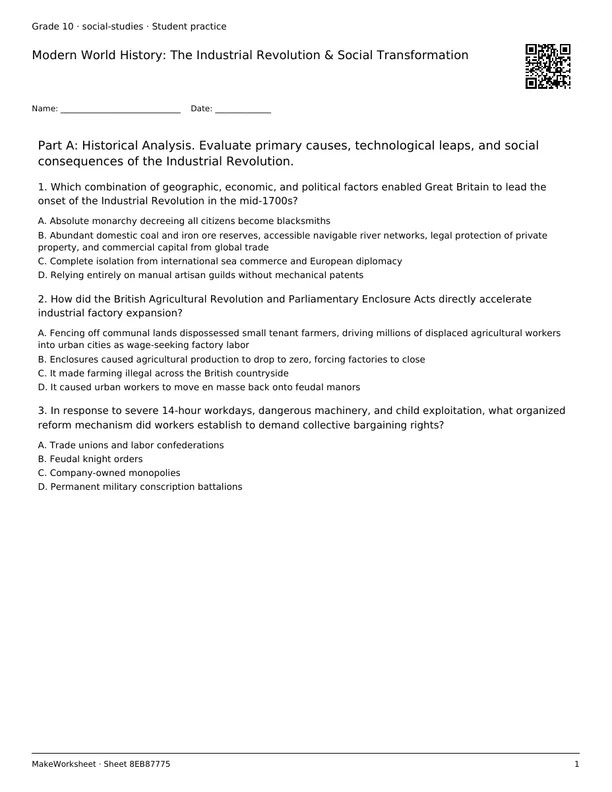
Analyze steam mechanization, agrarian enclosure acts, rapid urbanization, factory working conditions, and the emergence of modern economic ideologies.