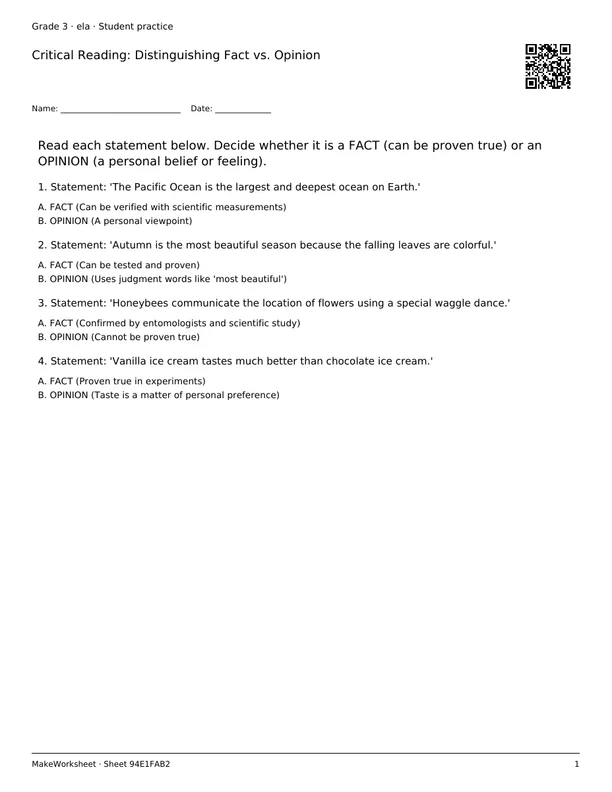
1.Statement: 'The Pacific Ocean is the largest and deepest ocean on Earth.'
AFACT (Can be verified with scientific measurements)
BOPINION (A personal viewpoint)
Learn to tell verifiable factual statements apart from feelings and personal opinions in informational texts with answer key.
The same content with a different order. No new questions are added. Choose “Save as PDF” in your browser’s print window to keep a copy.
0 practice pages · 0 answer pages. Pages are added automatically when needed. Question content and answer keys stay together.
Grade 3 · ela · Matching answer key included · US Letter and A4
Downloads contain the original practice. Use the workbench above for new questions and custom printing.
Distinguish a statement that can be checked from a personal preference.
An opinion can sound confident or use factual details; certainty alone does not make it a fact.
Write one checkable statement and one opinion about the same subject.
Statement: 'The Pacific Ocean is the largest and deepest ocean on Earth.'
Answer: A. This can be scientifically measured and verified on maps and reference books, making it a FACT.
Intended curriculum references: CCSS.ELA-LITERACY.RI.3.6 · CCSS.ELA-LITERACY.RI.3.8. These references describe learning goals; they are not endorsements.
Published 2026-10-02; updated 2026-10-02. Original MakeWorksheet practice. Automated consistency checks support publication; independent subject-specialist review is not recorded. Read our editorial policy.
 Practice preview
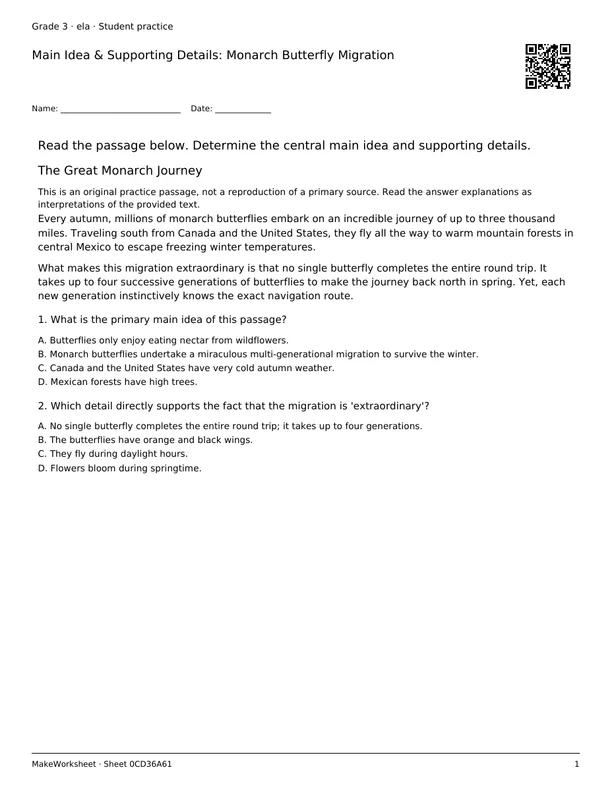
Master identifying central main ideas versus supporting evidence in informational text about the miraculous multi-generational monarch migration.
 Practice preview
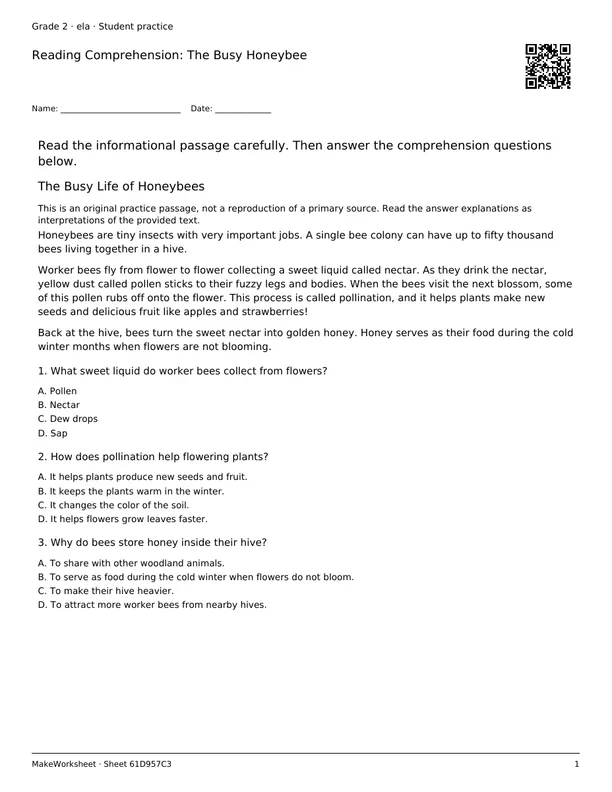
Engaging second-grade informational text passage about honeybees and pollination, followed by 3 Common Core comprehension questions.
 Practice preview
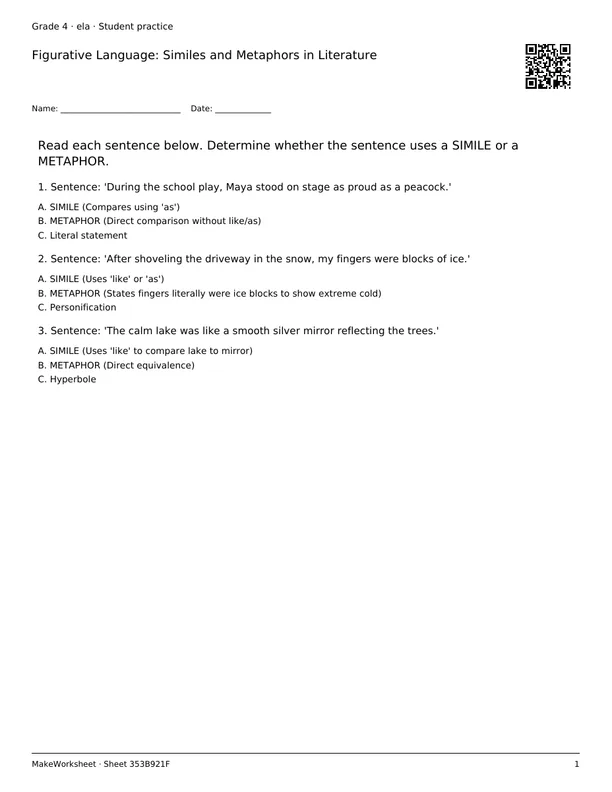
Distinguish between comparisons using 'like' or 'as' (similes) versus direct comparisons (metaphors). Includes literary examples and full answer key.
 Practice preview
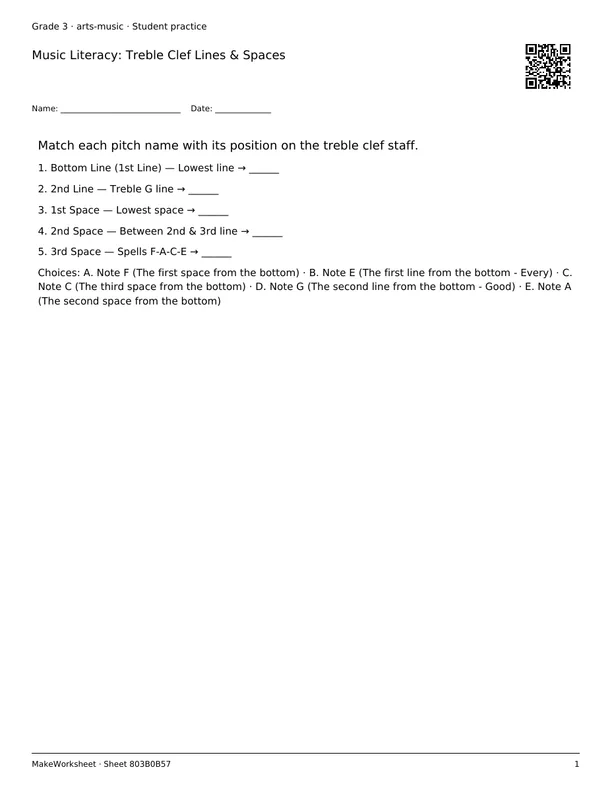
Master reading pitches on the musical staff. Learn lines (Every Good Boy Does Fine - E G B D F) and spaces (F A C E).