Skip to content
Grade 2situation judgmentOriginal practice

Emotional Regulation: Matching Reaction to Problem Size

Learn to categorize situations as Small Glitches, Medium Problems, or Big Emergencies and match appropriate emotional reactions.

The same content with a different order. No new questions are added. Choose “Save as PDF” in your browser’s print window to keep a copy.

Page layout

0 practice pages · 0 answer pages. Pages are added automatically when needed. Question content and answer keys stay together.

Sheet E7FCE2A6 · questions and answers share this ID

About this practice

Grade 2 · sel · Matching answer key included · US Letter and A4

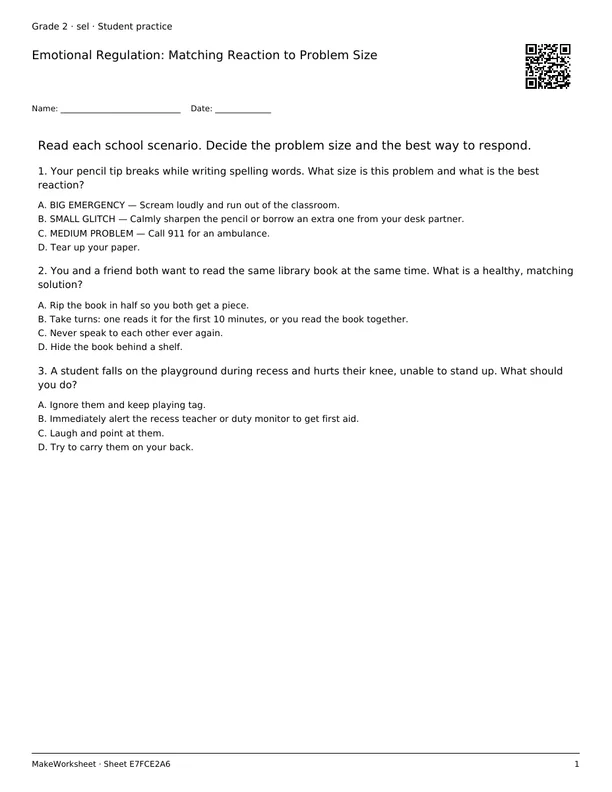
Preview the original practiceEmotional Regulation: Matching Reaction to Problem Size: first student practice page

Downloads contain the original practice. Use the workbench above for new questions and custom printing.

Teaching guide, sample answers and curriculum references

Before you begin

Describe what happened and distinguish inconvenience from immediate danger.

How to use this worksheet

  1. Model the target skill: differentiate small problems you can solve on your own from big emergencies needing adult help. Use the first task as a guided example before asking for an independent response.
  2. Check readiness first: Describe what happened and distinguish inconvenience from immediate danger.
  3. Discuss an incorrect response using this distinction: A feeling can be intense even when a problem is manageable; size labels should not dismiss the feeling.

A common mistake to discuss

A feeling can be intense even when a problem is manageable; size labels should not dismiss the feeling.

What to practice next

Identify a safe response and when adult help is needed in a new scenario.

Sample question and answer

Your pencil tip breaks while writing spelling words. What size is this problem and what is the best reaction?

  • A. BIG EMERGENCY — Scream loudly and run out of the classroom.
  • B. SMALL GLITCH — Calmly sharpen the pencil or borrow an extra one from your desk partner.
  • C. MEDIUM PROBLEM — Call 911 for an ambulance.
  • D. Tear up your paper.

Answer: B. A broken pencil is a small glitch that can be easily fixed without distress in just a few seconds.

Intended curriculum references: CASEL.Self-Management · CASEL.Responsible-Decision-Making. These references describe learning goals; they are not endorsements.

Published 2026-10-02; updated 2026-10-02. Original MakeWorksheet practice. Automated consistency checks support publication; independent subject-specialist review is not recorded. Read our editorial policy.
Continue practicing

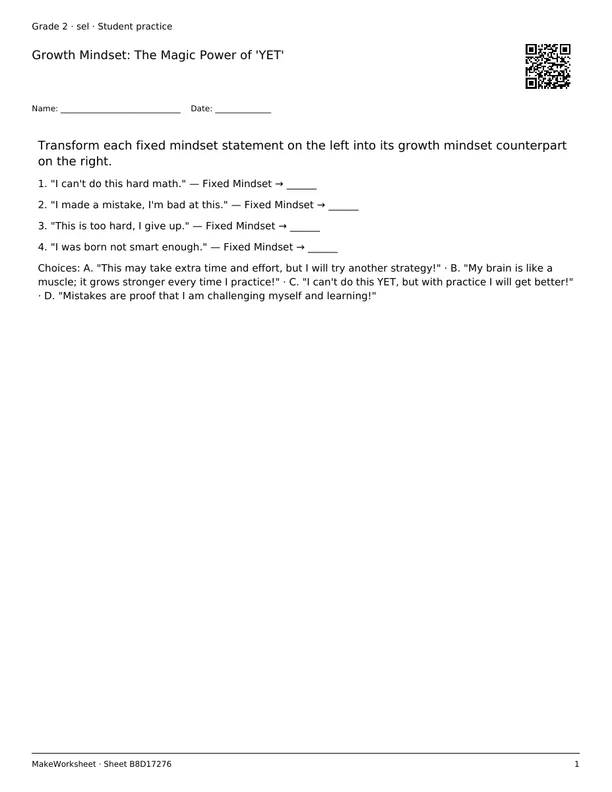
Growth Mindset: The Magic Power of 'YET': first student practice pagePractice preview
Grade 2
SEL-CASEL.Self-Awareness.2 Key

Growth Mindset: The Magic Power of 'YET'

Transform negative self-talk into resilient growth mindset statements. Turn 'I can't do this' into 'I can't do this YET!'

Shuffle this practice
Music: Four Instrument Families of the Symphony Orchestra: first student practice pagePractice preview
Grade 2
NAfME.MU:Re7.2.2 Key

Music: Four Instrument Families of the Symphony Orchestra

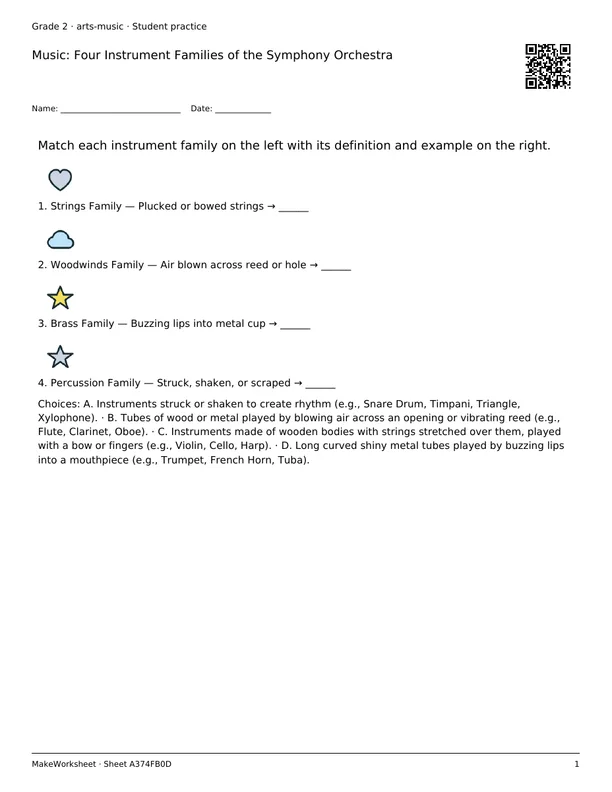
Sort musical instruments into Strings, Woodwinds, Brass, and Percussion based on how they produce sound. Includes full answer key.

Shuffle this practice
Reading Comprehension: The Busy Honeybee: first student practice pagePractice preview
Grade 2
RI.2.1 Key

Reading Comprehension: The Busy Honeybee

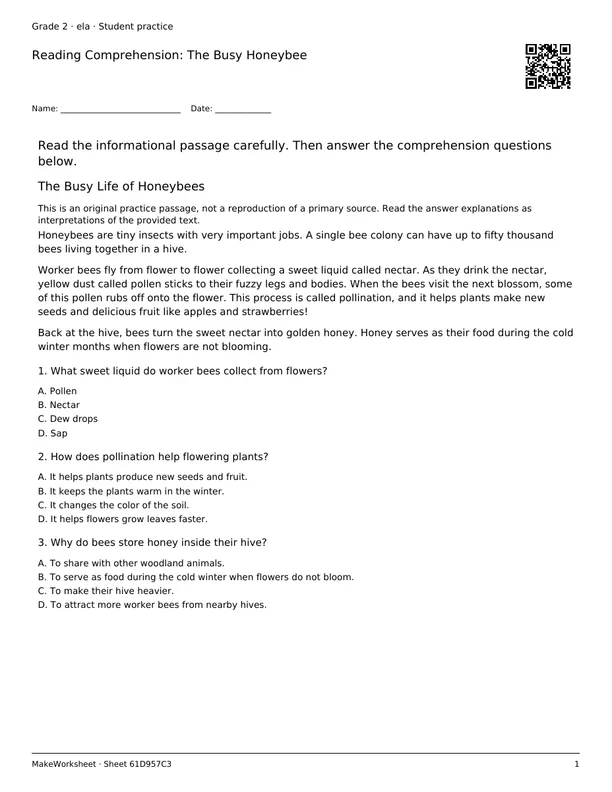
Engaging second-grade informational text passage about honeybees and pollination, followed by 3 Common Core comprehension questions.

Shuffle this practice
Prepositions of Place: In, On, Under, Behind & Next To: first student practice pagePractice preview
Grade 2
L.2.1 Key

Prepositions of Place: In, On, Under, Behind & Next To

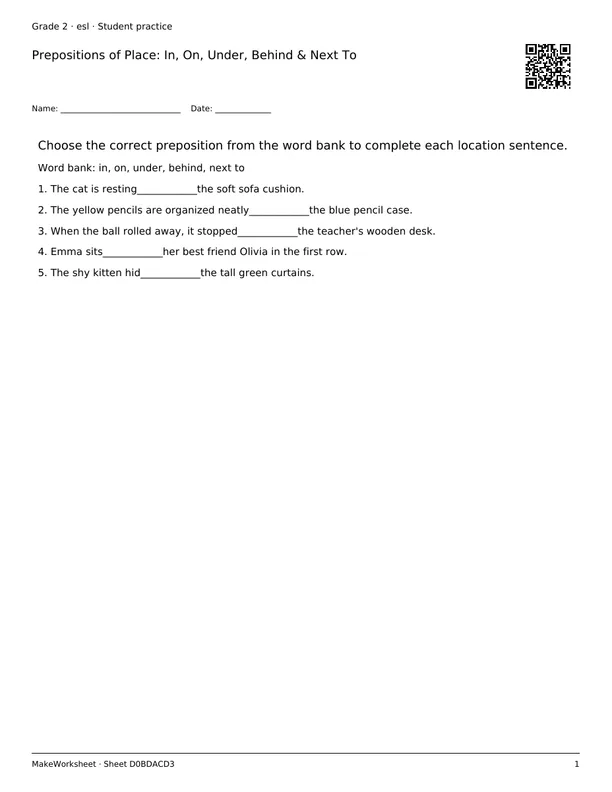
Spatial English grammar for ESL learners. Practice locating objects using in, on, under, behind, and next to with picture-oriented cues.

Shuffle this practice