Music: Four Instrument Families of the Symphony Orchestra
Sort musical instruments into Strings, Woodwinds, Brass, and Percussion based on how they produce sound. Includes full answer key.
The same content with a different order. No new questions are added. Choose “Save as PDF” in your browser’s print window to keep a copy.
Page layout
0 practice pages · 0 answer pages. Pages are added automatically when needed. Question content and answer keys stay together.
About this practice
Grade 2 · arts music · Matching answer key included · US Letter and A4
Preview the original practice
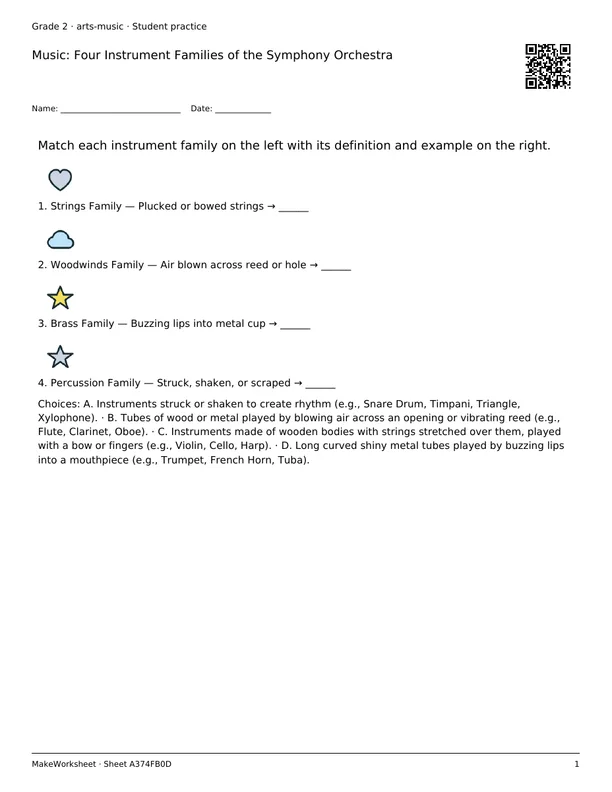
Downloads contain the original practice. Use the workbench above for new questions and custom printing.
Teaching guide, sample answers and curriculum references
Before you begin
Recognize that instruments produce sound by vibrating strings, air or a struck surface.
How to use this worksheet
- Model the target skill: identify the four major families of acoustic orchestral instruments: Strings, Woodwinds, Brass, and Percussion. Use the first task as a guided example before asking for an independent response.
- Check readiness first: Recognize that instruments produce sound by vibrating strings, air or a struck surface.
- Discuss an incorrect response using this distinction: A piano is often grouped with percussion because its strings are struck; classify using the convention stated in the activity.
A common mistake to discuss
A piano is often grouped with percussion because its strings are struck; classify using the convention stated in the activity.
What to practice next
Compare how a violin and a trumpet start their vibrations.
Intended curriculum references: NAfME.MU:Re7.2.2. These references describe learning goals; they are not endorsements.
Published 2026-10-02; updated 2026-10-02. Original MakeWorksheet practice. Automated consistency checks support publication; independent subject-specialist review is not recorded. Read our editorial policy.
Continue practicing
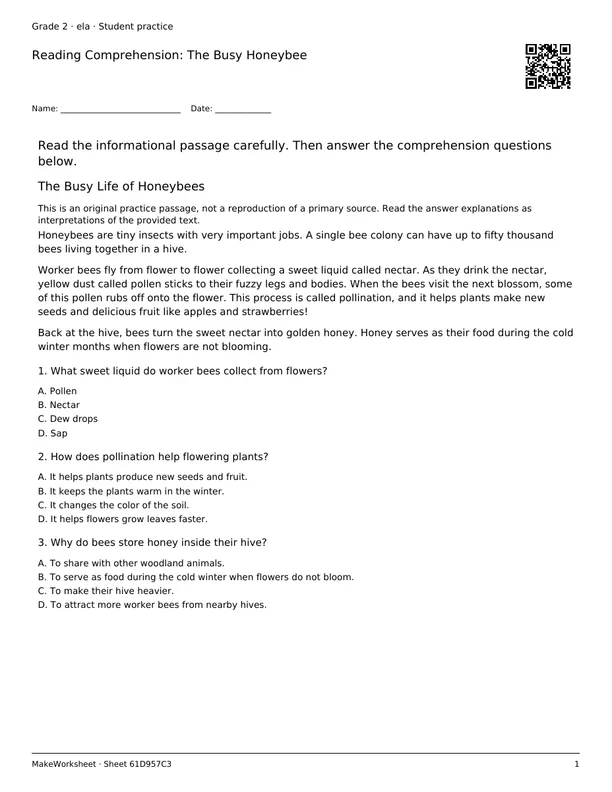 Practice preview
Reading Comprehension: The Busy Honeybee
Engaging second-grade informational text passage about honeybees and pollination, followed by 3 Common Core comprehension questions.
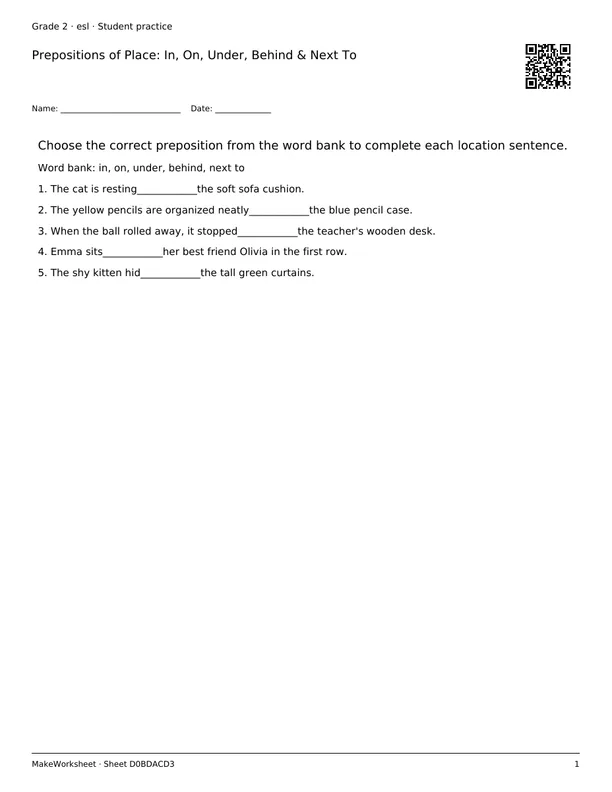 Practice preview
Prepositions of Place: In, On, Under, Behind & Next To
Spatial English grammar for ESL learners. Practice locating objects using in, on, under, behind, and next to with picture-oriented cues.
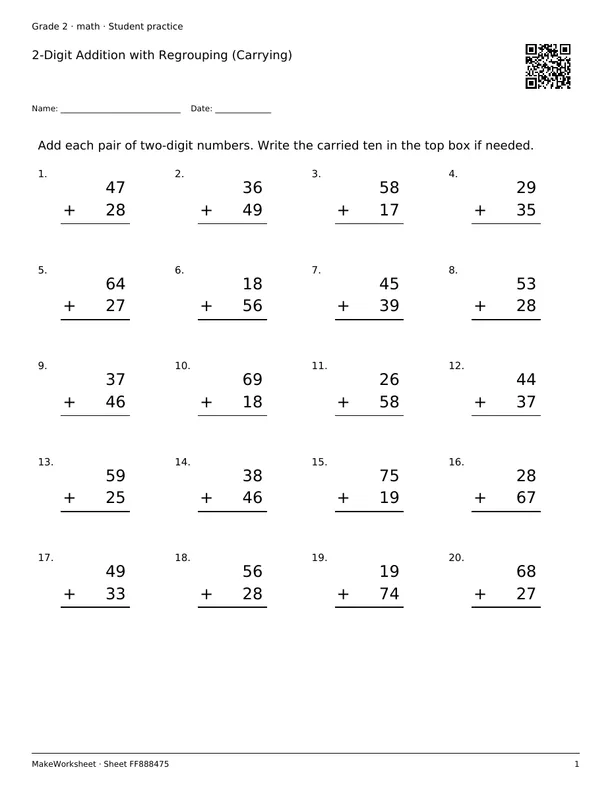 Practice preview
2-Digit Addition with Regrouping (Carrying)
Practice two-digit column addition with regrouping. Includes 20 original questions, space for calculation and a matching answer key.
 Practice preview
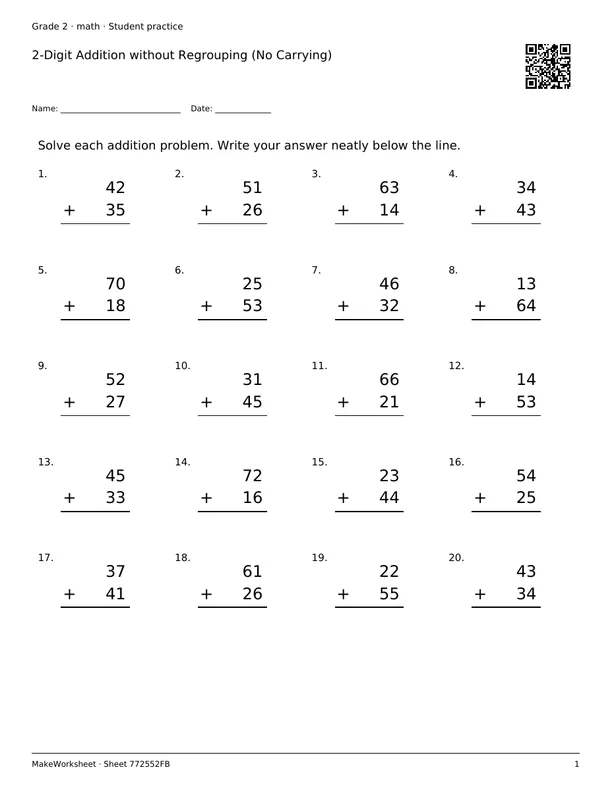
2-Digit Addition without Regrouping (No Carrying)
Introductory two-digit addition practice for 2nd grade. 20 clean column addition problems where sums do not require carrying.