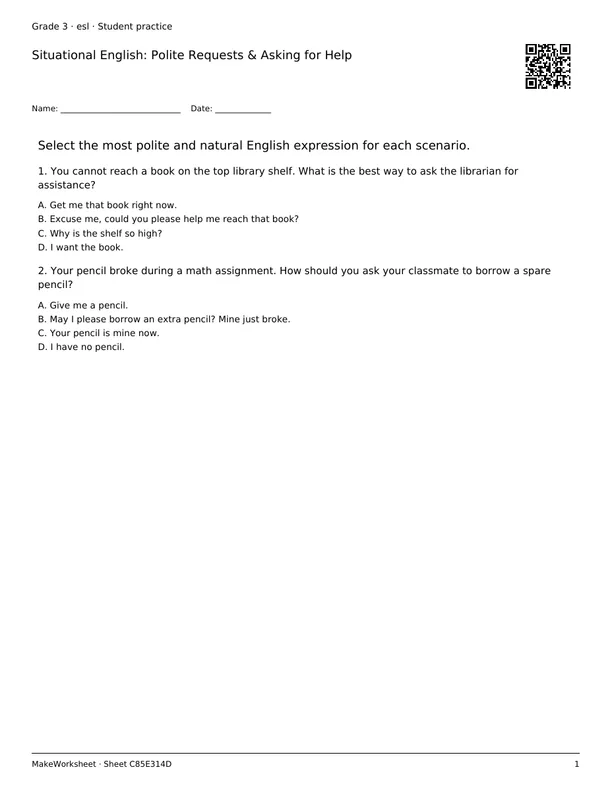
Downloads contain the original practice. Use the workbench above for new questions and custom printing.
Teaching guide, sample answers and curriculum references
Before you begin
Recognize another person's possible feeling in a simple situation.
How to use this worksheet
- Model the target skill: define empathy as putting oneself in another person's shoes to understand how they feel. Use the first task as a guided example before asking for an independent response.
- Check readiness first: Recognize another person's possible feeling in a simple situation.
- Discuss an incorrect response using this distinction: Guessing someone's feeling does not make it certain; a kind response can include asking what help they want.
A common mistake to discuss
Guessing someone's feeling does not make it certain; a kind response can include asking what help they want.
What to practice next
Explain a considerate response using the other person's perspective.
Sample question and answer
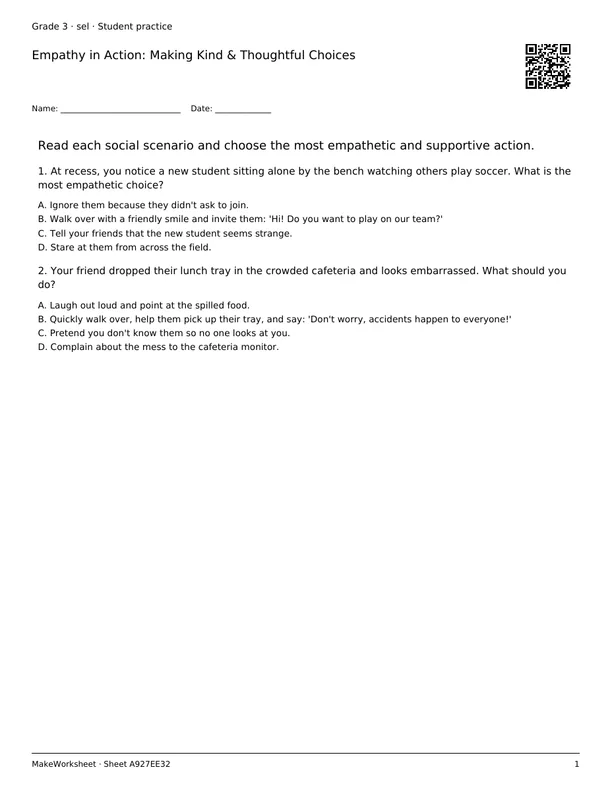
At recess, you notice a new student sitting alone by the bench watching others play soccer. What is the most empathetic choice?
- A. Ignore them because they didn't ask to join.
- B. Walk over with a friendly smile and invite them: 'Hi! Do you want to play on our team?'
- C. Tell your friends that the new student seems strange.
- D. Stare at them from across the field.
Answer: B. Inviting someone who feels left out shows active empathy and inclusive friendship.
Intended curriculum references: SEL-CASEL.Social-Awareness.1. These references describe learning goals; they are not endorsements.
Published 2026-10-02; updated 2026-10-02. Original MakeWorksheet practice. Automated consistency checks support publication; independent subject-specialist review is not recorded. Read our editorial policy.