Parts of a Plant & Their Functions
Explore the anatomy of flowering plants. Match roots, stem, leaves, and flowers with their essential survival functions.
The same content with a different order. No new questions are added. Choose “Save as PDF” in your browser’s print window to keep a copy.
Page layout
0 practice pages · 0 answer pages. Pages are added automatically when needed. Question content and answer keys stay together.
About this practice
Grade 1 · science · Matching answer key included · US Letter and A4
Preview the original practice
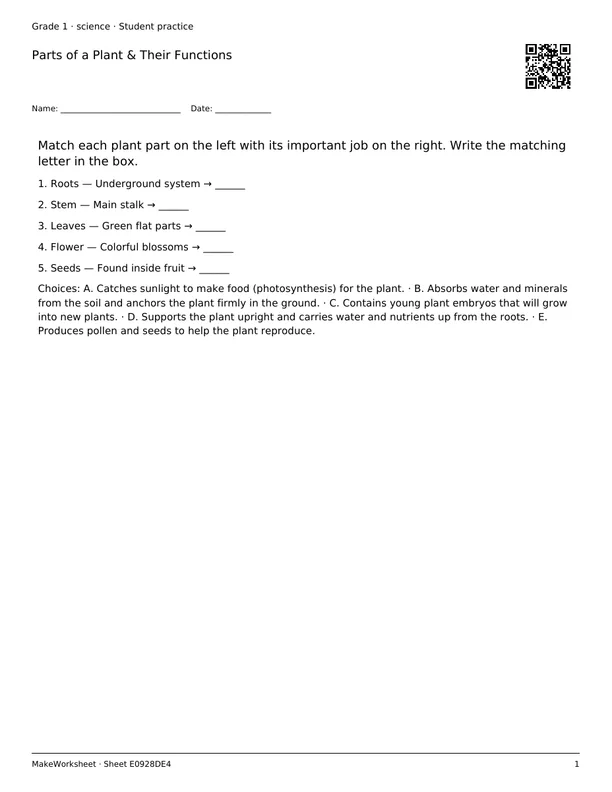
Downloads contain the original practice. Use the workbench above for new questions and custom printing.
Teaching guide, sample answers and curriculum references
Before you begin
Recognize the organism, body part or cell feature being discussed.
How to use this worksheet
- Model the target skill: identify the major external parts of a plant: roots, stem, leaves, flower, and seeds. Use the first task as a guided example before asking for an independent response.
- Check readiness first: Recognize the organism, body part or cell feature being discussed.
- Discuss an incorrect response using this distinction: A structure’s name and its function are separate ideas; practice connecting them.
A common mistake to discuss
A structure’s name and its function are separate ideas; practice connecting them.
What to practice next
Explain how two parts work together in the system.
Intended curriculum references: NGSS.1-LS1-1. These references describe learning goals; they are not endorsements.
Published 2026-10-02; updated 2026-10-02. Original MakeWorksheet practice. Automated consistency checks support publication; independent subject-specialist review is not recorded. Read our editorial policy.
Continue practicing
 Practice preview
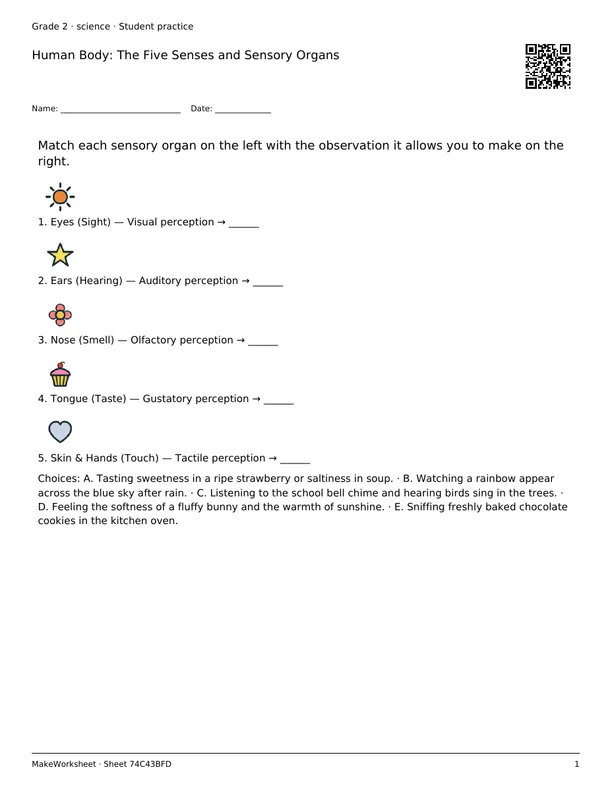
Human Body: The Five Senses and Sensory Organs
Connect sensory organs (eyes, ears, nose, tongue, skin) to their corresponding human senses and environmental observations.
 Practice preview
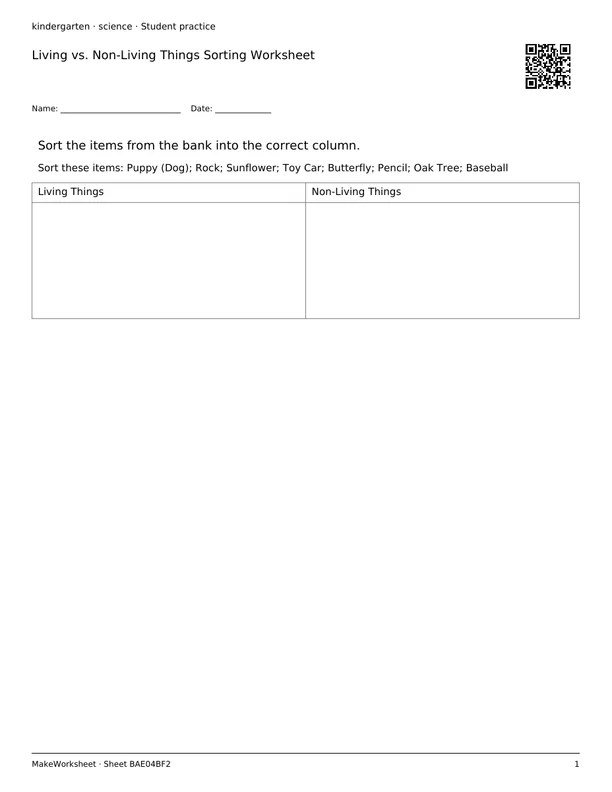
Living vs. Non-Living Things Sorting Worksheet
Foundational life science sorting activity. Students classify animals, plants, and objects into Living and Non-Living categories.
 Practice preview
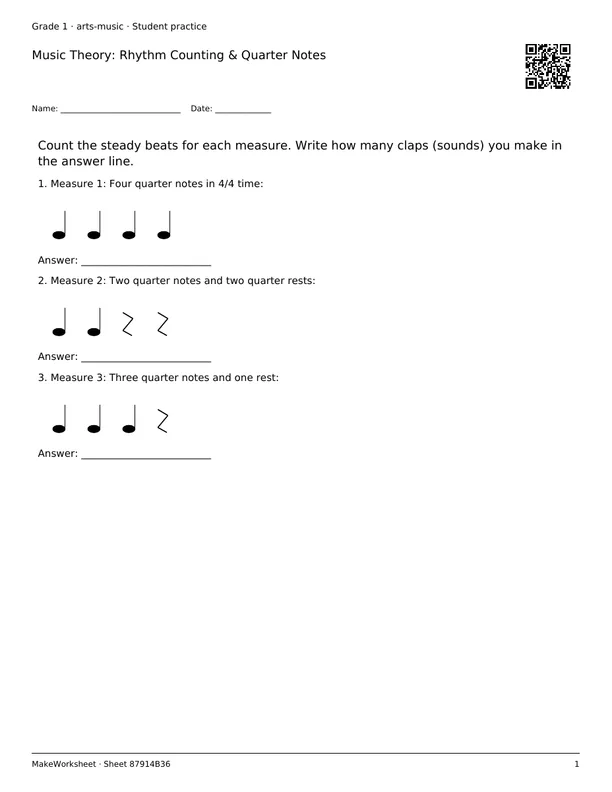
Music Theory: Rhythm Counting & Quarter Notes
Foundational music beat reading. Learn quarter notes (ta) and quarter rests (shh), clapping 4-beat measures.
 Practice preview
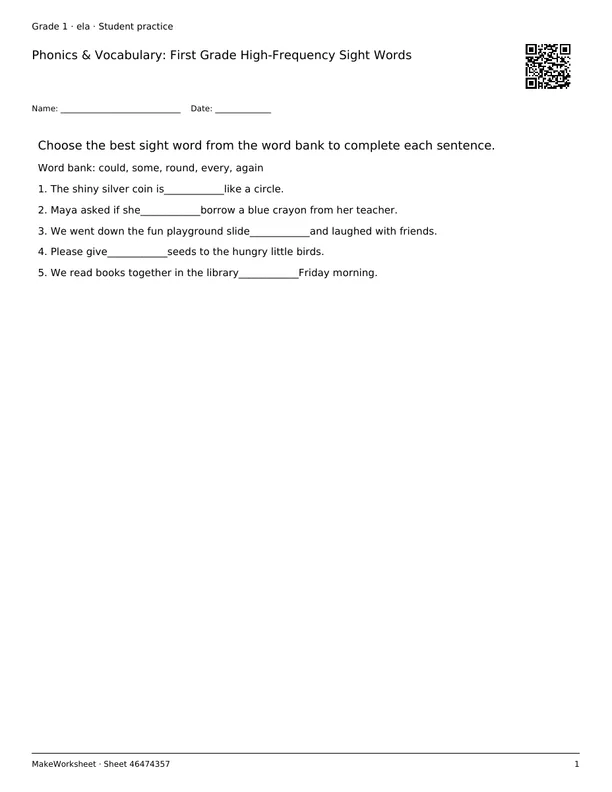
Phonics & Vocabulary: First Grade High-Frequency Sight Words
Master essential Dolch and Fry first-grade high-frequency sight words through context sentences and word bank selection.