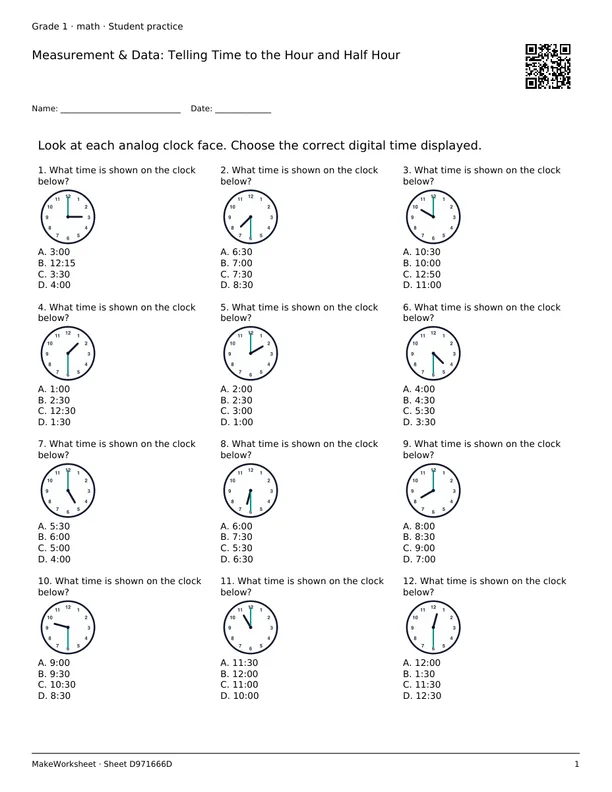
1.What time is shown on the clock below?
A3:00
B12:15
C3:30
D4:00
Read analog clock faces with hour and minute hands. Practice identifying o'clock and half past times with answer key.
New questions for the same learning goal. Choose “Save as PDF” in your browser’s print window to keep a copy.
0 practice pages · 0 answer pages. Pages are added automatically when needed. Question content and answer keys stay together.
Grade 1 · math · Matching answer key included · US Letter and A4
Downloads contain the original practice. Use the workbench above for new questions and custom printing.
Recognize numerals 1–12 and distinguish the shorter hour hand from the longer minute hand.
At :30, the hour hand is halfway between numerals; the minute hand points to 6. At :00, the minute hand points to 12.
Set a movable clock to one incorrect choice and compare the two hand positions.
What time is shown on the clock below?
Answer: A. The short hour hand points to 3 and the long minute hand points to 12. The time is 3:00 (Three o'clock).
The corresponding diagram is shown in the practice preview and PDF.
Intended curriculum references: CCSS.MATH.CONTENT.1.MD.B.3. These references describe learning goals; they are not endorsements.
Published 2026-10-02; updated 2026-10-02. Original MakeWorksheet practice. Automated consistency checks support publication; independent subject-specialist review is not recorded. Read our editorial policy.
 Practice preview
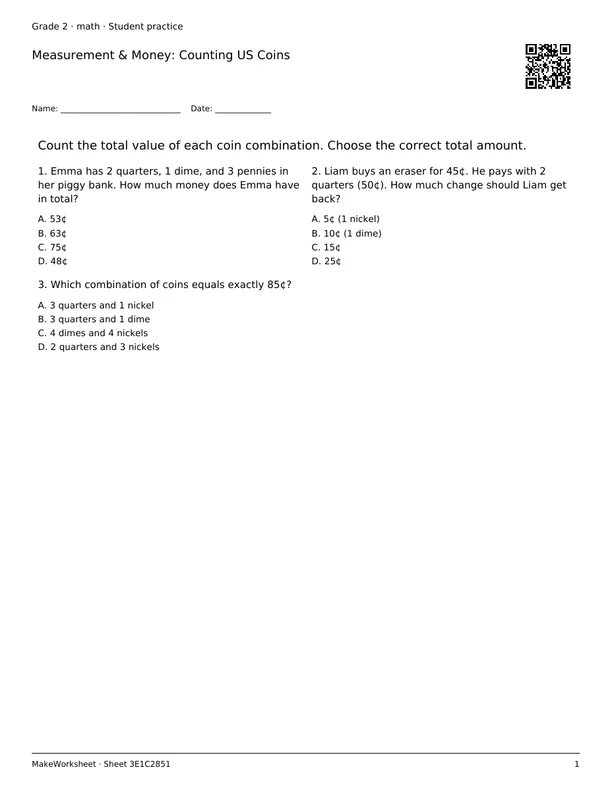
Identify coin values and count combinations of pennies, nickels, dimes, and quarters up to one dollar ($1.00). Includes answer key.
 Practice preview
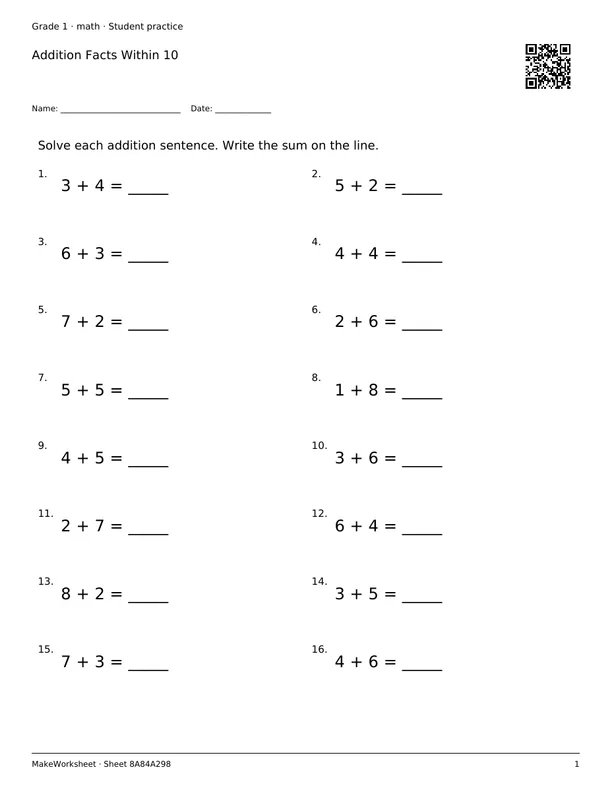
Essential addition fact fluency within 10. Clean horizontal equations with generous spacing for early elementary learners.
 Practice preview
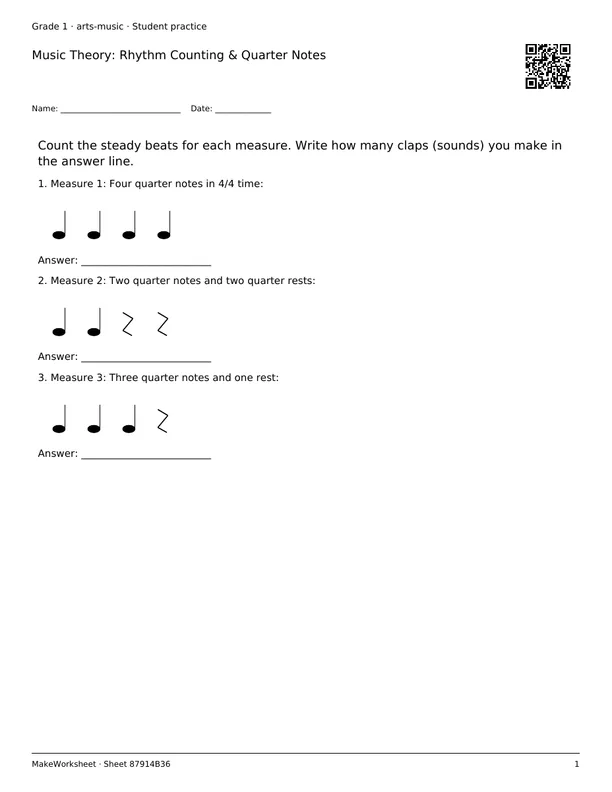
Foundational music beat reading. Learn quarter notes (ta) and quarter rests (shh), clapping 4-beat measures.
 Practice preview
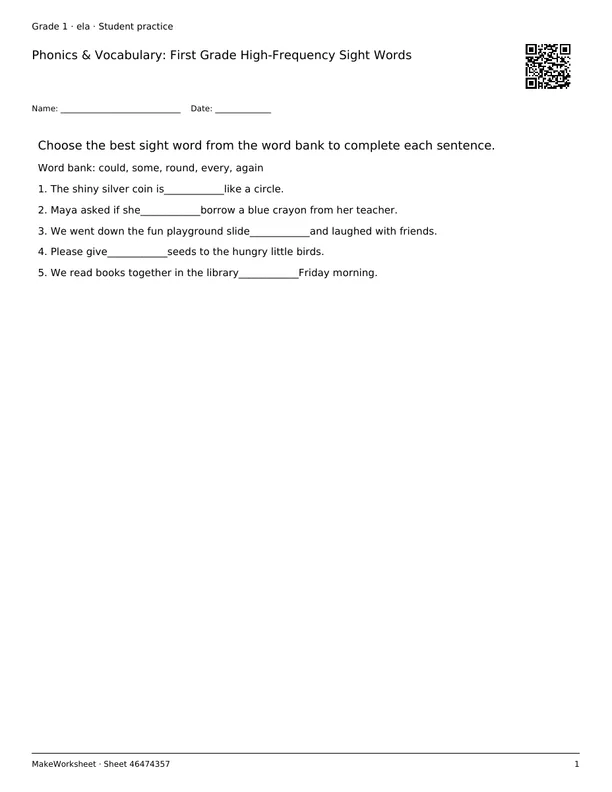
Master essential Dolch and Fry first-grade high-frequency sight words through context sentences and word bank selection.