Telling Time and Money Worksheets
Read hour and half-hour clock faces, then use coin values in practical counting problems. These are separate skills: knowing a clock numeral does not demonstrate knowledge of coin values.
Where to start
For time, start with the short hour hand and then distinguish :00 from :30 using the minute hand. For money, establish the value of each coin before adding combinations.
A common mistake
At half past, the hour hand is between numerals. A larger physical coin is not always worth more money.
What to try next
Use a movable clock or real coins to discuss one incorrect answer before returning to paper practice.
Practice in learning order
Select the resource that matches the learner’s current skill. Grade labels are guides; the activity and prerequisite skills matter more than completing every sheet.
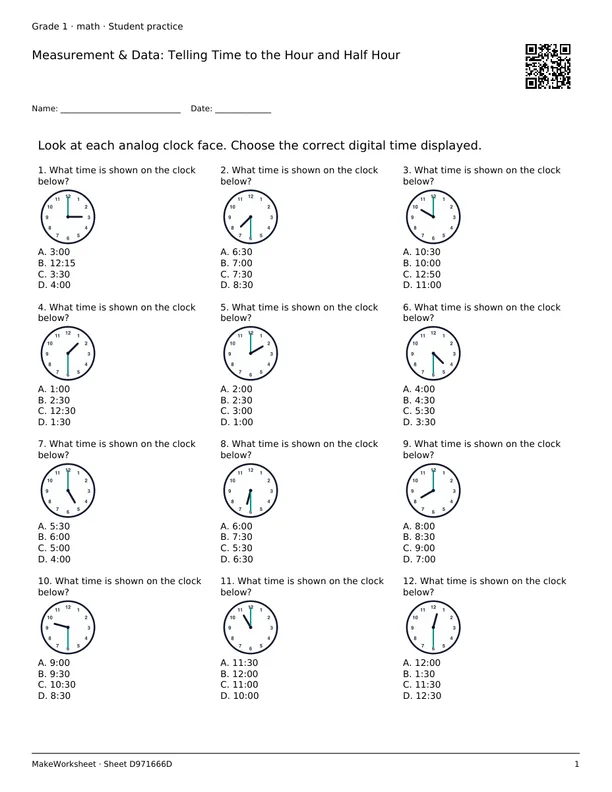 Practice preview
Measurement & Data: Telling Time to the Hour and Half Hour
Read analog clock faces with hour and minute hands. Practice identifying o'clock and half past times with answer key.
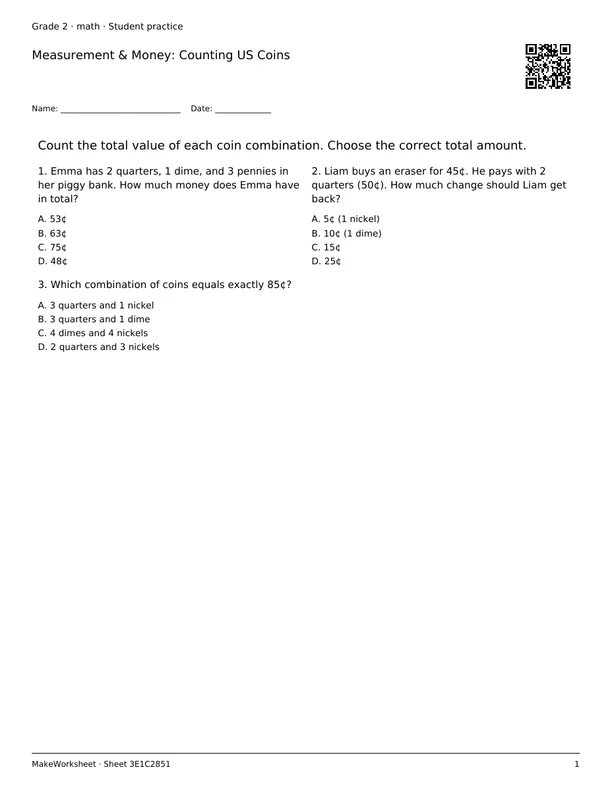 Practice preview
Measurement & Money: Counting US Coins
Identify coin values and count combinations of pennies, nickels, dimes, and quarters up to one dollar ($1.00). Includes answer key.