Early Literacy and Handwriting Worksheets
Separate letter formation, sound-to-letter decoding and word meaning. A child may recognize a letter without forming it comfortably or blending a word.
Where to start
Use tracing for controlled letter formation, CVC phonics for blending and sight-word sentences for contextual reading. Model one example before independent practice.
A common mistake
Copying a word is not evidence that the learner can decode it. Have the learner say or read the word after writing it.
What to try next
Move from tracing to writing from a model, then to recalling one letter independently. Read a short sentence using the practiced words.
Practice in learning order
Select the resource that matches the learner’s current skill. Grade labels are guides; the activity and prerequisite skills matter more than completing every sheet.
 Practice preview
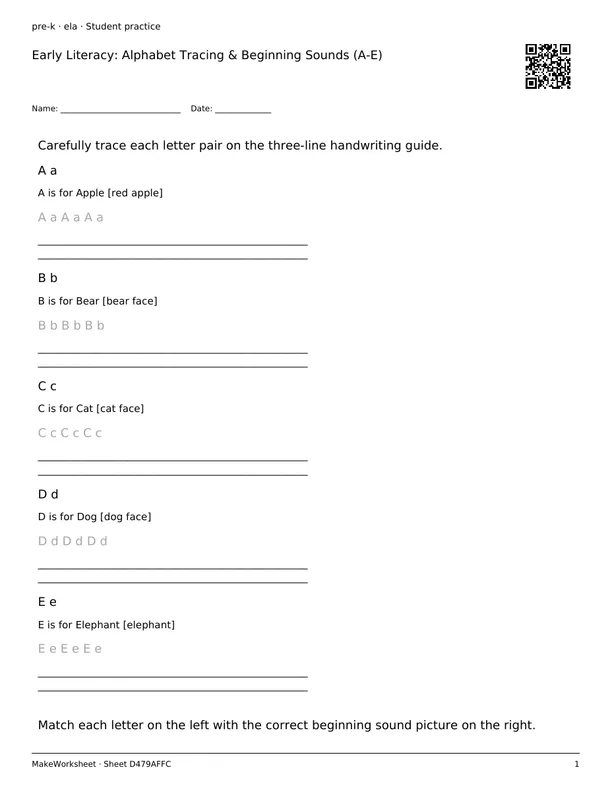
Early Literacy: Alphabet Tracing & Beginning Sounds (A-E)
Trace uppercase and lowercase letters A, B, C, D, E with dotted guidelines and connect to beginning sound pictures.
 Practice preview
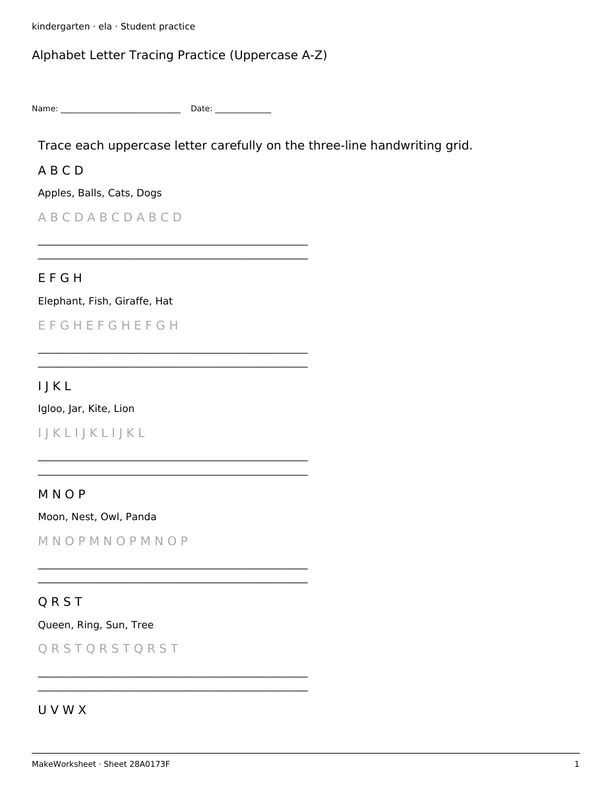
Alphabet Letter Tracing Practice (Uppercase A-Z)
Clean three-line handwriting practice for uppercase alphabet letters A through Z. Dotted guidelines help young learners master letter strokes.
 Practice preview
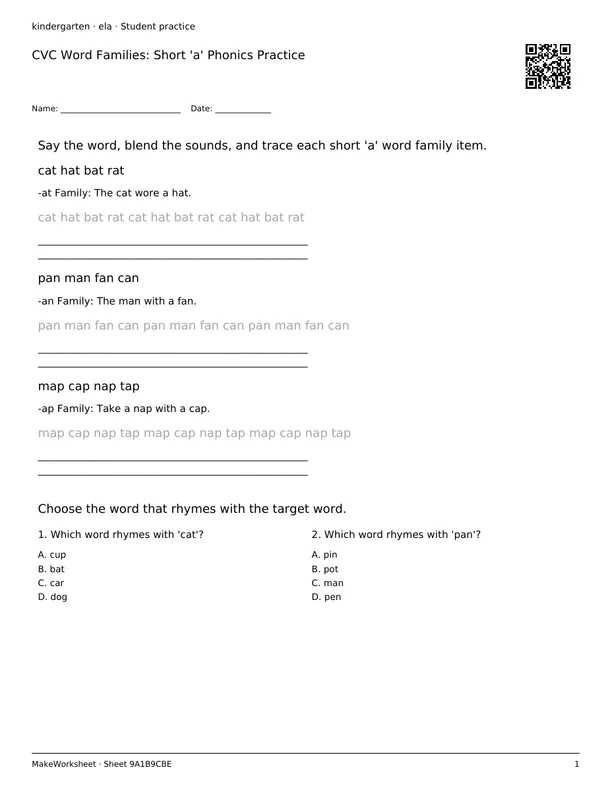
CVC Word Families: Short 'a' Phonics Practice
Engaging short 'a' CVC word family practice (-at, -an, -ap). Trace words, identify missing sounds, and read three-letter decodable words.
 Practice preview
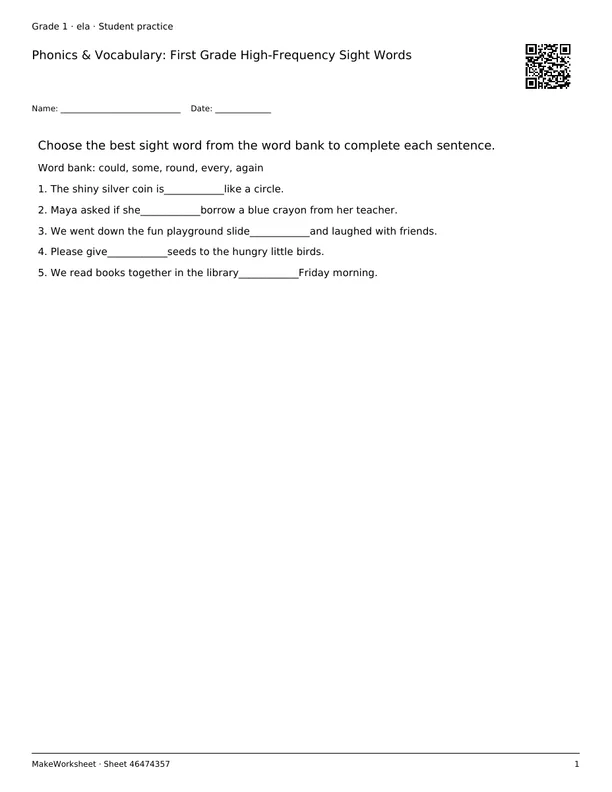
Phonics & Vocabulary: First Grade High-Frequency Sight Words
Master essential Dolch and Fry first-grade high-frequency sight words through context sentences and word bank selection.