Identifying My Feelings: Emotion Faces & Words
Foundational emotional literacy. Practice naming feelings including happy, sad, angry, surprised, and calm with expressive illustrations.
This is a fixed activity. Customize the layout, then print. Choose “Save as PDF” in your browser’s print window to keep a copy.
Page layout
0 practice pages · 0 answer pages. Pages are added automatically when needed. Question content and answer keys stay together.
About this practice
Pre-K · sel · Matching answer key included · US Letter and A4
Preview the original practice
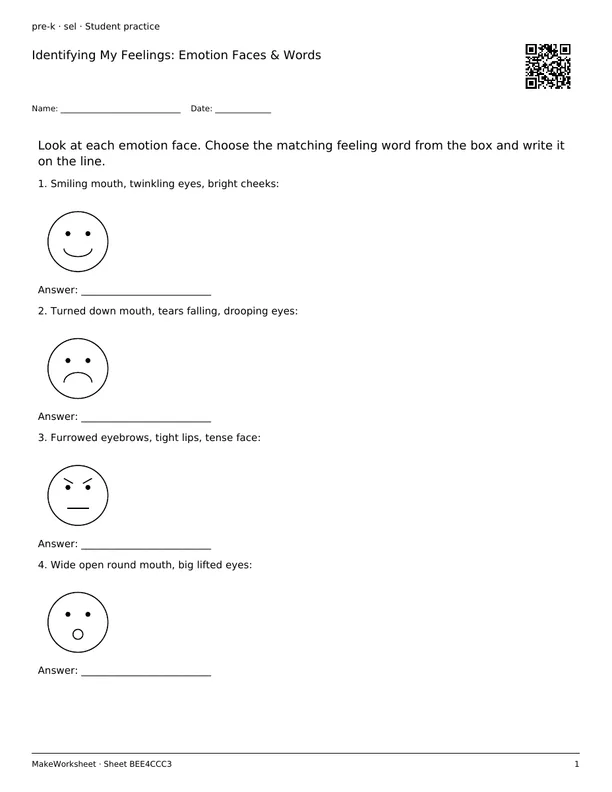
Downloads contain the original practice. Use the workbench above for new questions and custom printing.
Teaching guide, sample answers and curriculum references
Before you begin
Recognize basic facial cues and name familiar feelings.
How to use this worksheet
- Model the target skill: identify core emotional states: Happy, Sad, Angry, Surprised, and Calm. Use the first task as a guided example before asking for an independent response.
- Check readiness first: Recognize basic facial cues and name familiar feelings.
- Discuss an incorrect response using this distinction: A face is a clue rather than proof of a feeling; people can express the same emotion differently.
A common mistake to discuss
A face is a clue rather than proof of a feeling; people can express the same emotion differently.
What to practice next
Ask how someone feels and compare their words with the facial clue.
Intended curriculum references: SEL-CASEL.Self-Awareness.1. These references describe learning goals; they are not endorsements.
Published 2026-10-02; updated 2026-10-02. Original MakeWorksheet practice. Automated consistency checks support publication; independent subject-specialist review is not recorded. Read our editorial policy.
Continue practicing
 Practice preview
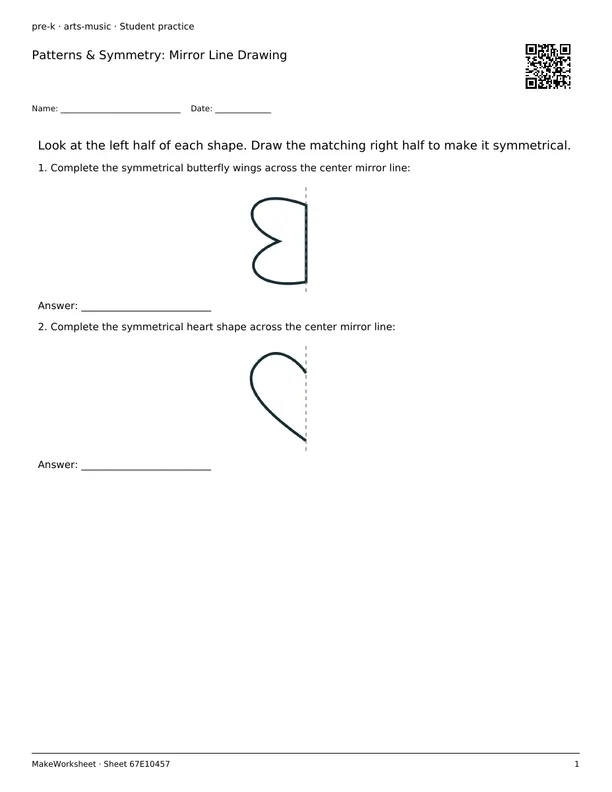
Patterns & Symmetry: Mirror Line Drawing
Develop visual-spatial awareness and fine motor pencil control. Complete the other half of symmetrical butterflies, hearts, and stars.
 Practice preview
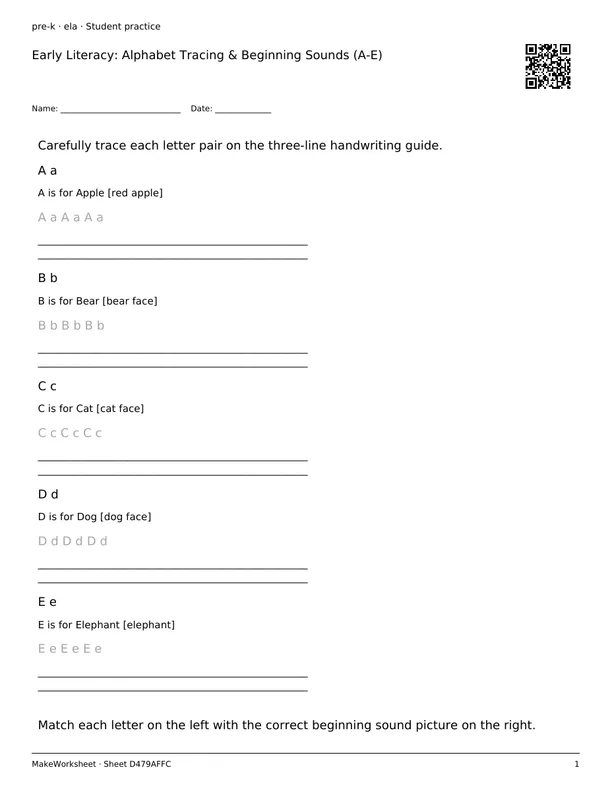
Early Literacy: Alphabet Tracing & Beginning Sounds (A-E)
Trace uppercase and lowercase letters A, B, C, D, E with dotted guidelines and connect to beginning sound pictures.
 Practice preview
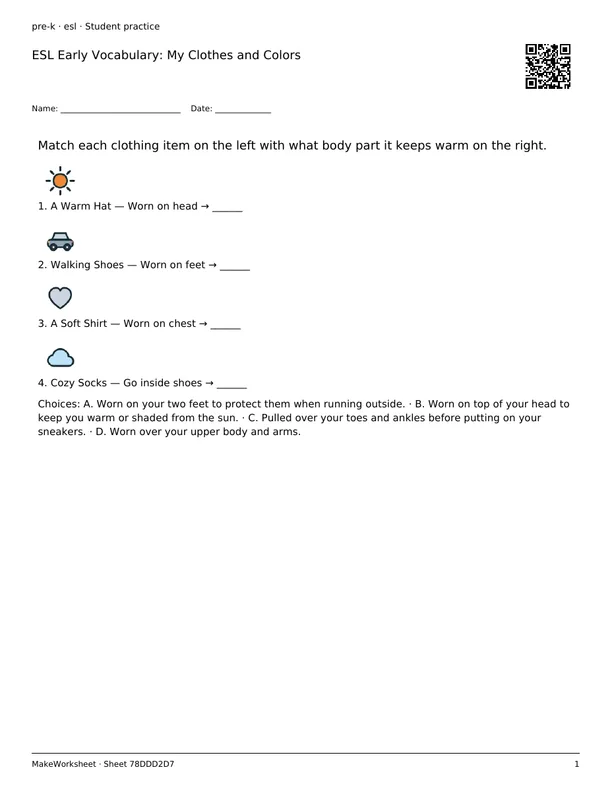
ESL Early Vocabulary: My Clothes and Colors
Fun beginner English vocabulary activity for preschool English learners. Match everyday clothes (shirt, shoes, hat, socks) and their colors with SVG illustrations.
 Practice preview
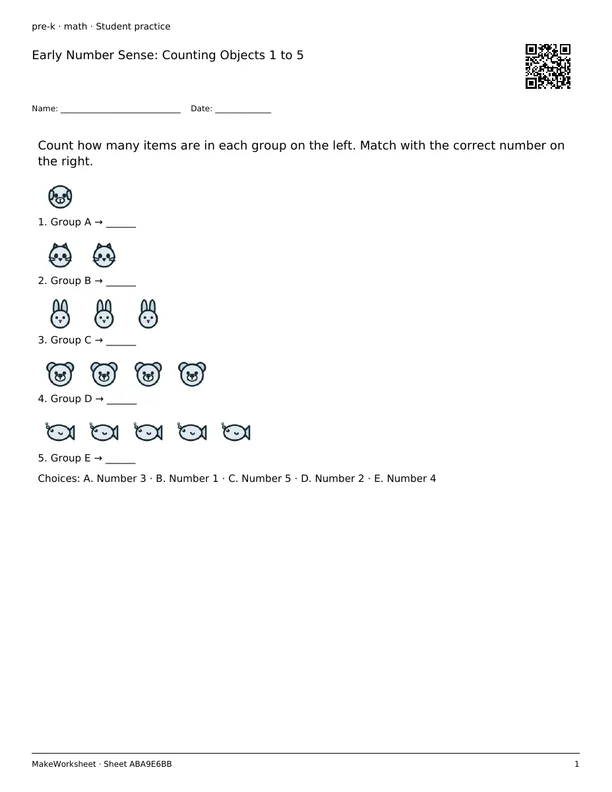
Early Number Sense: Counting Objects 1 to 5
Foundational counting practice for preschool and Pre-K learners. Count groups of 1 to 5 cute objects and match with correct numbers.