My Calm-Down Toolbox: Self-Regulation Strategies
Learn healthy emotional coping skills. Explore deep breathing, counting to 10, taking a break, and positive self-talk.
The same content with a different order. No new questions are added. Choose “Save as PDF” in your browser’s print window to keep a copy.
Page layout
0 practice pages · 0 answer pages. Pages are added automatically when needed. Question content and answer keys stay together.
About this practice
Grade 1 · sel · Matching answer key included · US Letter and A4
Preview the original practice
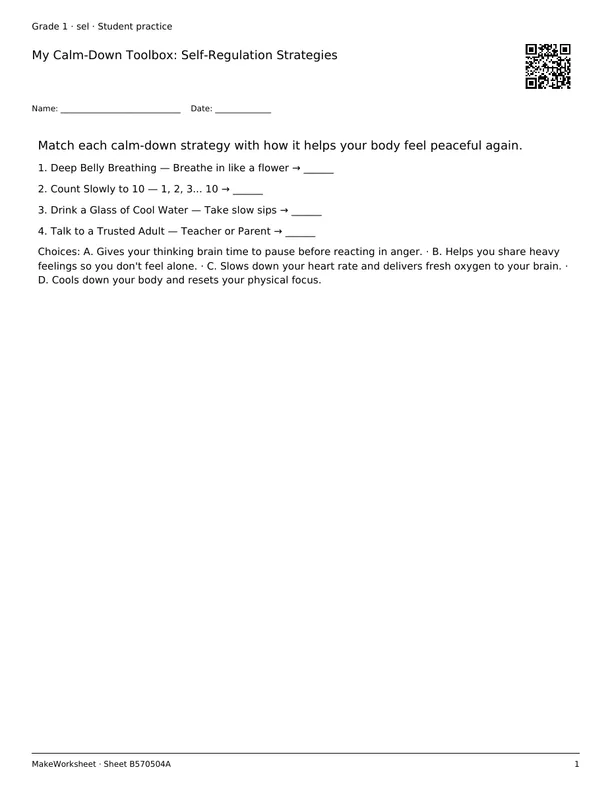
Downloads contain the original practice. Use the workbench above for new questions and custom printing.
Teaching guide, sample answers and curriculum references
Before you begin
Name a feeling and recognize a situation that brings it on.
How to use this worksheet
- Model the target skill: recognize when one's body feels overwhelmed, anxious, or angry. Use the first task as a guided example before asking for an independent response.
- Check readiness first: Name a feeling and recognize a situation that brings it on.
- Discuss an incorrect response using this distinction: Calming down does not mean that the feeling is wrong; choose a safe action that helps you respond.
A common mistake to discuss
Calming down does not mean that the feeling is wrong; choose a safe action that helps you respond.
What to practice next
Practice a breathing or pause strategy in a calm moment, before a difficult situation.
Intended curriculum references: SEL-CASEL.Self-Management.1. These references describe learning goals; they are not endorsements.
Published 2026-10-02; updated 2026-10-02. Original MakeWorksheet practice. Automated consistency checks support publication; independent subject-specialist review is not recorded. Read our editorial policy.
Continue practicing
 Practice preview
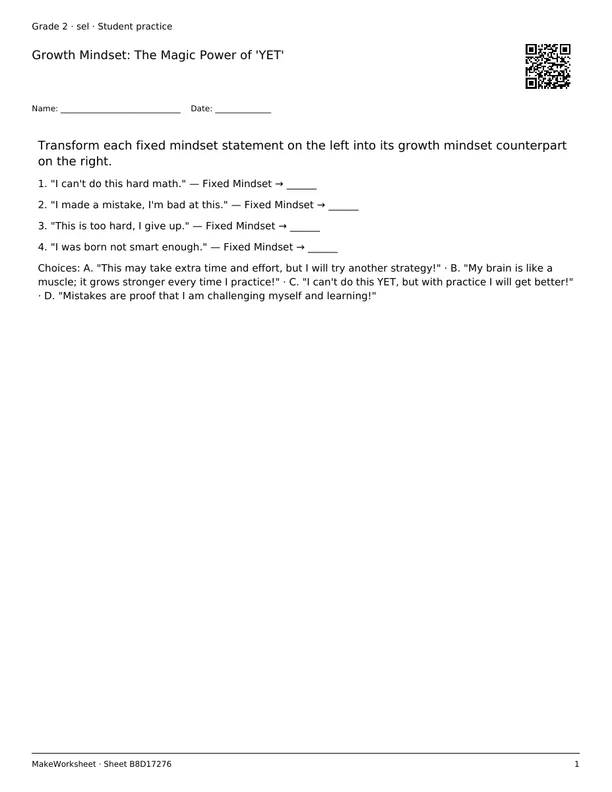
Growth Mindset: The Magic Power of 'YET'
Transform negative self-talk into resilient growth mindset statements. Turn 'I can't do this' into 'I can't do this YET!'
 Practice preview
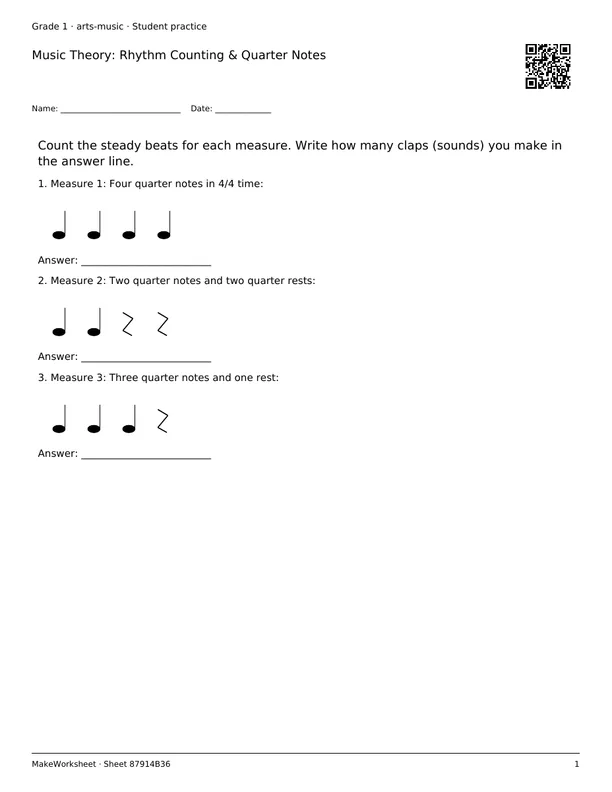
Music Theory: Rhythm Counting & Quarter Notes
Foundational music beat reading. Learn quarter notes (ta) and quarter rests (shh), clapping 4-beat measures.
 Practice preview
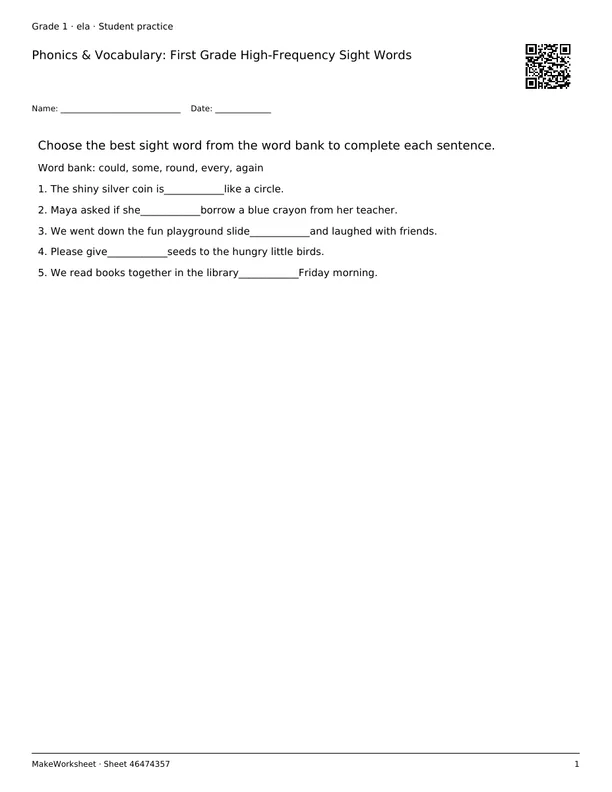
Phonics & Vocabulary: First Grade High-Frequency Sight Words
Master essential Dolch and Fry first-grade high-frequency sight words through context sentences and word bank selection.
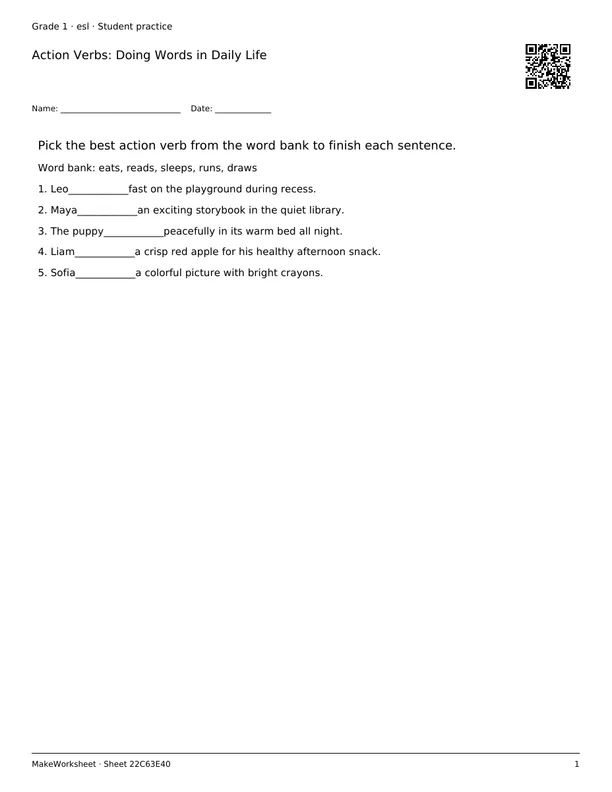 Practice preview
Action Verbs: Doing Words in Daily Life
Master essential English action verbs. Complete sentences using run, eat, sleep, read, and write with visual context and answer key.