Downloads contain the original practice. Use the workbench above for new questions and custom printing.
Teaching guide, sample answers and curriculum references
Before you begin
Recognize a turn-taking situation and name a shared resource.
How to use this worksheet
- Model the target skill: identify friendly, inclusive behaviors that help build positive peer friendships. Use the first task as a guided example before asking for an independent response.
- Check readiness first: Recognize a turn-taking situation and name a shared resource.
- Discuss an incorrect response using this distinction: Sharing does not always mean giving away a possession; taking turns and asking permission are also fair options.
A common mistake to discuss
Sharing does not always mean giving away a possession; taking turns and asking permission are also fair options.
What to practice next
Role-play a polite request and a response that respects the other person's choice.
Sample question and answer
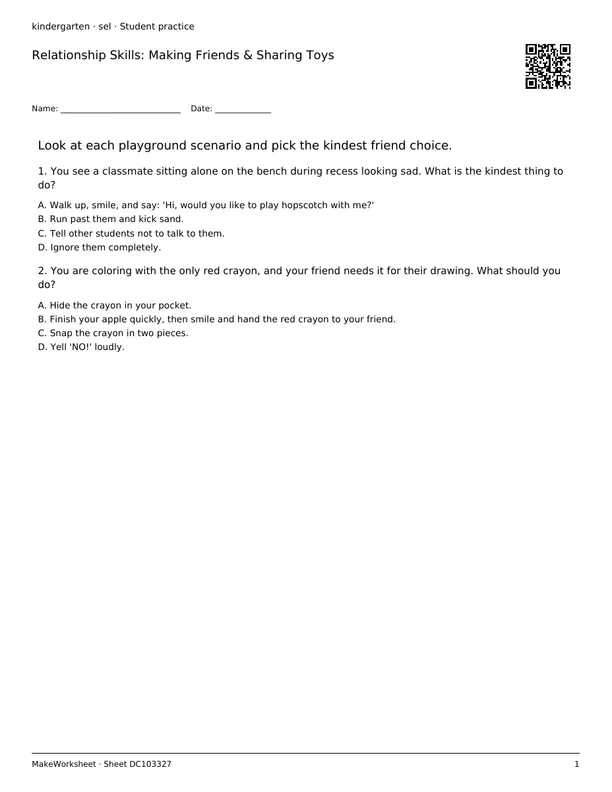
You see a classmate sitting alone on the bench during recess looking sad. What is the kindest thing to do?
- A. Walk up, smile, and say: 'Hi, would you like to play hopscotch with me?'
- B. Run past them and kick sand.
- C. Tell other students not to talk to them.
- D. Ignore them completely.
Answer: A. Inviting someone to play is inclusive, kind, and helps make new friends feel welcome.
Intended curriculum references: CASEL.Relationship-Skills. These references describe learning goals; they are not endorsements.
Published 2026-10-02; updated 2026-10-02. Original MakeWorksheet practice. Automated consistency checks support publication; independent subject-specialist review is not recorded. Read our editorial policy.