sel · Grade 3
Understand Two Perspectives
Understand a fictional situation, consider perspectives and explain a constructive response.
Find this activity in the Social & Emotional Learning map
Explore the knowledge outline and its source scope. This unit supports selected ideas.
Learning goals
- Understand a fictional situation, consider perspectives and explain a constructive response.
Before you begin
Use the fictional characters; personal disclosure is optional and unnecessary.
Age and grade do not measure readiness. Adjust reading or adult support to preserve the intended learning goal.
Follow the sequence
Complete practice
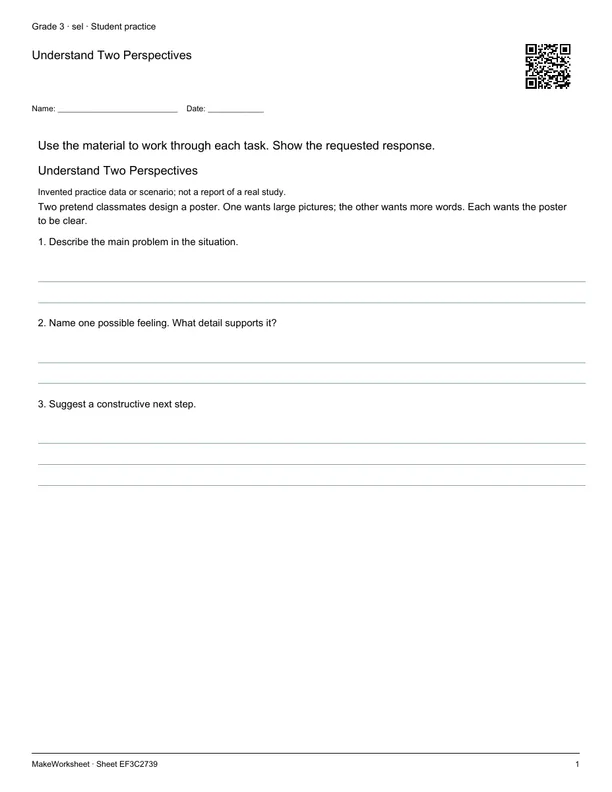 Practice preview
Understand Two Perspectives
Practice · Independent · 25 min
Understand a fictional situation, consider perspectives and explain a constructive response. A complete set with exploration, practice and application. Use the linked unit for the learning sequence and teaching guide.
1. Explore
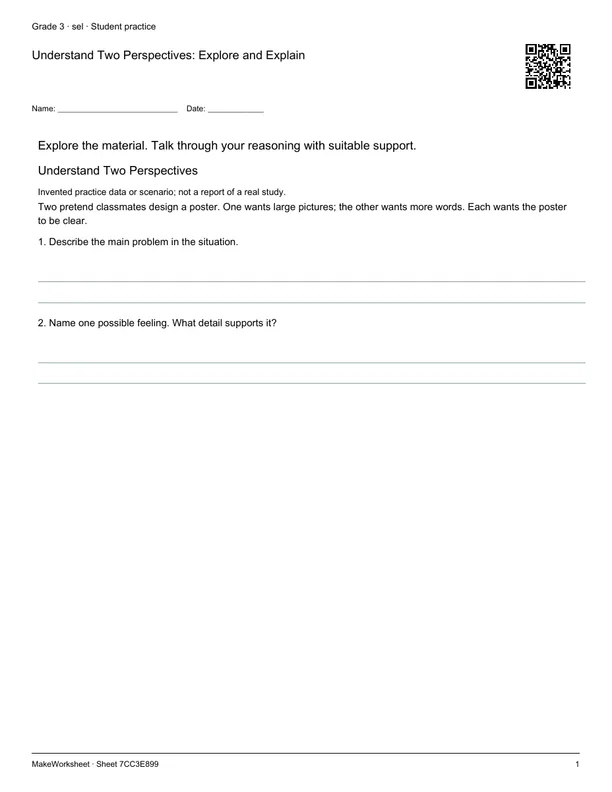 Practice preview
Understand Two Perspectives: Explore and Explain
Explore · Independent · 10 min
Understand a fictional situation, consider perspectives and explain a constructive response. A focused learn activity. Use the linked unit for the learning sequence and teaching guide.
2. Practice
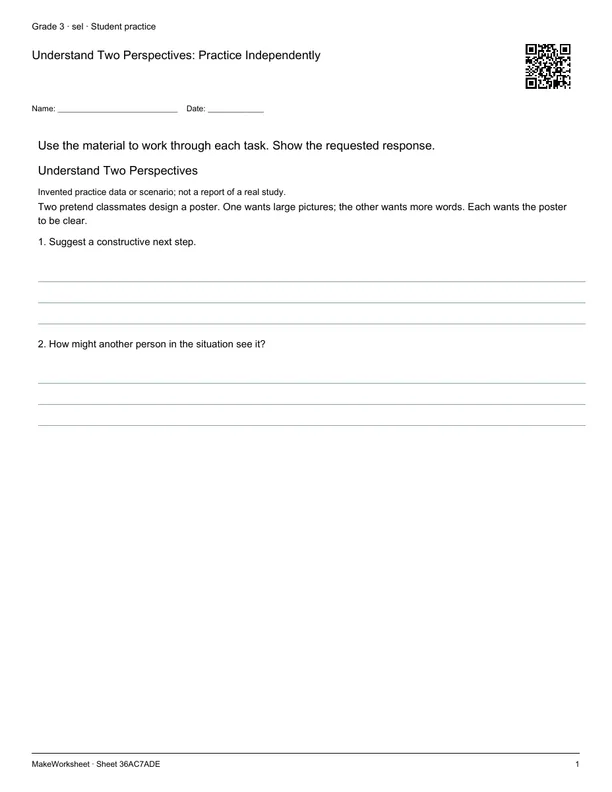 Practice preview
Understand Two Perspectives: Practice Independently
Practice · Independent · 10 min
Understand a fictional situation, consider perspectives and explain a constructive response. A focused practice activity. Use the linked unit for the learning sequence and teaching guide.
3. Apply
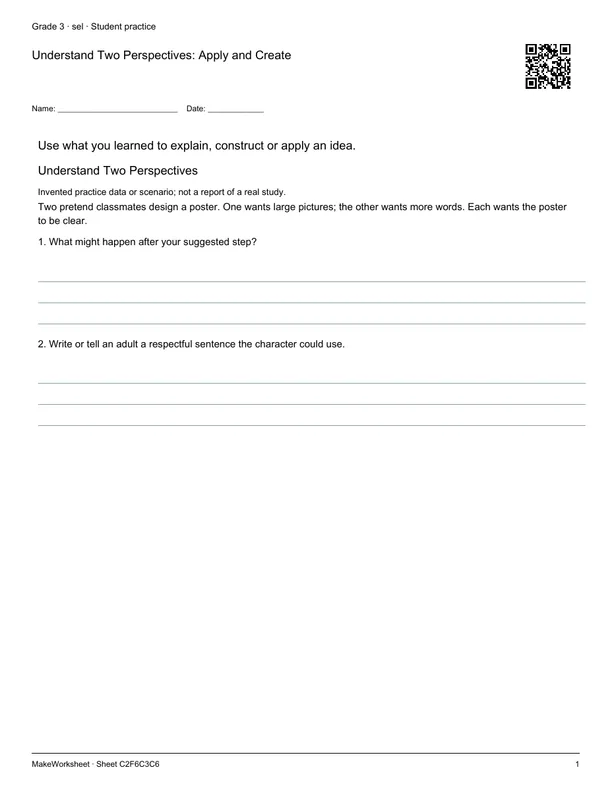 Practice preview
Understand Two Perspectives: Apply and Create
Apply · Independent · 15 min
Understand a fictional situation, consider perspectives and explain a constructive response. A focused apply activity. Use the linked unit for the learning sequence and teaching guide.
Download the unit pack
Numbered activities, separate answer keys and a teaching guide in one ZIP. The pack uses the focused sequence; the complete practice sheet above is an alternative.
Teaching and response guide
- Begin with: Describe the main problem in the situation.
- Connect the response to: Suggest a constructive next step.
- Ask students to apply the idea: What might happen after your suggested step?
Watch for: Assuming one expression proves a single feeling or that only one respectful answer is possible.
Check the answer criteria for each task. A supported explanation may have more than one acceptable response. These activities offer evidence to discuss; completing a sheet alone does not establish mastery.